All posts by James L. Mcelhinney

LOOK INSIDE THE CHAPBOOK OF THE HUDSON HIGHLANDS SUITE

Download (DOCX, 48KB)

A chapbook is a companion volume (booklet) for content published in different form. The word comes from “cheap”, something bartered for produced at an affordable cost. The original chapbooks were the first “paperbacks”, mass-produced printed matter for popular consumption during the 16th, 17th and 18th centuries, making their appearance alongside the first broadsides, tabloids and periodicals. Chapbooks were often produced (as here) to accompany a suite of loose prints, or perhaps a finely bound volume. Popular music and political rants were published in this form, as were serial fictions known as Penny Dreadfuls, the forerunners to 20th-century comic-books.

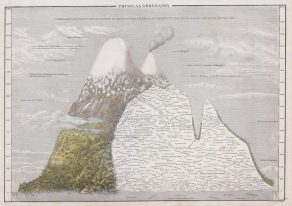
The concept driving the limited-edition Hudson Highlands suite arose from my awareness of 19th-century expeditionary art, and from a conversation with Dick solomon of Pace Prints. Returning from his exploration of Latin America to Europe by way of Philadelphia, Alexander von Humboldt advised Thomas Jefferson that artists were essential to the success of future military explorations. While in South America and Mexico, Humboldt had been forced to produce his own drawings, which were later elaborated and refined for publication by professional artists in Paris.

Artists like Jacques le Moyne, Frans Post, Albert Eckhout, William Hodges, William Bartram and others had already paved the way. Taking Humboldt’s advice to heart, Stephen H. Long enlisted artists Samuel Seymour and Titian Ramsay Peale II as members of his 1821 expedition to the Rocky Mountains. West Point superintendent Sylvanus Thayer modified the curriculum of the US Military Academy at West Point to require two hours of draw a day for second and third-year cadets.

Later artist-entrepreneurs like John-James Audubon, William Guy Wall, George Catlin and Alfred Jacob Miller explored the boundaries between art, science and ethnography, seeking private funding for their expeditions and popular audiences for the artworks they produced. While original works were exhibited and sold, the greater audience for these artists was reached via publications in the form of books and prints.

A couple of years ago I had the pleasure of interviewing Dick Solomon, to collect an oral history from him for the Smithsonian Archives of American Art. A few months later I saw him again, at a print show at the Seventh Regiment Armory on Park Avenue. I asked if he would give me a few minutes of his time to show him something. After some time had passed I called and made an appointment to meet at Pace Gallery, on East 57th Street. I showed him the Hudson Valley painting-journal, for which Wyvern Binderyarchives of american art
, on Clerkenwell Road in London, had produced a Solander (clamshell) box. Solomon leafed through the book. He looked at me, and with a wink said,
“if I were to see this at a show, I would wonder what kind of lunatic thought this had commercial potential. You’ve got to find a way to get the genie out of the bottle. Consider producing a suite of archival prints.”
I took his advice to heart. After showing the book to a number of other dealers and collectors, it became clear that producing a limited edition of prints would be the best option. I found myself reviewing the careers of Audubon, Catlin and others, which brought me to the realization that if I had revived a centuries-old artistic practice (painting in books), I might be forced to resort to centuries-old marketing strategies.

This iteration of the Hudson Highlands chapbook is undergoing final, minor adjustments. The limited edition of Hudson Highlands will be published on November 1, 2017 with a retail price of $1,500.00 The pre-publication price is $1,000.00
Subscribers who order a copy of the limited edition prior to October 15, 2017 will be thanked, and listed as sponsors on the Acknowledgements page of the chapbook.

To place your order, send a check for $1,000.00 to:

Needlewatcher Editions, PO Box 142, West Haverstraw, New York, 10993

New York residents add 8% sales tax ($80.00)

To use PayPal:


Look inside the chapbook:

Download (PDF, 414KB)

Hudson Highlands: Limited Edition. Pre-publication Special Offer

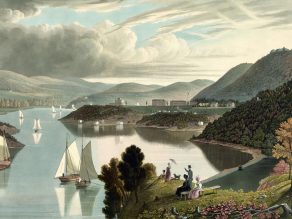
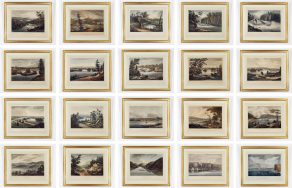
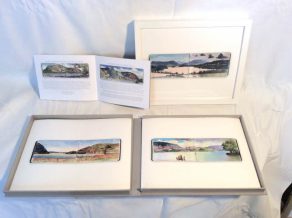
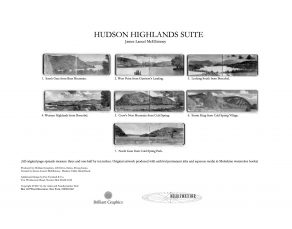
Hudson Highlands, a suite of seven archival digital prints, drawn from the painting-journals of James Lancel McElhinney, will be published in a limited edition of fifty copies on November 1, 2017. The suite of facsimile images is printed on 100 lb. archival paper and housed in a fine cloth-covered archival clamshell box. A companion chapbook identifying each location in enclosed.

(Clamshell cover design)

(Cover sheet/image key)

Copies of this limited edition are now available for sale from Needlewatcher Editions, at a pre-publication discounted price. Subscribers who complete their purchase by October 15 will be listed as patrons on the acknowledgements page pf the companion chapbook. For details, please open or download this PDF.

Download (PDF, 353KB)

To order:


FIRST SUMMER ROMANCE: Telling Tales at the Roger Smith Hotel on August 2, 2017

Last night I had the pleasure to share a few stories with a great audience at the Roger Smith Hotel at 47th Street and Lexington Avenue.
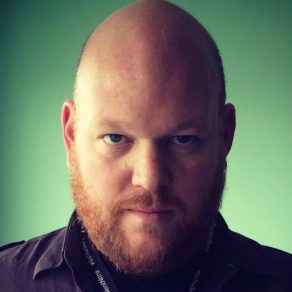
Last year I had met the engaging and lovely Danika Druttman at dinner in the West Village with artists Mike Maxwell and Edgar Heap of Birds. Danika, who runs the programs and exhibitions at Roger Smith Hotel, invited me to speak at one of their Show and Tell events. Last night’s program was the baker’s dozen. It was a privilege to share the bill with master storytellers Noah Harlan and Flash Rosenberg.
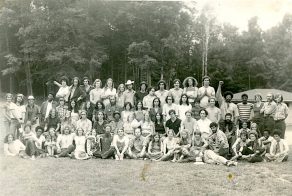
The subject of First Summer Romance is not my normal fare.
Collecting stories over the past few years for a memoir with a working title of A Pack of Lies, I decided to rework one of those narratives into something appropriate. It’s all true. I deny every word of it. That’s my story and I’m sticking to it.

FIRST SUMMER ROMANCE

(an excerpt from A Pack of Lies by James L. McElhinney © 2017)

Many years ago, I received a scholarship to attend a summer art-school in Maine, which had been founded in the late 1940s by a group of prominent New York artists. Over the years, its fame had grown, mostly because many of the artists who had studied there later went on to become famous and successful.
The school was in the middle of nowhere.I didn’t own a car.
Calling the school’s Manhattan office looking for a ride-share, I was given the number of a guy named Frank, who was the opposite of the cliché of a bohemian artist.
He lived in an apartment in his parents’ house in Audubon, New Jersey, which was furnished with oriental rugs and antiques. Paintings of nudes, portraits and landscapes covered the walls.
Frank drove a late-60s burgundy Ford Fairlane sedan, equipped with an 8-track tape-deck and twelve hours of Bob Dylan tapes. Fueled by cigarettes, black coffee and malted-milk balls, we reached Central Maine at twilight, finding our billets after nightfall. After breakfast the next morning, we all trudged up the dirt road to campus, to attend an official welcoming ceremony in the fresco-barn. Spread out across a hilltop, the physical plant was a series of rustic buildings, adjoined by cow-pastures rimmed by dark forests. We all lived at the bottom of the hill, in a hamlet of cedar-shake cottages, scattered along the southern shore of Lake Wesserunsett.

This territory was not unfamiliar to me. My family had summered at Mount Desert. The Maine coast was a beloved destination. Ten years earlier, I had attended Camp Choconut in northern Pennsylvania. Summers ended with the traditional Villa Hunt, a three-day event in which campers and counselors reenacted Pershing’s pursuit of Pancho Villa into Mexico. For three days, we slept in trees, and by rushing streams. We stalked the woods, and tagged each other with Bisquick- balls.
More wilderness adventures were had at Camp Hugh Beaver in the Poconos. Frightful reports circulated about a Stroudsburg man, who had slaughtered his family and lurked in the woods. Sightings were reported. Campers slept with one eye open. One day a counselor caught a rattlesnake. He put it in a terrarium and fed it hatchlings from a nearby chicken farm. After capturing a hundred-pound snapping turtle, he somehow got it into one of the stables. The next day we found the hinge broken and the door ajar. Tracks led down to the water’s edge. For days, nobody dared to go into the lake.

Incessant rain plagued our first week in Maine. I unpacked my gear into a corner of a sprawling shed, rounded up some tables and an easel, found some objects and started painting a still-life. When the weather cleared, Frank invited me to ride shotgun on one of his plein-air excursions. I had never really painted landscape before. There was a prejudice against it amongst the avant-garde contingent, who regarded the practice as backward and the subject as inferior. To vex them even more, we began to call ourselves Sunsets Incorporated.
Every morning after breakfast, the burgundy Fairlane debouched from our leafy enclave, in search of painting-motifs; shop-talk for a view that might afford a good composition. Anyone familiar with the terrain in Maine knows that everywhere you turn, there are gobsmacking vistas. Painting day after day, under a burning sun, or in the fine mist of a cool soft day, or shielding our work under ponchos against a driving rain, mosquitoes the size of hummingbirds, and swarms of biting flies were our constant companions. Exposed as I was to the elements from morning to night, something wild and savage was unleashed within me. Imagine a place full of hormonal twenty-something workaholics, men and women, straight and gay, removed from the humdrum routines of everyday life, set loose in the north woods. Two weeks into the program I became involved with a woman named Liza. Most of us bunked two to a room, but Liza’s roommate never showed up, affording us a measure of privacy. She was, shall we say, very considerate, and eagerly approved of my displays of gratitude. Life without her was unthinkable. Marriage even crossed my mind.

That week Frank and I took a break from the wilderness, and painted by the dam in a nearby mill-town. The French-easel posse was already on site by the time we arrived, and had set up in the most advantageous positions to address the motif.
Its leader was a member of the faculty named Paul. Clad in white from head to toe, wearing a large black beard, he could have been cast as Monet. Curious onlookers approached him. Removing his wide floppy hat with a flourish, he presented it to them, like a mendicant’s bowl. Stunned, they halted, turned, and crept away. Throughout the day, we could hear Paul’s booming voice,
“Blue, blue! Distance is blue” Only Claude could paint distance.”
Driving back to base-camp, Handel’s Water Music blared from the 8-track. All I could think of was Liza. That night, after one of our extended postprandial cuddles, I went back to my room and sat on my bed. Something was in it. Someone. At first I thought my room-mate had gone mad, or mistaken my bunk for his. Reaching under the covers, I found smooth skin, warm breasts and a woman named Lauren. She was amazing. Soon, life without Lauren was unimaginable. This was love. We made plans. It was serious.

Frank and I had been talking about bringing large canvases out to the field, but the modest cargo capacity of the burgundy Fairlane foiled our ambitions. Instead we set up on campus, next to a pond, below the life-drawing studio.
Frank painted water-lilies. I painted Frank painting water-lilies.
My canvas measured four by six feet. Securing it to three easels, I leaned large rocks against their feet for added stability. Our animated banter drew complaints from a few craving silence, as they toiled over drawings in the life-studio up the hill. The co-director of the school came by to investigate.
“Look at that’s they’re doing,” said Frank. “Then look at what we’re doing. You decide. If you want us to shut up, we’re happy to oblige.”
The administrator walked up the hill, to confer with the disgruntled, then returned five minutes later. He smiled, and told us to carry on. Deciding not to break down our workplace for lunch, we left everything where it stood and went to the dining-room.
Returning an hour later, we found Hyder’s setup intact, but my table had been overturned. My palette–a sheet of thick glass–lay face-down on the grass, broken in two pieces. Paint tubes were strewn everywhere. Oddly curved scrape-marks crisscrossed the bottom half of my canvas. I was furious, sure that one of those vengeful sons-of-bitches from the life studio must have done this. Marching up the hill and into the studio, I called them all out at once. They denied everything. Following a few volleys of ripe invective, I slammed the door and stormed down the hill. Frank looked at me, pointed across the pond, and then burst out laughing. There stood two sheep, their faces smeared with oil-paint.

That evening at dinner, Lauren and I conspired to sneak out of our rooms and go skinny-dipping. The plan was to swim out to the raft anchored offshore, and make love under the stars. Waiting by the shoreline for half an hour, I began to wonder if she had preceded me, and might be waiting for me to join her.
Silently, I slipped into the water and made for the raft. Drawing near, her silhouette came into view, sitting on the edge of the raft, legs in the water. Drawing closer, I saw a welcoming smile. Lifting myself onto the deck, we greeted each other with a deep, slow kiss. She spoke.
“I’ve been waiting for you”
“Wait a minute” I replied. “Where the hell is Lauren?”
“Never mind,” the mermaid replied.
“We didn’t swim all this way for nothing.”
We stayed together until first light. From that day on, I could think of nothing but Diana, undine, goddess of sex, warden of my heart. We spoke of growing old together. Life without one another was incomprehensible. Happiness would be ours!
Returning to the field, Frank and I battled sun-showers and bloodthirsty insects. Reveling with primal delight, I embraced my communion with nature, in every possible way. As summer drew to an end, resuming our previous lives was out of the question. Blissful exile, mountains of work, new friends and transformative adventures had filled every last one of us with a kind of jubilation.
At the same time, a sense of loss swept over me. Which romance would blossom? Which love would endure? Pledging endless devotion, we swore to keep in touch, and went our separate ways. Many years later, only one of these summer romances has stood the test of time. We’re still together, the landscape and me.
NEEDLEWATCHER NETCAST: A CONVERSATION WITH ELISE ENGLER

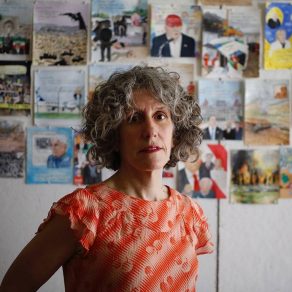
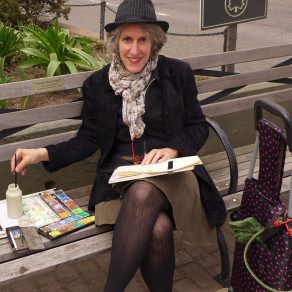
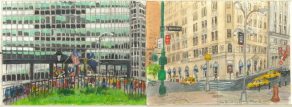
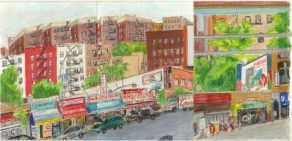
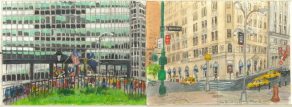
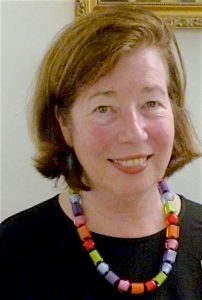
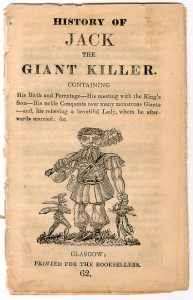
Elise Engler keeps track of the world through her drawings, paintings, and accordion-books; making lists and documenting her travels to The Galapagos, Antarctica, Sicily and the streets of New York. Beginning on May 19, 2014 Elise Engler spent a year on Broadway, exploring it block by block, from Kingsbridge to the Battery. Engler recently completed a residency at the MacDowell Colony. Last year she began work on a new series entitled First Radio Headline Heard of the Day, a chronicle of mostly political events, as they unfold in real time.
I recently caught up with Elise Engler to learn more about her work. Listen, enjoy, comment, and share:

NEEDLEWATCHER NETCAST: WHAT LIES BETWEEN: A Conversation with Don Stinson

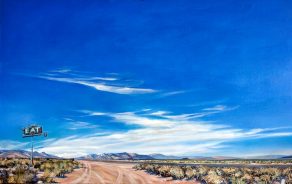
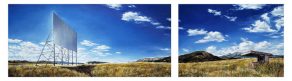
I first met Don Stinson when I moved to Colorado nearly twenty years ago. I felt an immediate affinity with what he was doing. Stinson’s focus was on landscape, not as scenery, nor as an artistic trope, but as a dialogue between terrain, and the society which shapes and consumes it. Mindful of history, western exploration, and influenced by the writings of J.B. Jackson, Stinson’s paintings take notice of dystopic anomalies, industrial intrusions and modern ruins. Adrift in vast deserts, or located near majestic geological formations, these byproducts of disposable culture are at once elegiac, and cautionary. What Lies Between: new works by Don Stinson is now on view at David B. Smith Gallery in Denver, Colorado. Recently we caught up with one another, to talk about the exhibition.

Listen:


What Lies Between, new works by Don Stinson, will be on view through June 3rd, at David B. Smith Gallery. 1543A Wazee Street, in Denver, Colorado, 80202. Gallery hours are Wednesday to Friday 12-6pm and Saturday 12-5pm and by appointment. For more information please go to the gallery website at www.davidbsmithgallery.com. Learn more information about Don Stinson and his work at www.donstinson.com

Erratum: During the interview I misspoke, identifying Dr. Joni Kinsey (University of Iowa) as the author of a book on Albert Bierstadt, when she is the author of a definitive study of Thomas Moran, which I highly recommend to anyone concerned with the history of the American landscape.

Remembering J.B. Jackson: Advice to Landscape Painters

Elevating landscape painting to a kind of purity, twentieth-century Formalism also reduced it to a species of decorative, portable scenery. The question has always been whether the architect exists to provide painters with walls, or if the painter exists to decorate those walls. Either way, both are at the mercy of economies of real property, which historically have tended to shape terrain at the expense of the environment.
Discovering the influential essays of John Brinckerhoff Jackson (1909-1996) for me discredited many of the assumptions about landscape to which painters subscribe. Jackson brought me to the realization that terrain is not passive but susceptible, and ultimately indifferent. What one beholds in sweeping vistas is not physical reality, but a mirage–the reflection of human desires projected upon the land. Thus every landscape is fiction, a narrative, and a conundrum. Jackson said that “Landscape is history made visible”. It is also shaped by natural forces dictating conditions that govern life on earth. Quoting Eliade, Jackson noted that the process of organizing terrain into landscapes was a way of accelerating or delaying the process of nature; an attempt to assume the role of time, presumably to overcome mortality.
Any well-informed landscape painter should acquaint themselves with his essays, and with other writers such as John Stilgoe, James Howard Kunstler, Jane Jacobs, Frederick Jackson Turner, John Burroughs, John Muir, George Perkins Marsh, William Wordsworth, and Alexander von Humboldt, who remains the most influential of them all. Andrea Wulf’s recent biography of Humboldt is highly recommended.
Also recommended is Drawn to Landscape: The Pioneering Work of J.B. Jackson. Edited by Janet Mendelsohn and Chris Wilson. University of Virginia Press. 2015

Dr. Katherine Manthorne to speak at Frederic Church’s Olana on Saturday, May 20, 2017 (Click on any image to learn more)

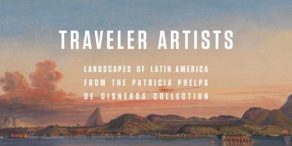
Dr. Katherine E. Manthorne of the CUNY Graduate Center Doctoral program in Art History will speak in conjunction with the exhibition “Overlook: Teresita Fernandez Confronts Fredeic Church at Olana“; works from the Coleccion Patricia Phelps de Cisneros curated by Teresita Ferndandez.

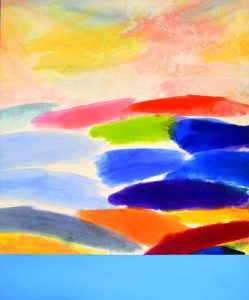
RONNIE LANDFIELD: American Color Field Master

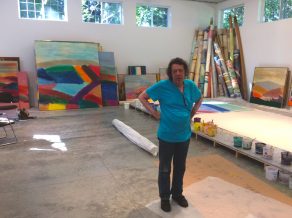
Ronnie Landfield in his studio. Photo by James L. McElhinney, 2015

Painter Ronnie Landfield has been a presence on the New York scene since his work was exhibited in the Whitney Biennial in 1967. His latest exhibition opens at Findlay Galleries on May 4th, 2017 and runs through June 3rd. Ronnie Landfield and I met at the gallery to discuss his latest exhibition. Ronnie Landfield. American Color Field Master will be on view through June 3rd at Findlay Galleries, located on the 7th floor, at 724 Fifth Avenue, between 56th and 57th Streets. Gallery hours are Tuesday through Saturday 10am -6pm and by appointment.

Listen:

Ronnie Landfield
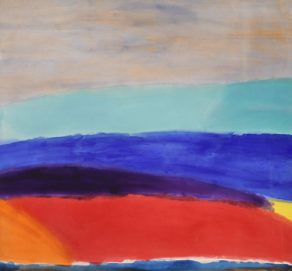
Late in the Day, 2012
acrylic on canvas
75 x 81 inches

Ronnie Landfield
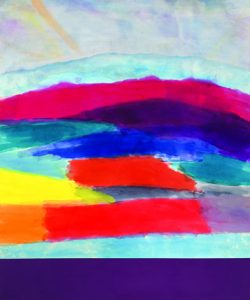
Threshold of Eternity, 2012
acrylic on canvas
90 x 76 inches

Ronnie Landfield
We Walked all the Way, 1997
acrylic on canvas
87 x 72 inches

(Images courtesy David Findlay Jr. Gallery, New York, Published under fair use for critical and educational purposes)

HUDSON HIGHLANDS SUITE: THE BACKSTORY

http://www.mcelhinneyart.com/prints/

NEEDLEWATCHER NETCAST: CONCEPT AND PAINTING: A Conversation with Robert C. Morgan

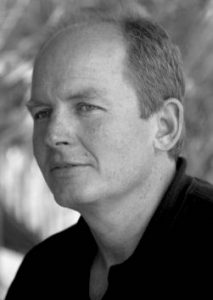
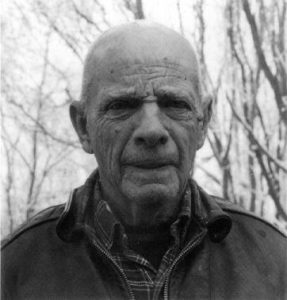
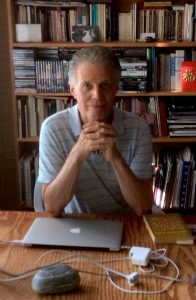
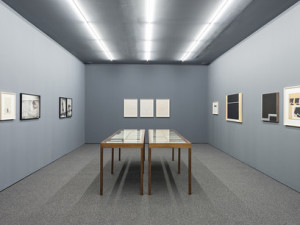
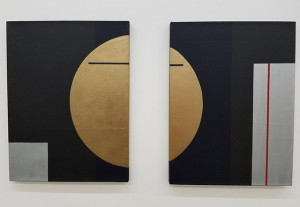
Concept and Painting, an exhibition of the artist and critic Robert C. Morgan is now on view at Proyetos Monclova in Mexico City. The show opened on March 23rd and runs through April 29. I first met Robert when we both taught on Fridays at Pratt Institute in Brooklyn. We were in different departments, but at midday we each went off campus for lunch. On one of those days, we found ourselves at a restaurant, waiting for dining companions who never arrived. Rather than dining alone, we began a series of conversations, of which this is the latest. On Friday April 7, I sat down with Robert at his home near Union Square to learn more about the exhibition.

Listen to our conversation:

Comments are welcome below, where you can share this on social media and request notification of future podcasts and blog posts.(Photographs and links on this post shared under fair use, etc.)
Robert-C-Morgan-Exhibition-view-Courtesy-of-Proyectos-Monclova 2

Robert-C-Morgan-640x442 2