All posts by James L. Mcelhinney

“Today’s Masters” Feature Article by Peter Trippi in Fine Art Connoisseur Magazine

The genesis of Hudson Highlands is explored in a wonderful article by Fine Art Connoisseur Editor-in-Chief Peter Trippi. A few months ago Peter and I sat down to discuss a host of topics surrounding
The magazine is on newsstands and is available at Barnes and Noble. Here is a PDF of the article, as a teaser.

Download (PDF, 3.2MB)

In the same issue are articles about Wayne Thiebaud, Thomas Cole, Wilhelm Schadow, and American Realism on view in Europe.

Purchased by the West Point Museum: HUDSON HIGHLANDS. NORTH RIVER SUITE, VOLUME ONE

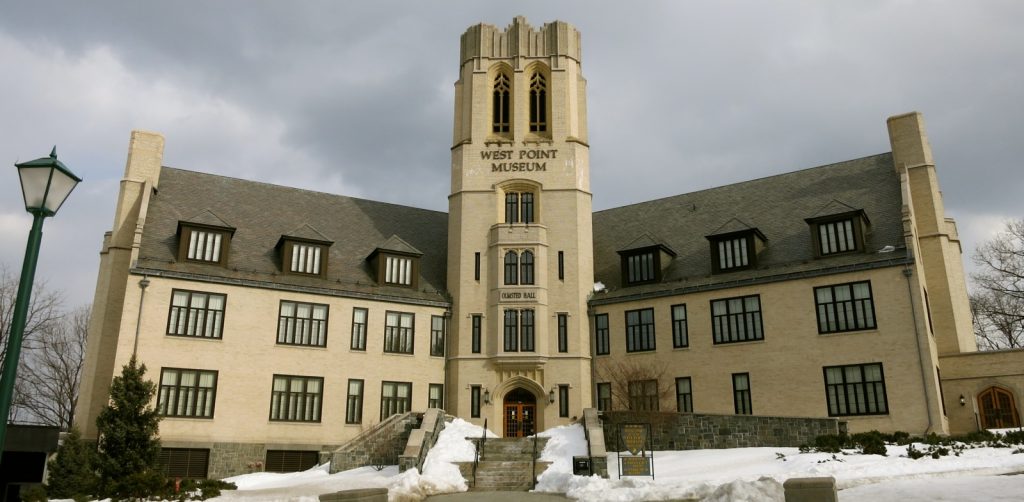
It is with great pleasure that I can share that the West Point Museum has acquired a copy of Hudson Highlands, North River Suite, Volume One. Few may be aware that West Point was where the Hudson River School was conceived. For more than two centuries the United States Military Academy required two years of drawing, part of Thayer’s reforms to the curriculum in 1819. Thomas Cole’s Fort Putnam was not the first painting of West Point, but it helped establish the site as a canonical motif for artists, and a bucket-list destination for steamboat tourists. This acquisition by the museum is deeply gratifying to me, because Hudson Highlands now resides with so many historical works by artists in the collection whom I admire.

More than half of the limited edition of 50 are available. For information about how one may purchase a copy, scroll down to the bottom of this post, or send an email to

ed******@ne***********.com


“>

ed******@ne***********.com


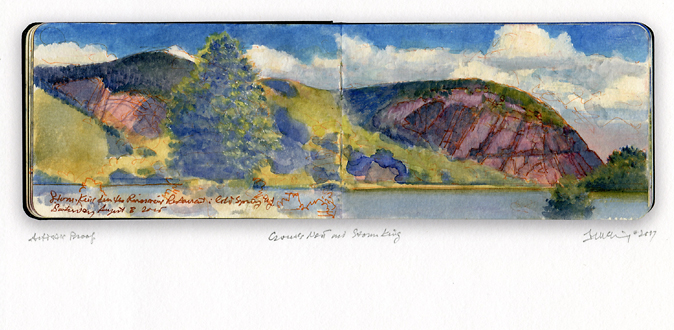
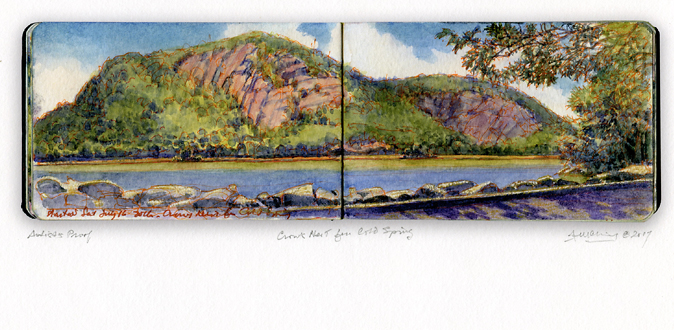
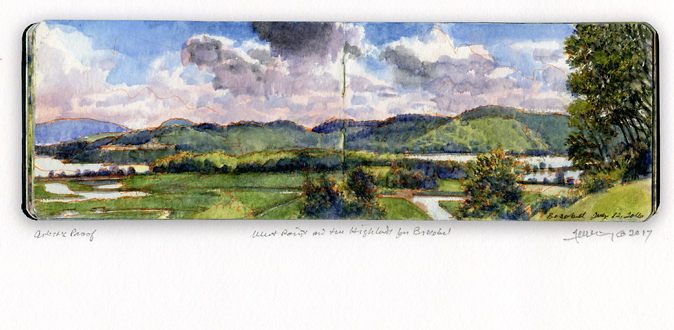
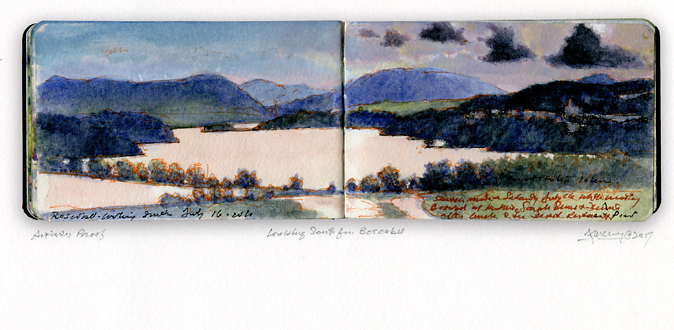
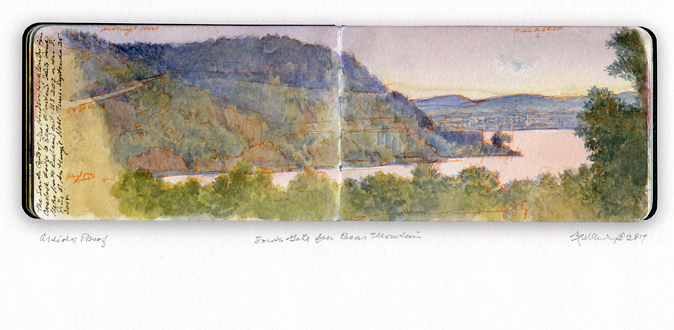
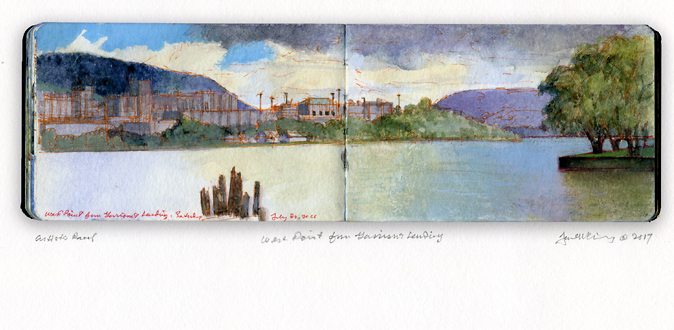
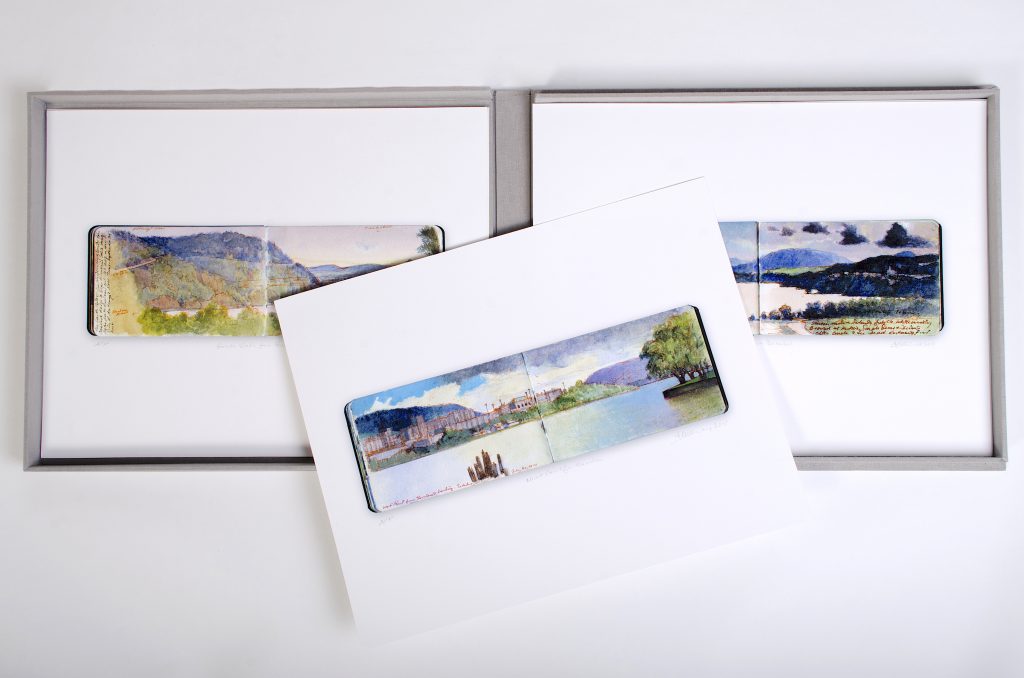
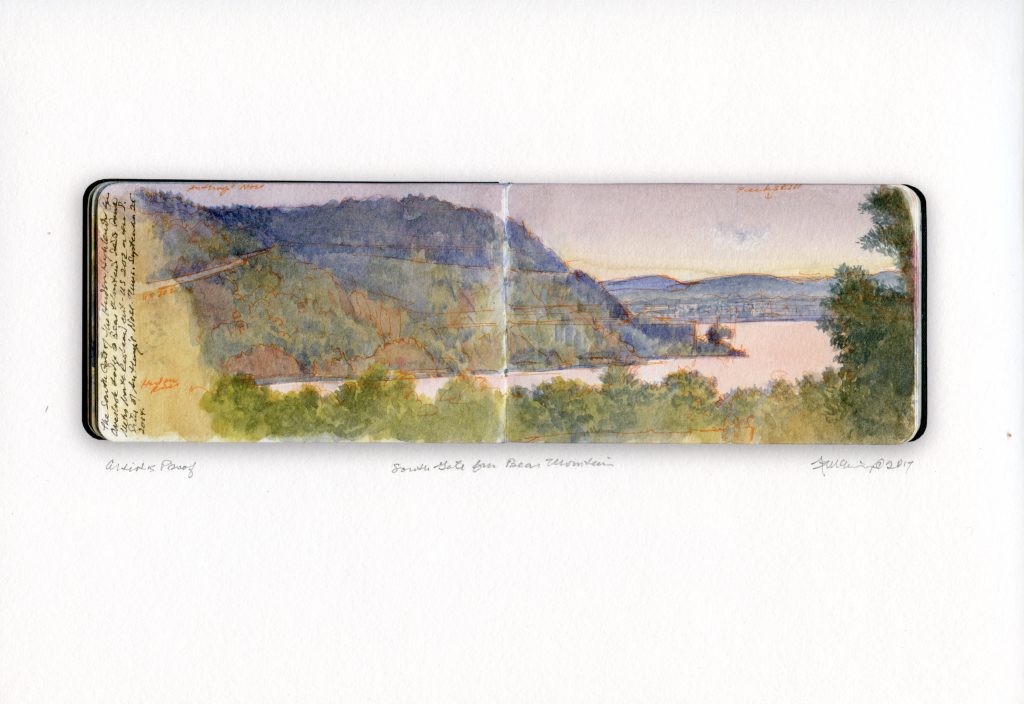
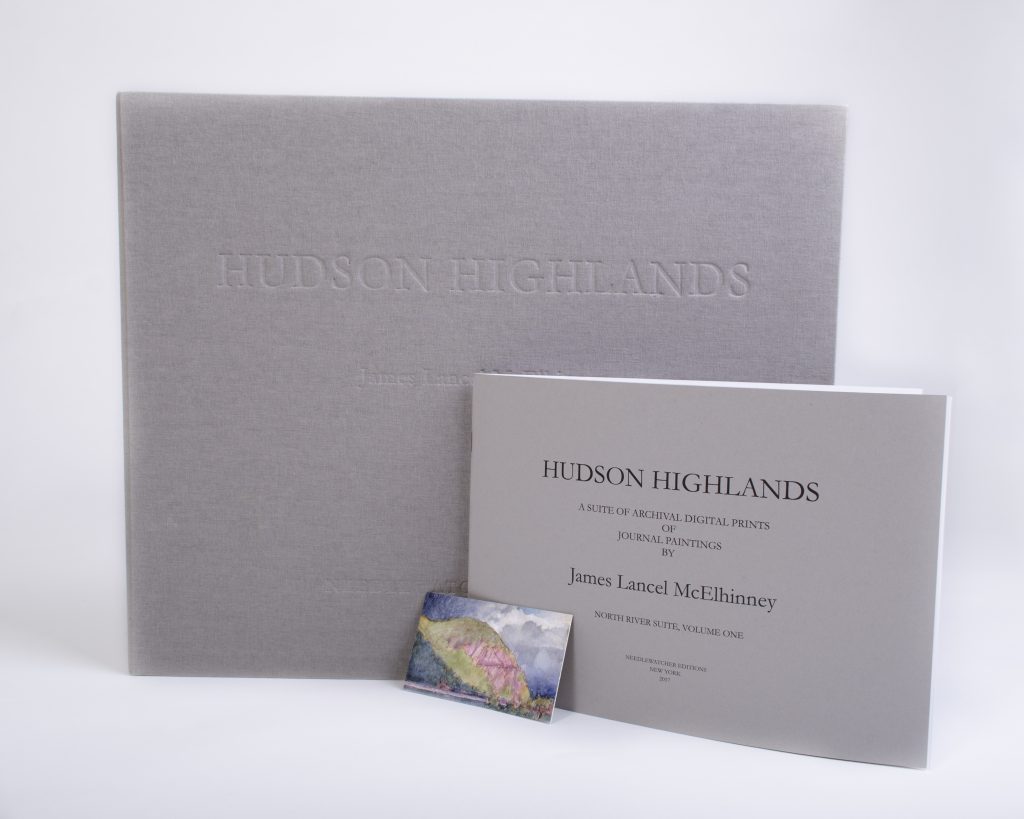
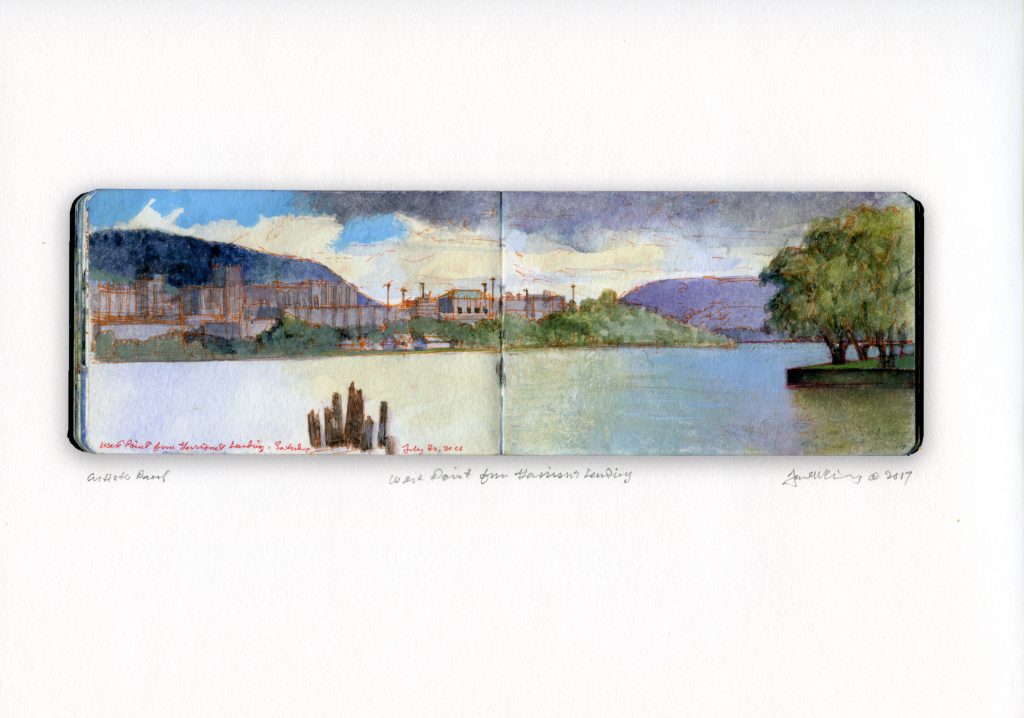
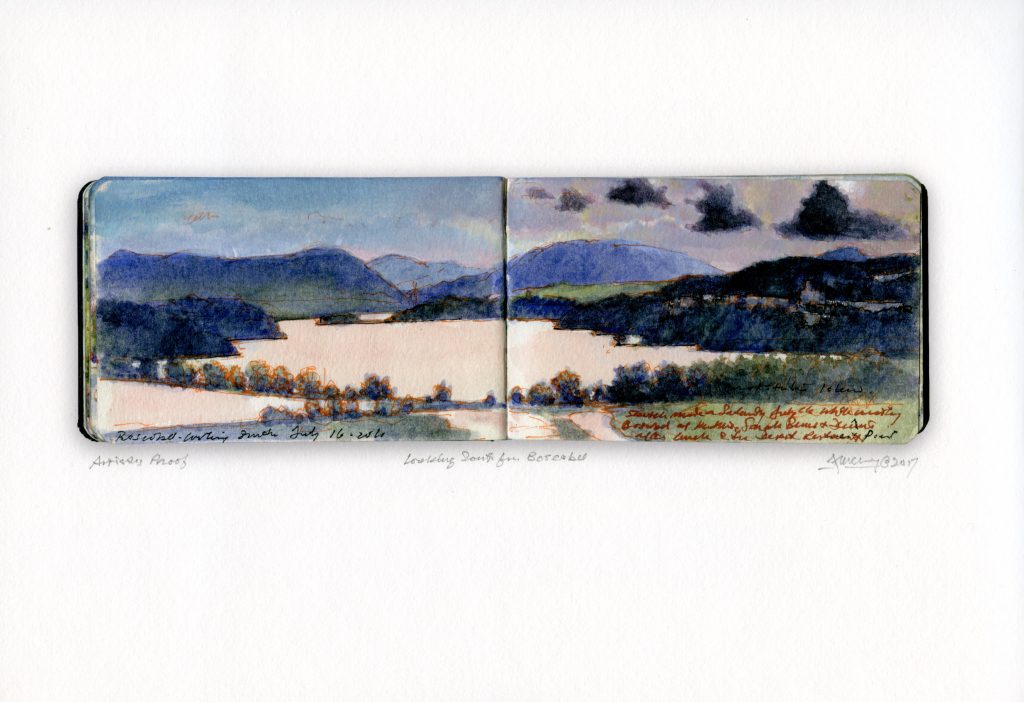
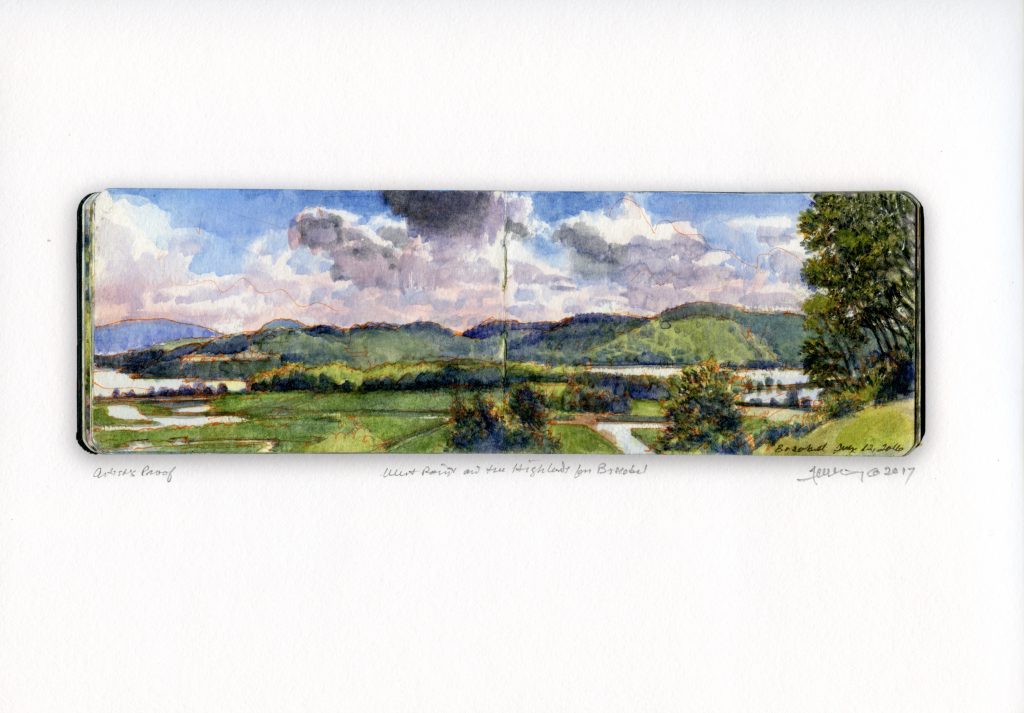
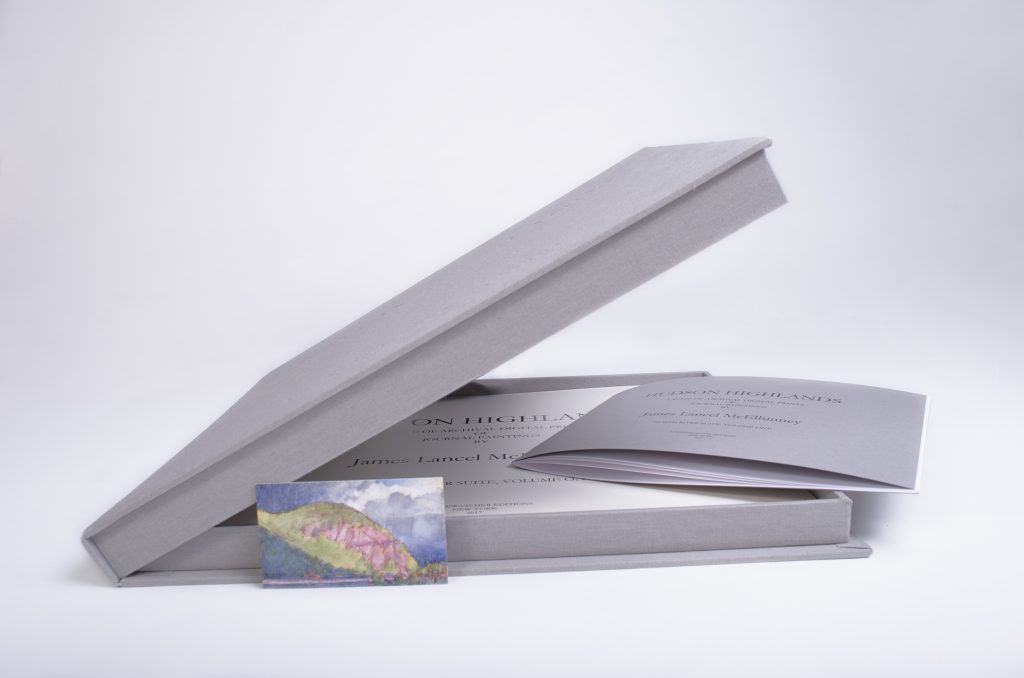
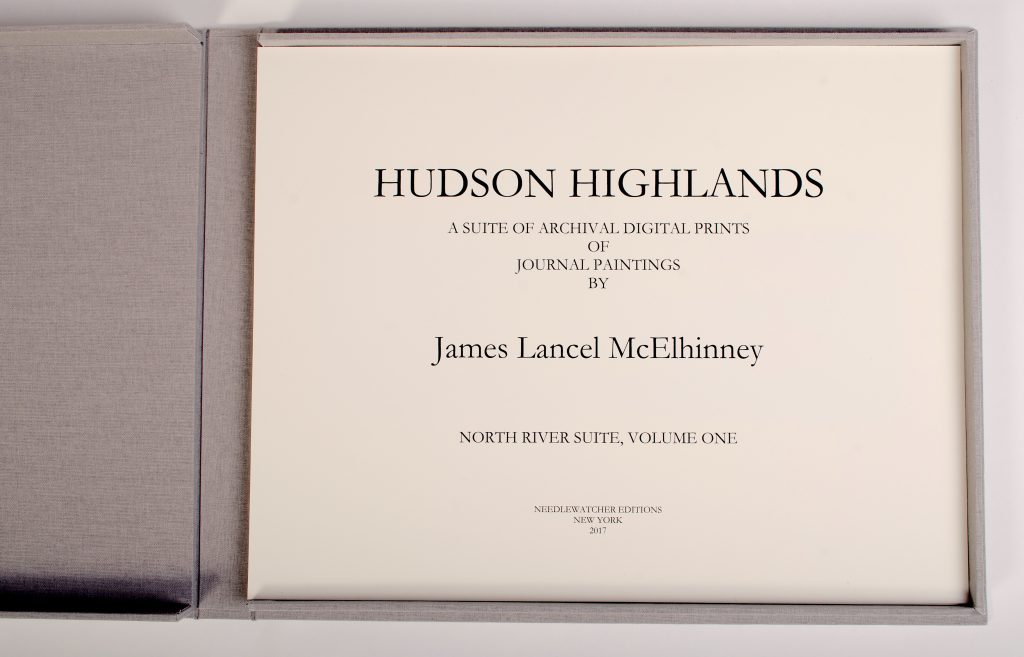
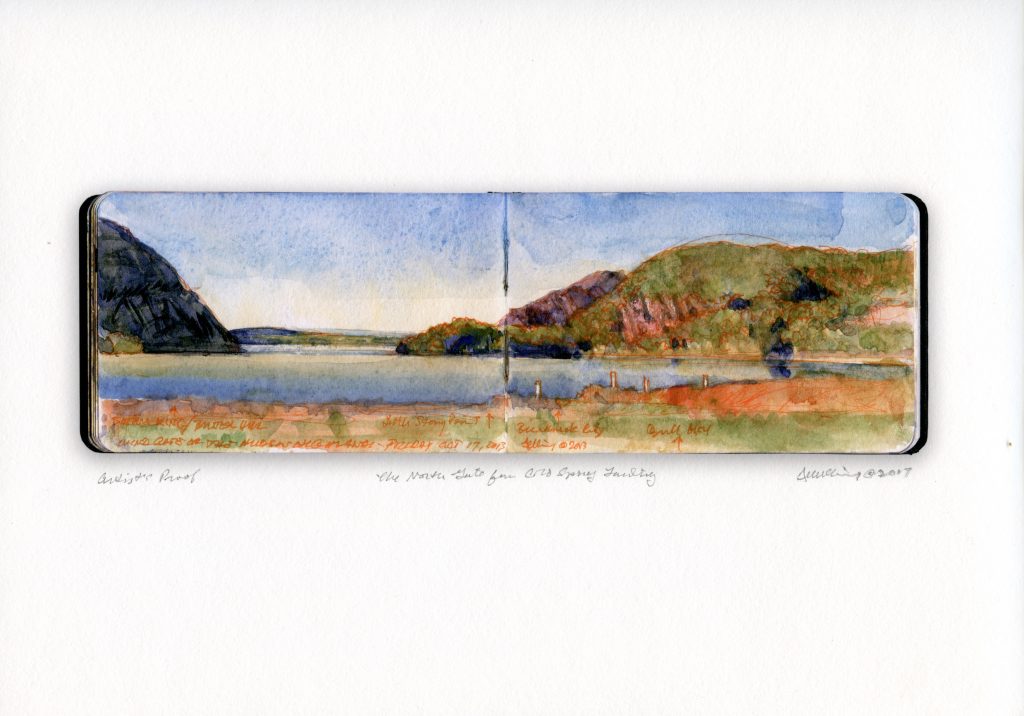
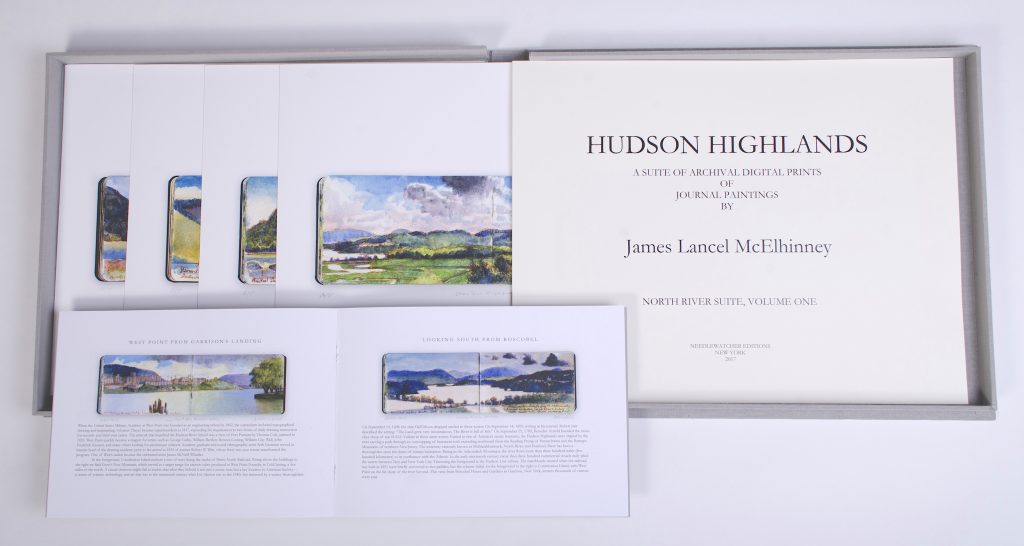
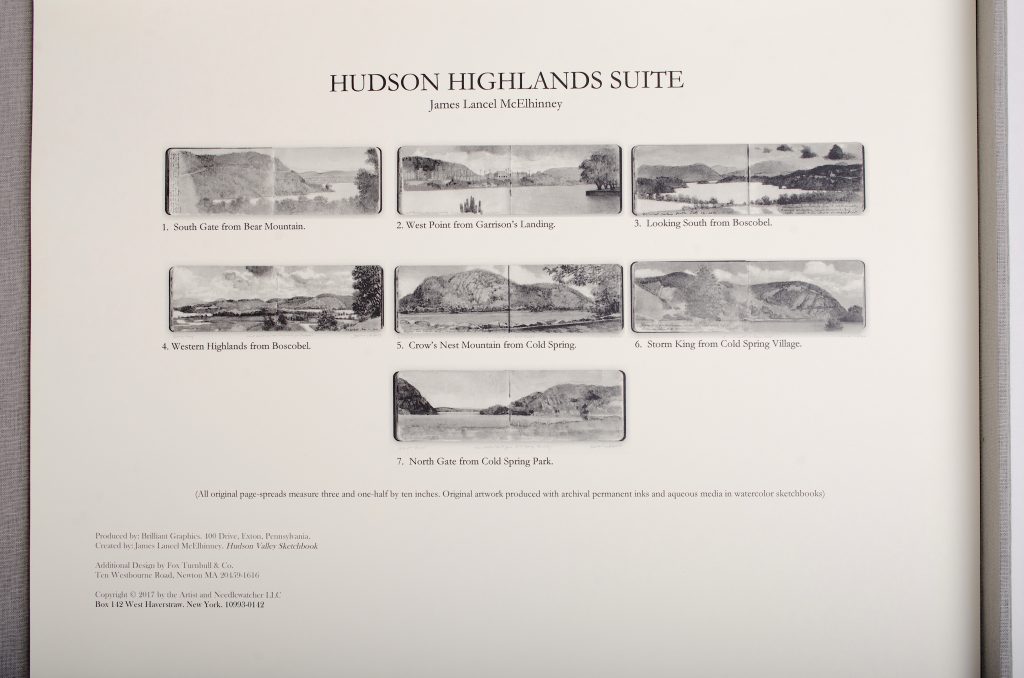
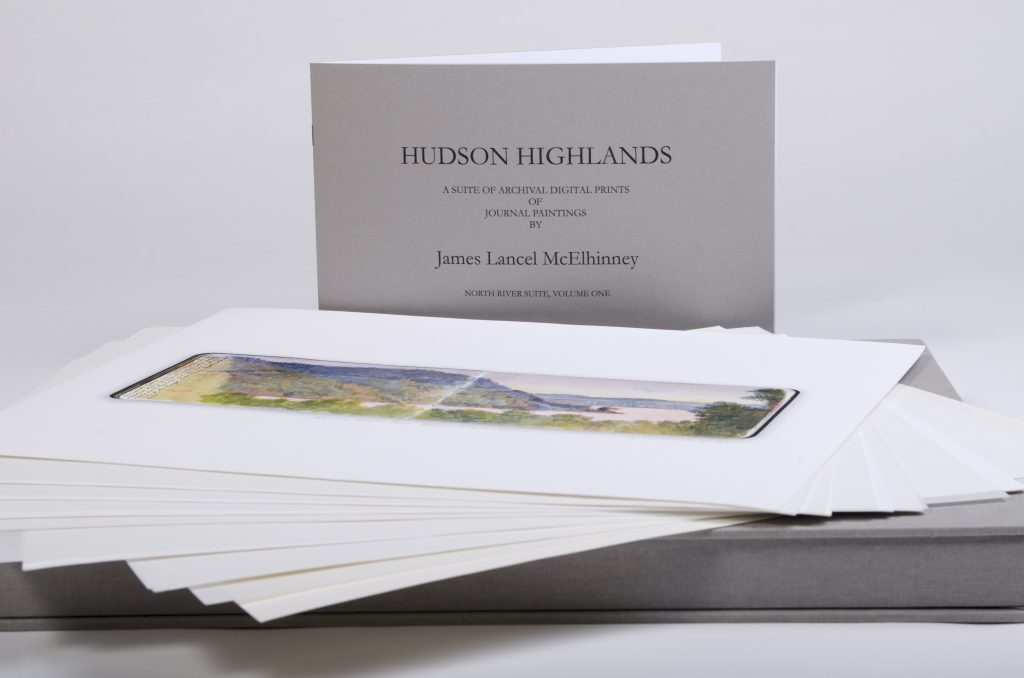
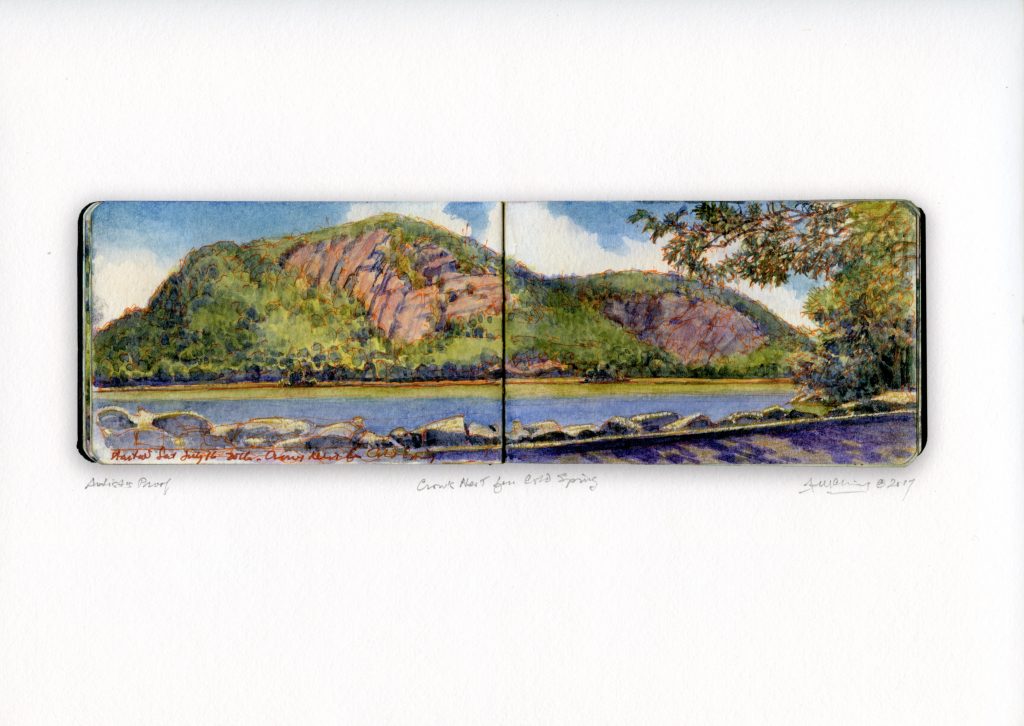
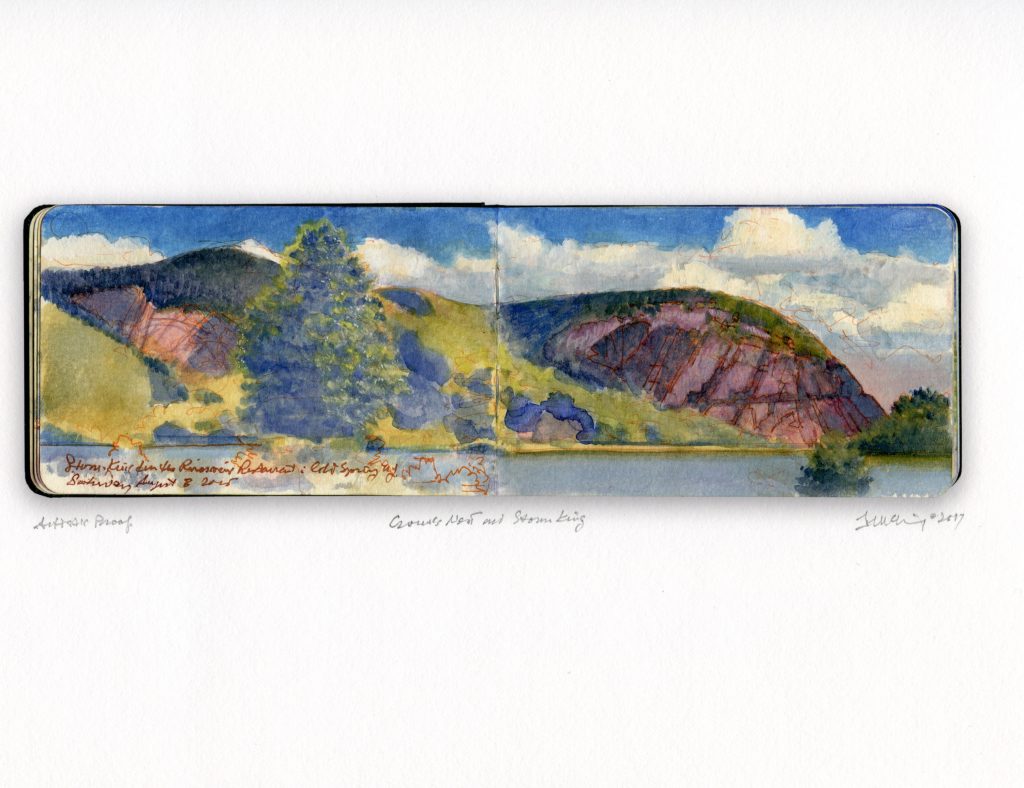
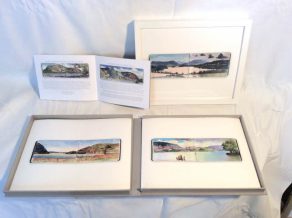
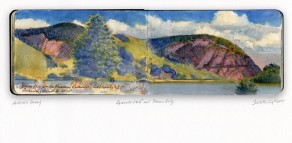
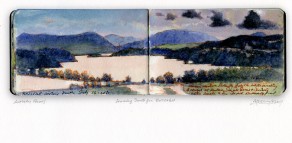
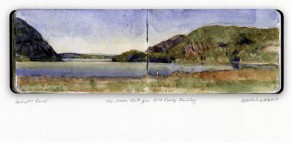
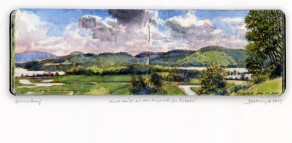
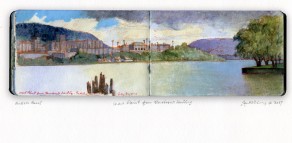
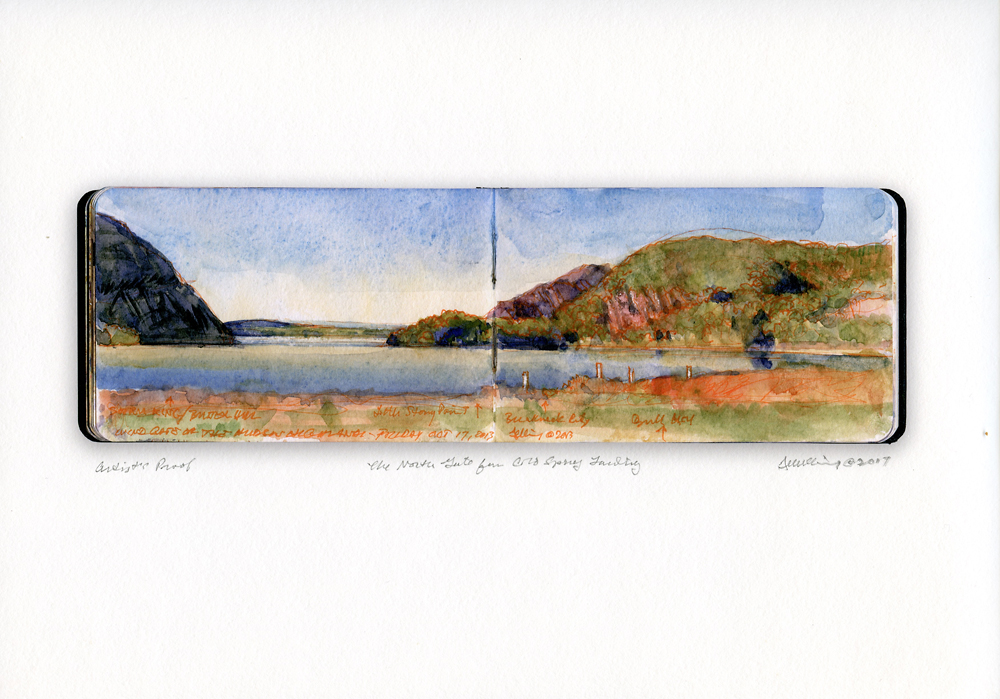
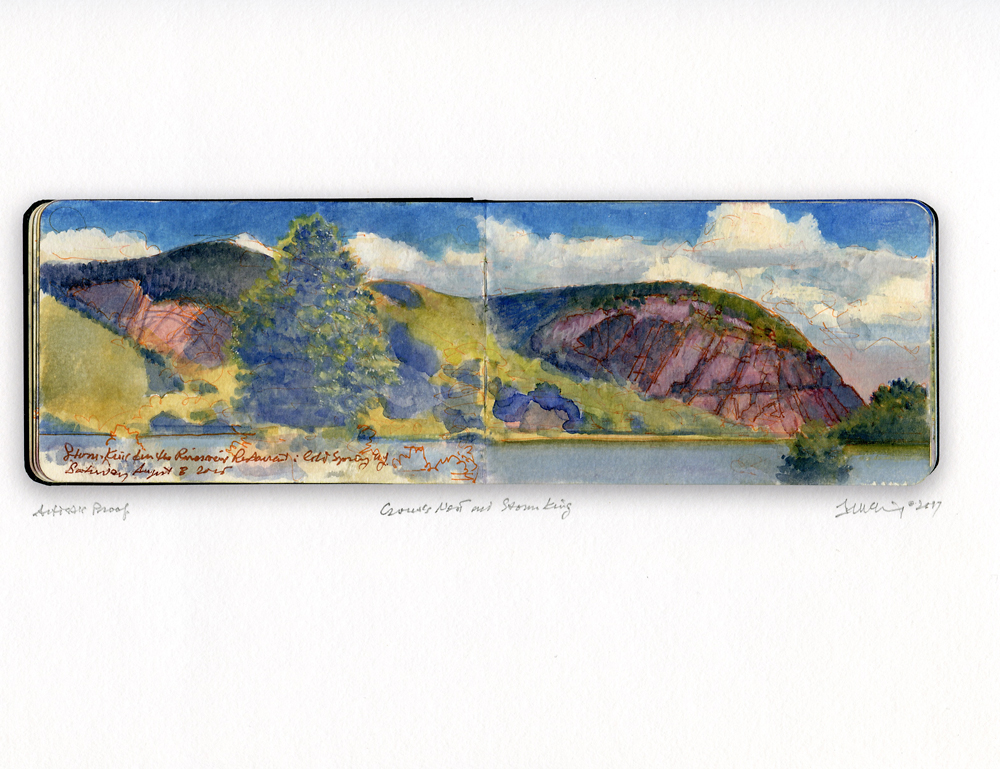
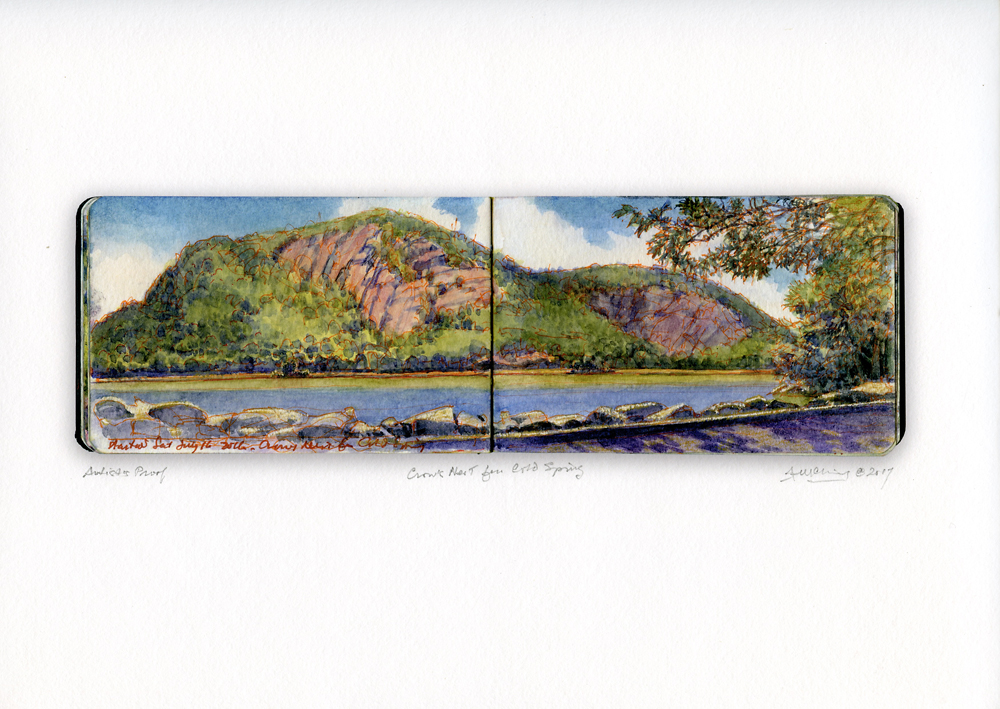
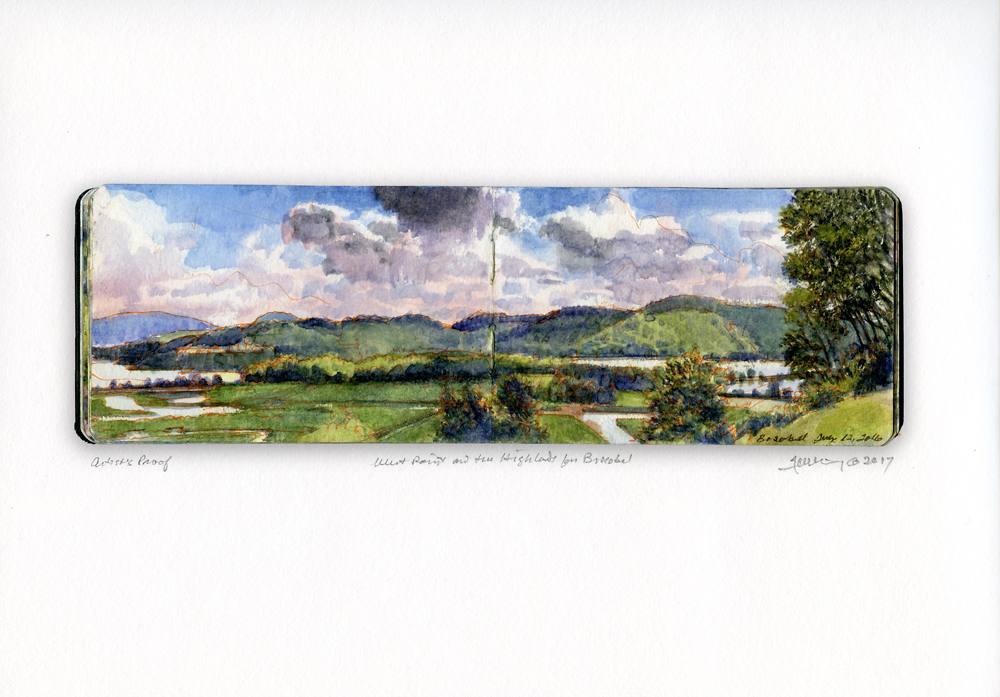
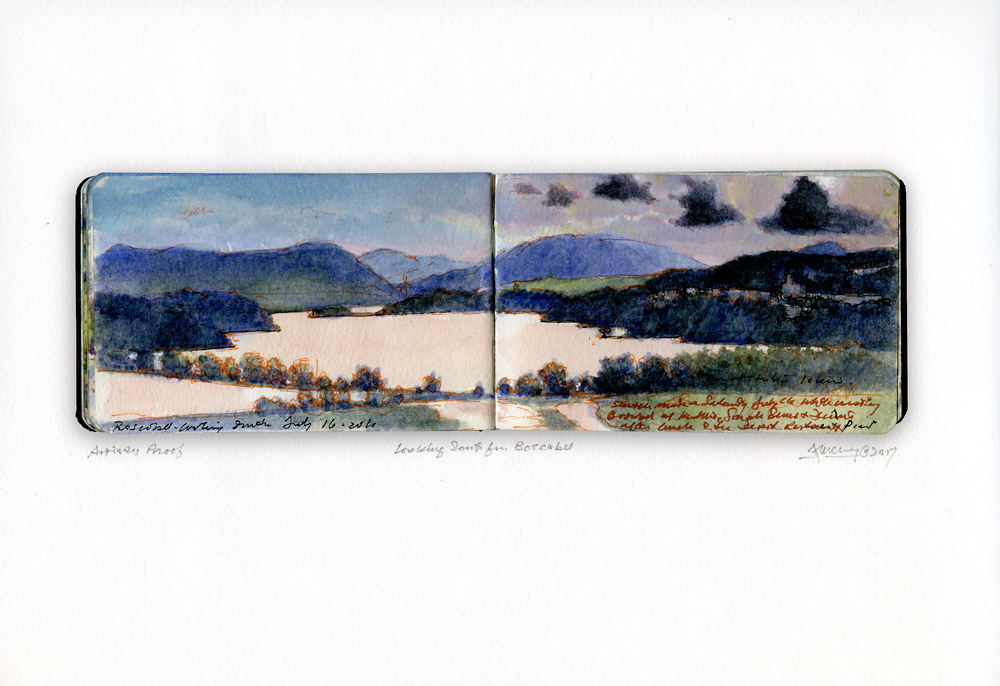
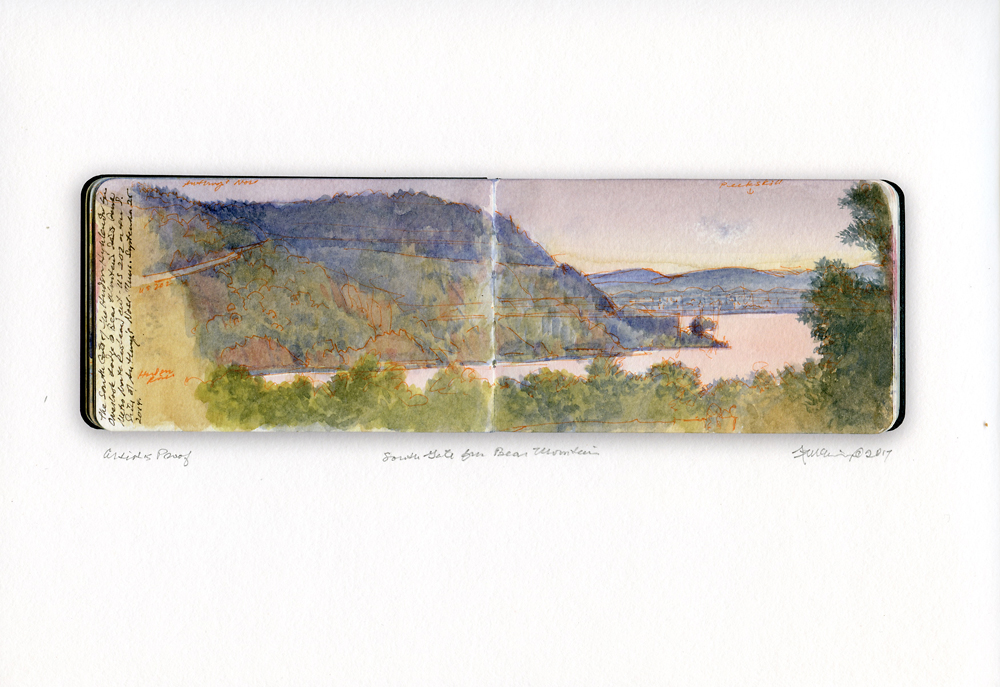
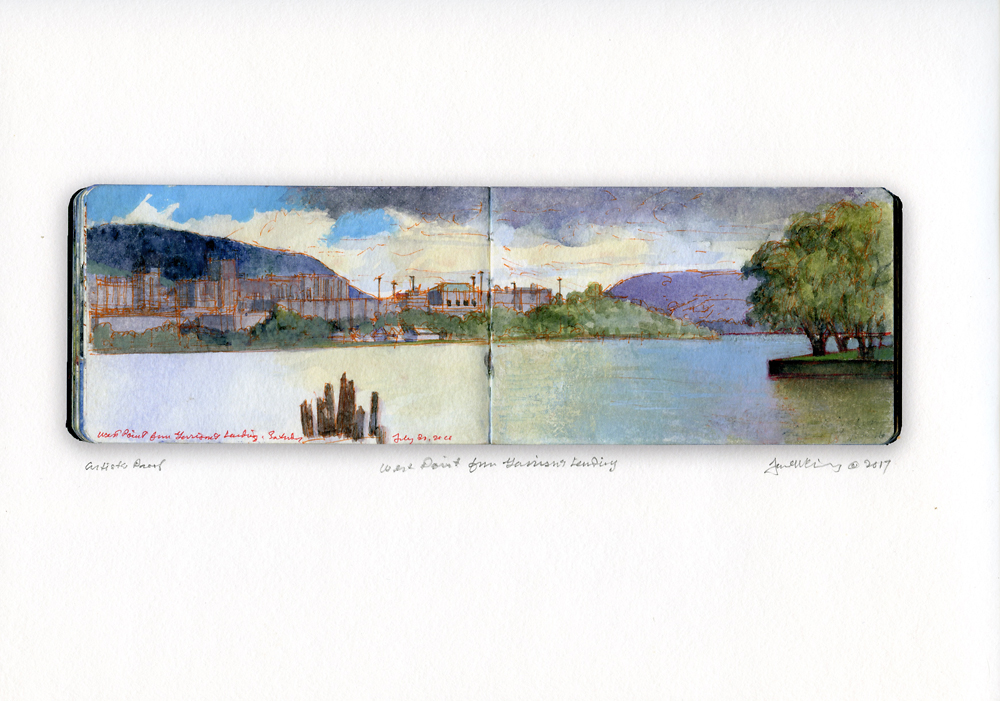
Hudson Highlands, a suite of seven archival digital prints of painting-journal page-spreads James Lancel McElhinney’s North River project has been published in a limited edition of fifty signed, numbered and dated archival digital prints, loose-bound in a fine cloth-covered clamshell box which also contains a title page, descriptive chapbook and colophon page. The project received support from a generous grant from the Pollock Krasner Foundation. Nearly half the edition was sold prior to publication, via subscription.
Exhibited by Bravin-Lee Programs at Untitled Miami from December 6-10, 2017, Hudson Highlands is now available for purchase. Details below.

James Lancel McElhinney is a visual artist, author, oral historian, and publisher. McElhinney attended Tyler School of Art, Skowhegan School of Painting and Sculpture and Yale, where he earned an MFA in painting. McElhinney is a recipient of a 2017 Pollock-Krasner Foundation Grant, and a visual artist fellowship from the National Endowment for the Arts in 1987. McElhinney is listed on the Master Artist Council of the Arthur Miller Foundation. From 1991 to 2003 McElhinney created a series of artworks exploring historic battlefields as flashpoints in new conflicts between historic preservation and commercial development. Since 2005, painting in book-form, has afforded McElhinney greater mobility. Identifying with expeditionary artists such as John-James Audubon, George Catlin and Seth Eastman, McElhinney regards his paintings as interventions, encountering the landschaft as a palimpsest of simultaneous narratives; terrain organized by memory and desire, human activity, conditioned by topography, climate and hydrology. McElhinney has conducted numerous oral history interviews for the Colección Patricia Phelps de Cisneros, Columbia University Center for Oral History, The Frick Center for the History of Collecting, the Smithsonian Archives of American Art, South Carolina Center for Jewish History, Vermont Studio Center and VoCA: Voices in Contemporary Art. He is the author of numerous articles, essays and books including Classical Life Drawing Studio (2010) and The Visual Language of Drawing (2012), both with Sterling Publishing and Art Students League of New York on Painting, Ten Speed Press, Crown Publishing 2015.

A limited number of copies are available
Retail price (Through March 15) : $1,500.00
(New York State resident add 8% sales tax)
To pay by check: Needlewatcher Editions.PO Box 142, West Haverstraw, New York. 10993
To pay by PayPal, send payment to

ed******@ne***********.com


. Click on the link below:

Inquiries by art-dealers and booksellers, please write to

ed******@ne***********.com


Look inside the descriptive chapbook:

Download (PDF, 5.47MB)

RETHINKING SETH EASTMAN at the U.S. Capitol Historical Society

On Wednesday, January 17, 2018 I will be delivering a talk on soldier-artist Seth Eastman in The press release is attached below. The US Capitol Historical Society has informed me that C-Span may be recording the event. Please forward this to anyone whom you think might wish to attend. Should you be able to attend, I will be delighted to see you there.


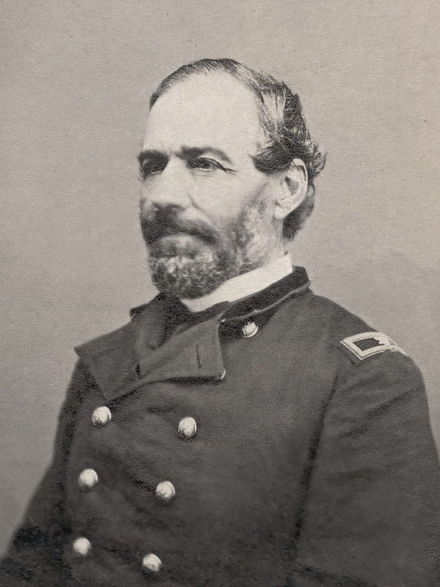
Seth Eastman. 1866

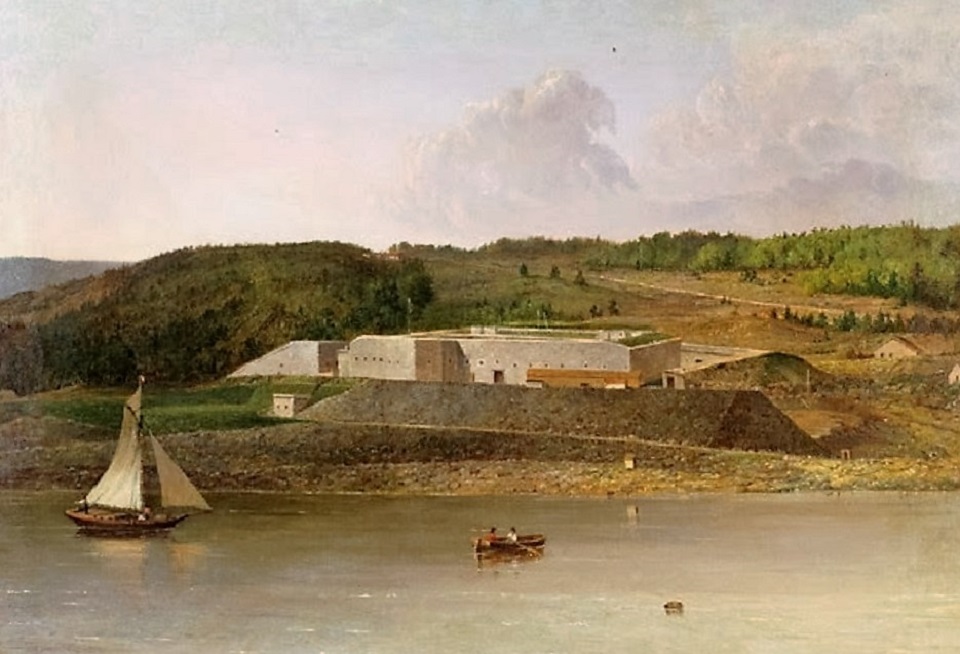
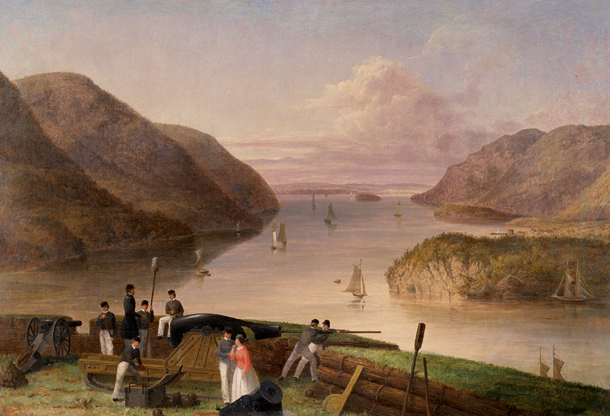
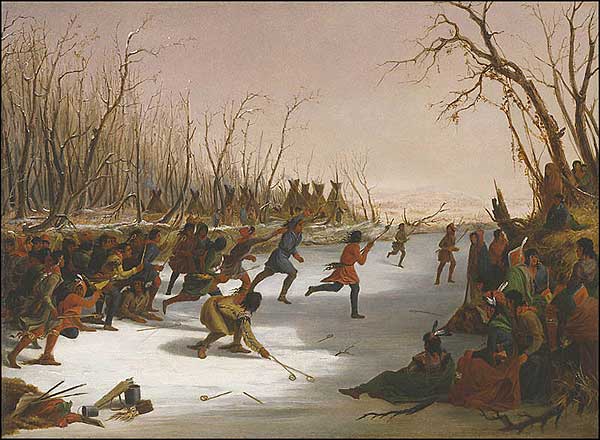
Seth Eastman (b. Brunswick, Maine 1808, d. Washington DC, 1875) was a soldier-artist who taught drawing at West Point, as the assistant to three drawing-masters; Thomas Gimbrede, Charles Robert Leslie and Robert Walter Weir. Eastman was elected an associate member of the National Academy of Design, gaining renown as the “Pictorial Historian of the Indian” during the 1850s, for his collaboration with Henry Rowe Schoolcraft on a monumental archaeological and ethnographic study of indigenous peoples. At the end of his life he produced seventeen canvases representing the Principal Fortifications of the United States, for the House of Representatives. Today owned jointly by the House and Senate art-collections, the paintings hang in a restricted-access office corridor at the U.S. Capitol building. Much scholarship has been devoted to Eastman’s work dealing with Native Americans, but not his final works. I became interested in Eastman during the 1990s, when my paintings were focused on endangered Civil War battlefields, as metaphors for how American landscapes are created through a process of conflict and compromise.


Fort Knox. Prospect, Maine. 1870-1875


Looking North from Knox’s Battery, West Point. 1870-1875


Ballplay of the Dakotas. Amon Carter Museum. Fort Worth, Texas

https://uschs.org/lectures/january-brown-bag-lecture/

Download (PDF, 211KB)

HUDSON HIGHLANDS: Volume One. North River Suite now available

Hudson Highlands, a suite of seven archival digital prints of painting-journal page-spreads James Lancel McElhinney’s North River project has been published in a limited edition of fifty signed, numbered and dated archival digital prints, loose-bound in a fine cloth-covered clamshell box which also contains a title page, descriptive chapbook and colophon page. Nearly half the edition was sold prior to publication, via subscription.
Exhibited by Bravin-Lee Programs at Untitled Miami from December 6-10, 2017, Hudson Highlands is now available for purchase. Details below.

James Lancel McElhinney is a visual artist, author, oral historian, and publisher. McElhinney attended Tyler School of Art, Skowhegan School of Painting and Sculpture and Yale, where he earned an MFA in painting. McElhinney is a recipient of a 2017 Pollock-Krasner Foundation Grant, and a visual artist fellowship from the National Endowment for the Arts in 1987. McElhinney is listed on the Master Artist Council of the Arthur Miller Foundation. From 1991 to 2003 McElhinney created a series of artworks exploring historic battlefields as flashpoints in new conflicts between historic preservation and commercial development. Since 2005, painting in book-form, has afforded McElhinney greater mobility. Identifying with expeditionary artists such as John-James Audubon, George Catlin and Seth Eastman, McElhinney regards his paintings as interventions, encountering the landschaft as a palimpsest of simultaneous narratives; terrain organized by memory and desire, human activity, conditioned by topography, climate and hydrology. McElhinney has conducted numerous oral history interviews for the Colección Patricia Phelps de Cisneros, Columbia University Center for Oral History, The Frick Center for the History of Collecting, the Smithsonian Archives of American Art, South Carolina Center for Jewish History, Vermont Studio Center and VoCA: Voices in Contemporary Art. He is the author of numerous articles, essays and books including Classical Life Drawing Studio (2010) and The Visual Language of Drawing (2012), both with Sterling Publishing and Art Students League of New York on Painting, Ten Speed Press, Crown Publishing 2015.

Retail price: $1,500.00
(New York State resident add 8% sales tax)
To pay by check: Needlewatcher Editions.PO Box 142, West Haverstraw, New York. 10993
To pay by PayPal, send payment to

ed******@ne***********.com


. Click on the link below:


Look inside the descriptive chapbook:

Download (PDF, 5.47MB)

McElhinney Hawai’i Painting Journal, June 29-July 13, 2015, on View at UNTITLED MIAMI


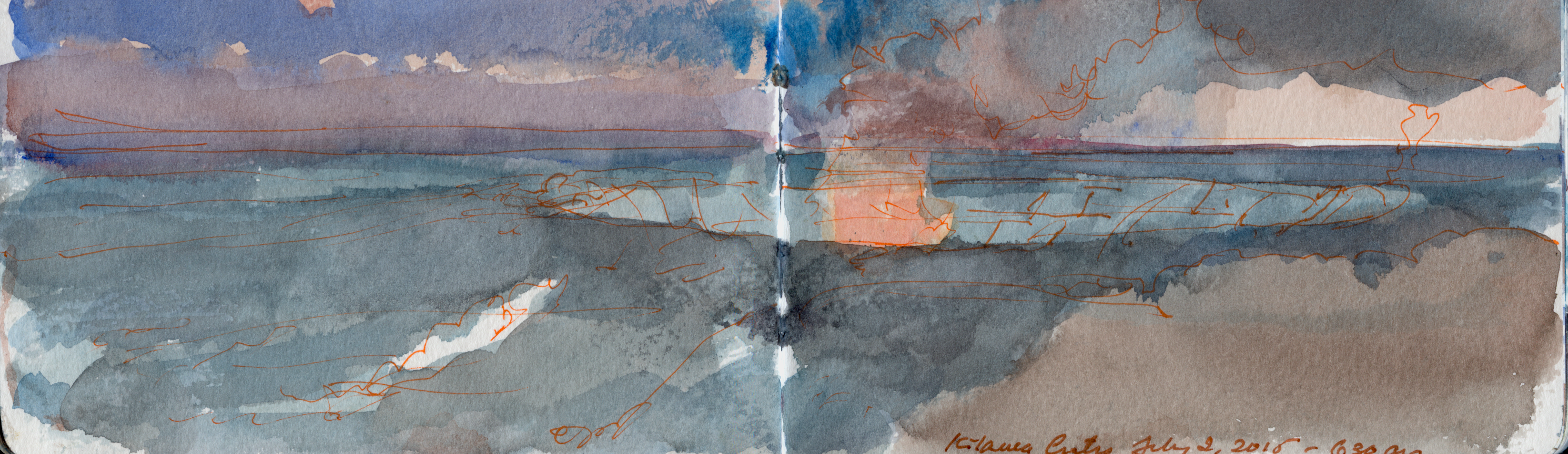
Dawn, July 2, 2015, from the summit of Kilauea.

I am honored that Bravin-Lee Programs will be exhibiting HUDSON HIGHLANDS at UNTITLED Miami. The fair opens tonight.
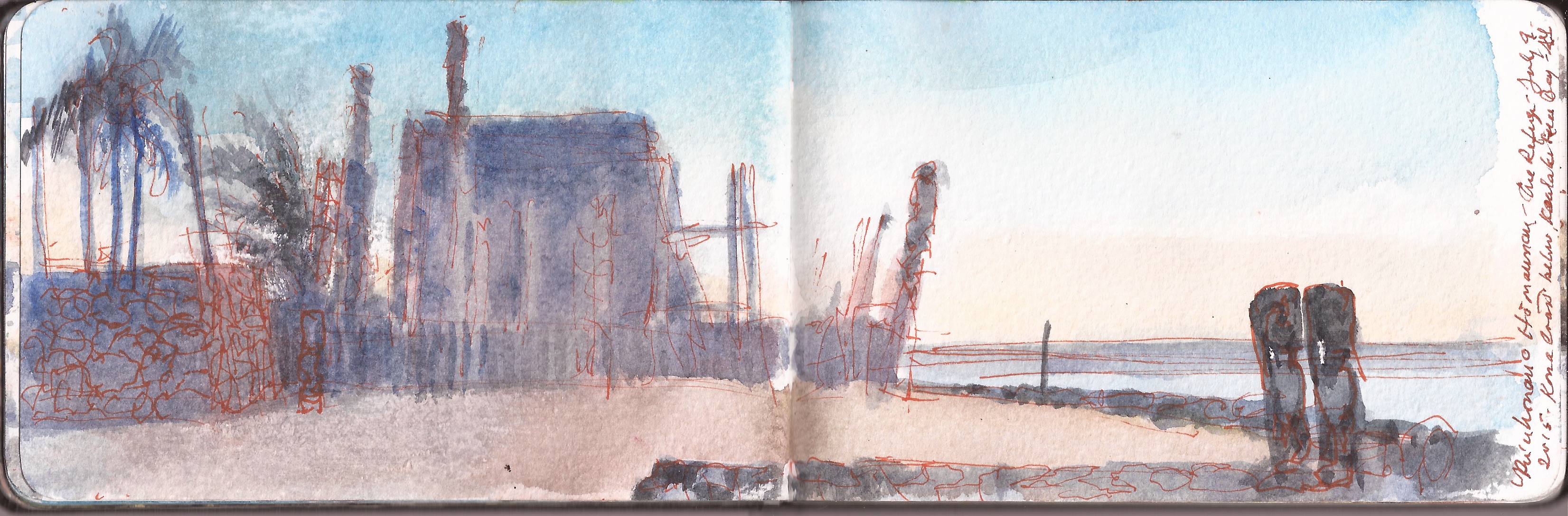
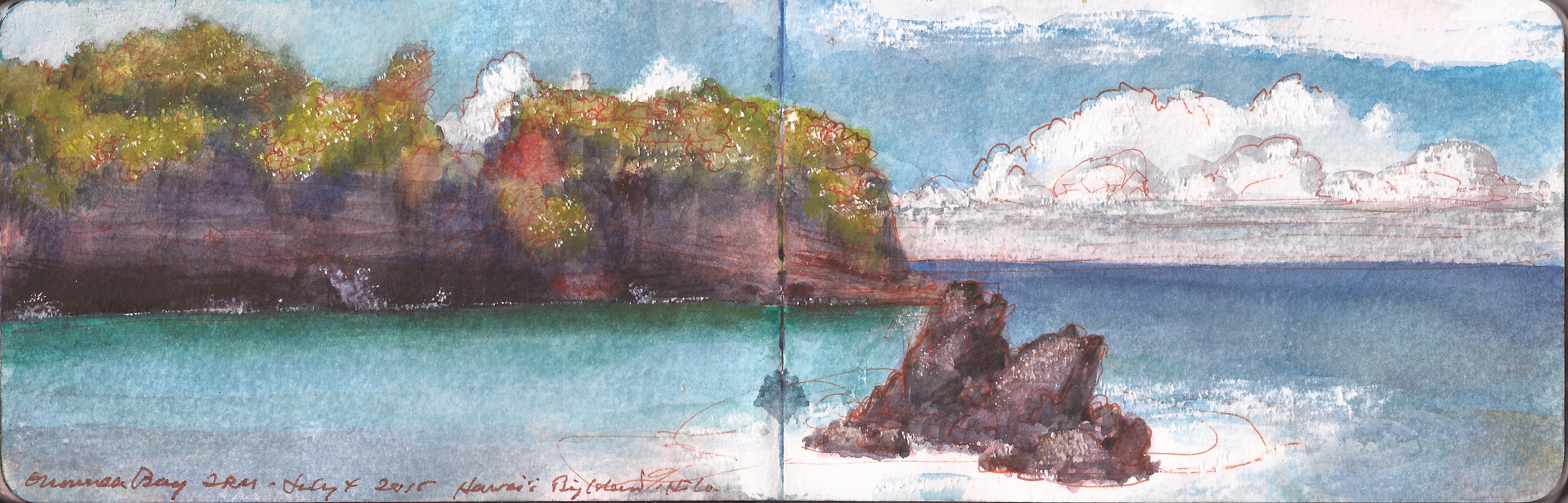
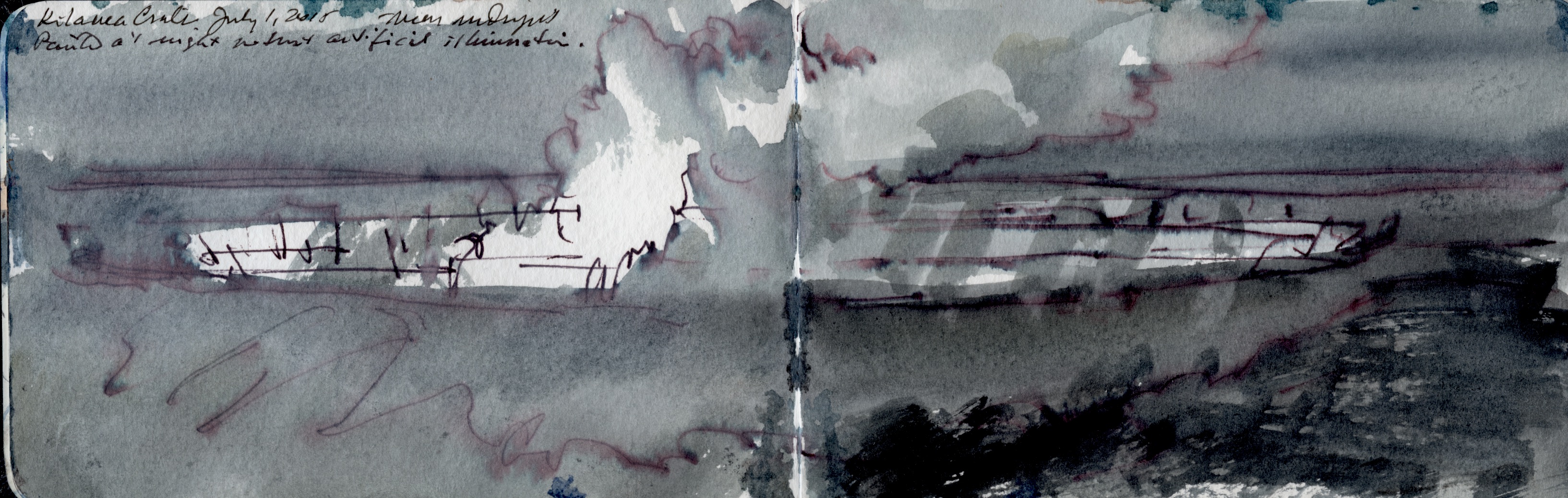
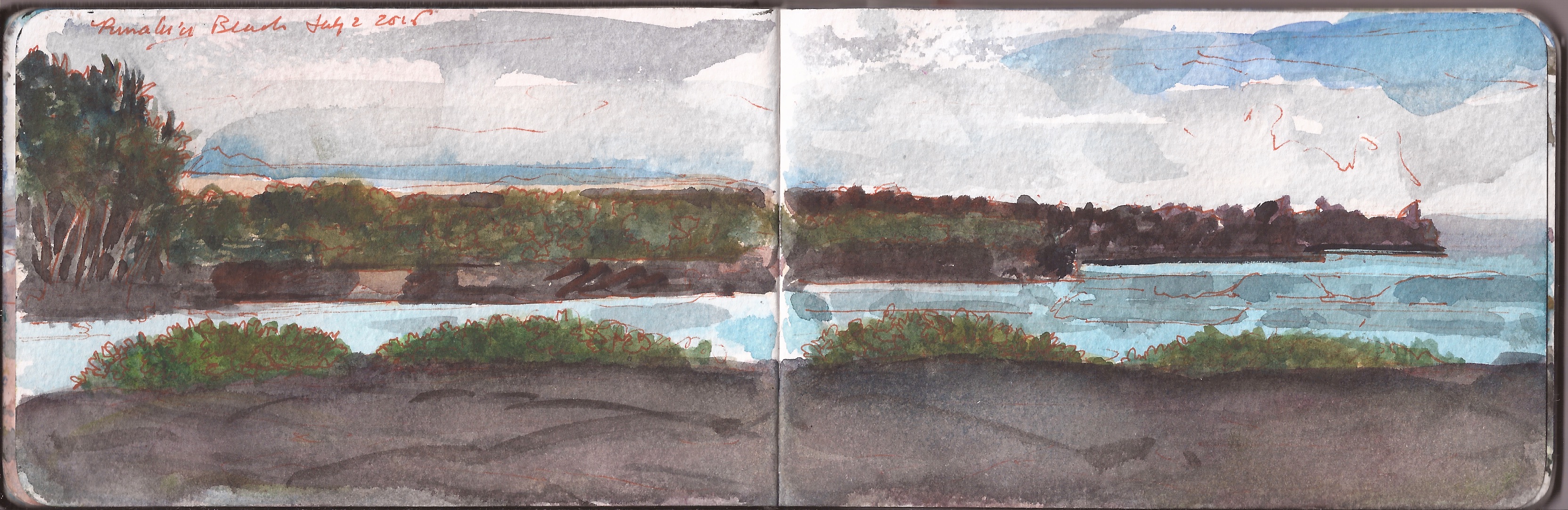
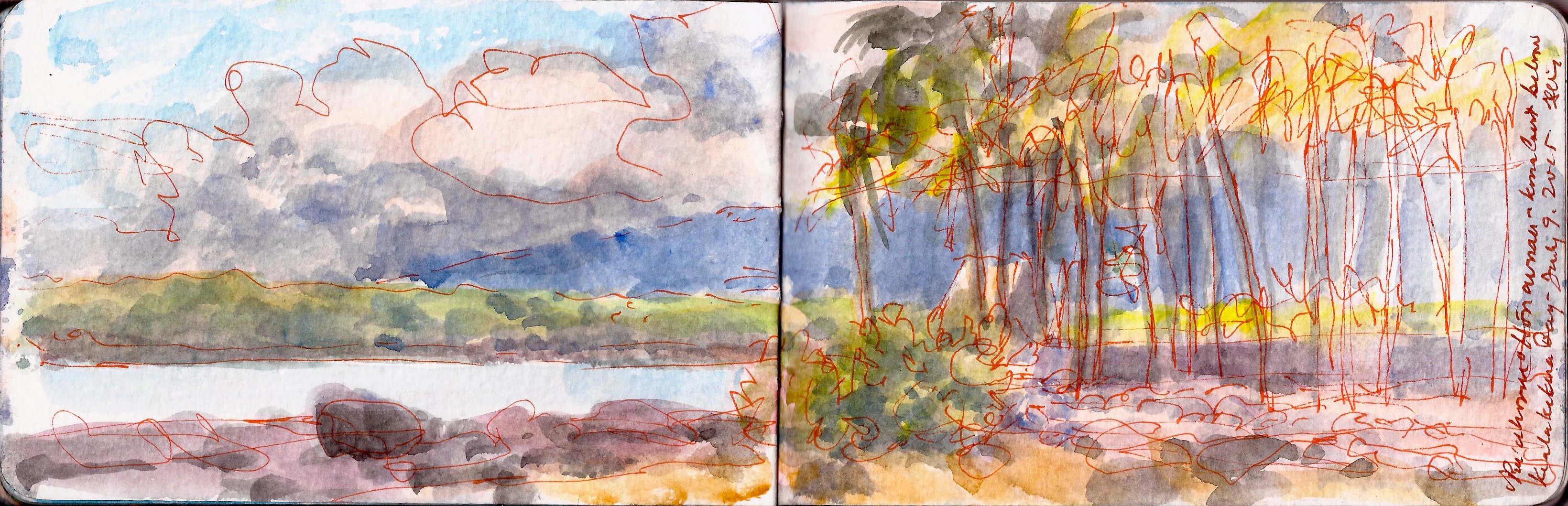
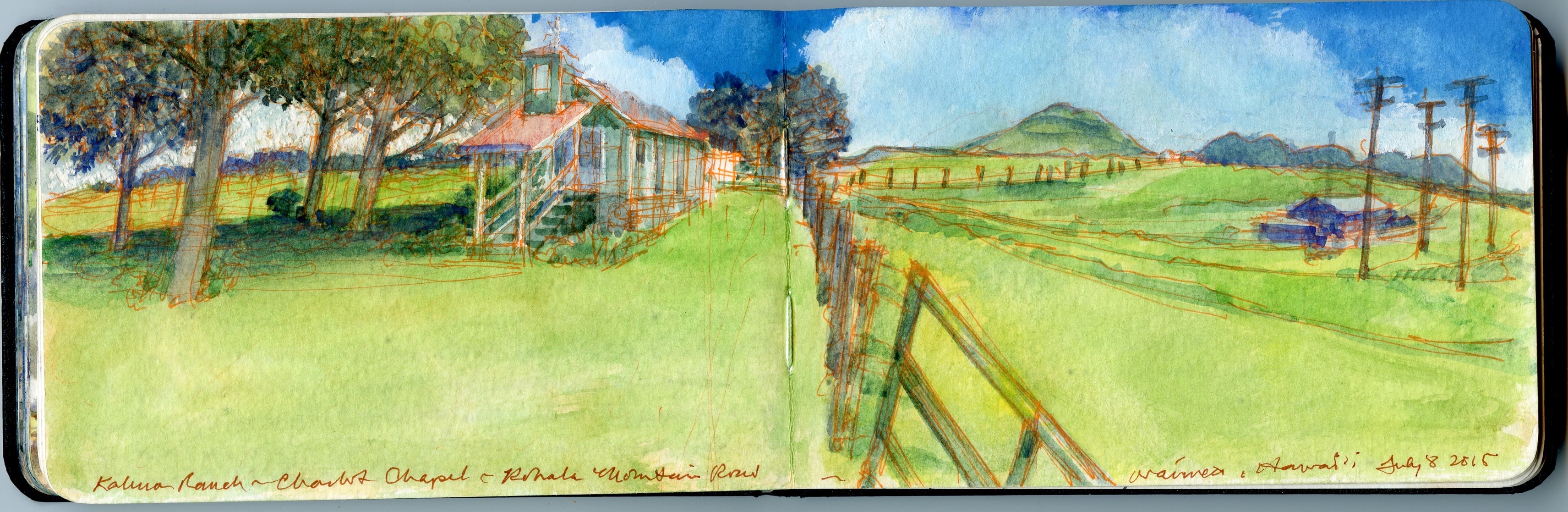
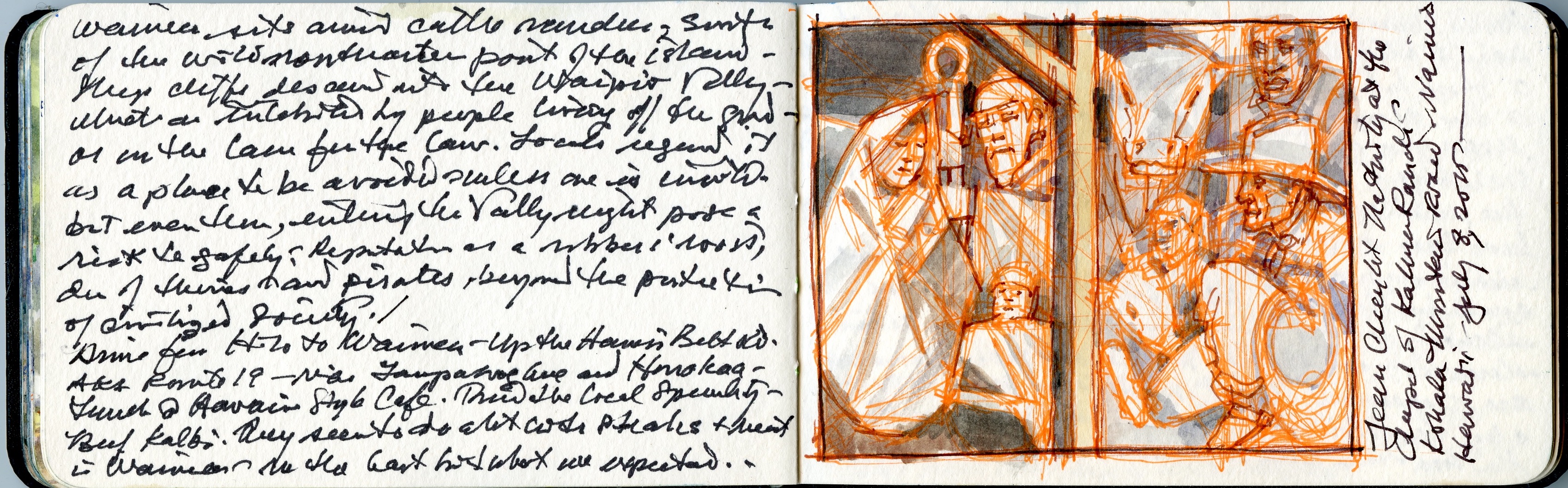
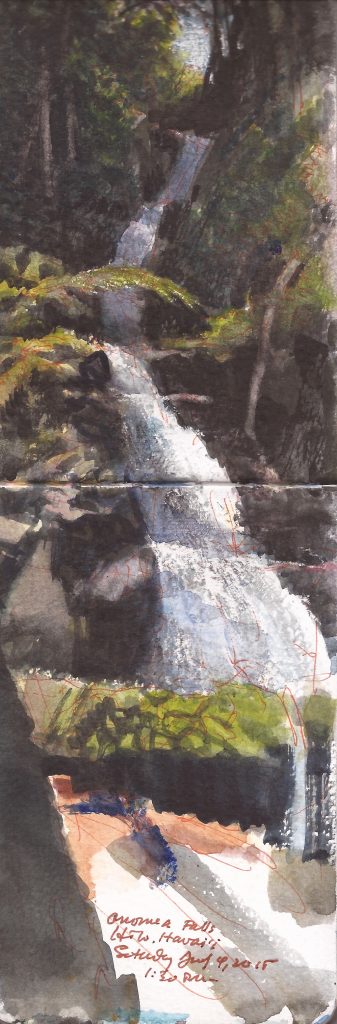
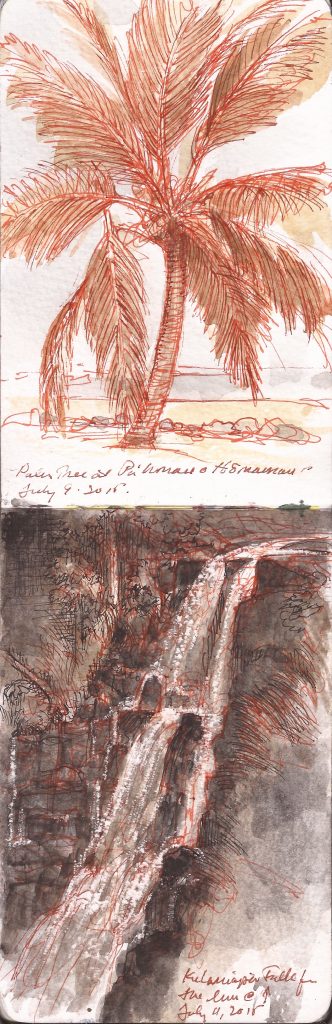
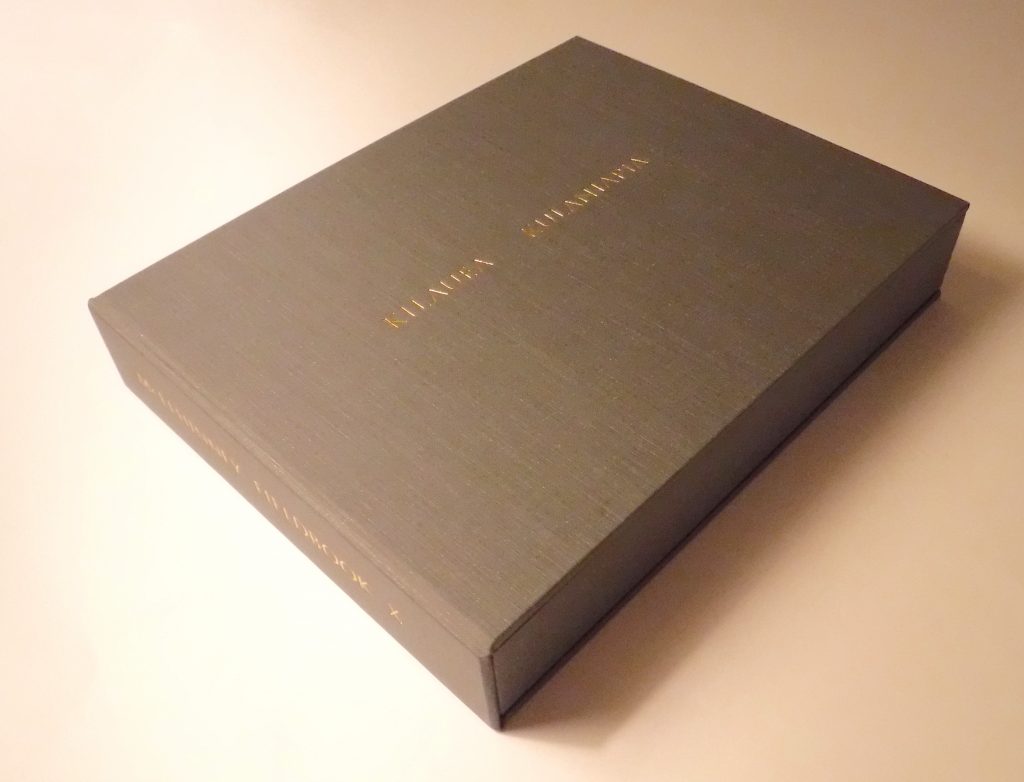
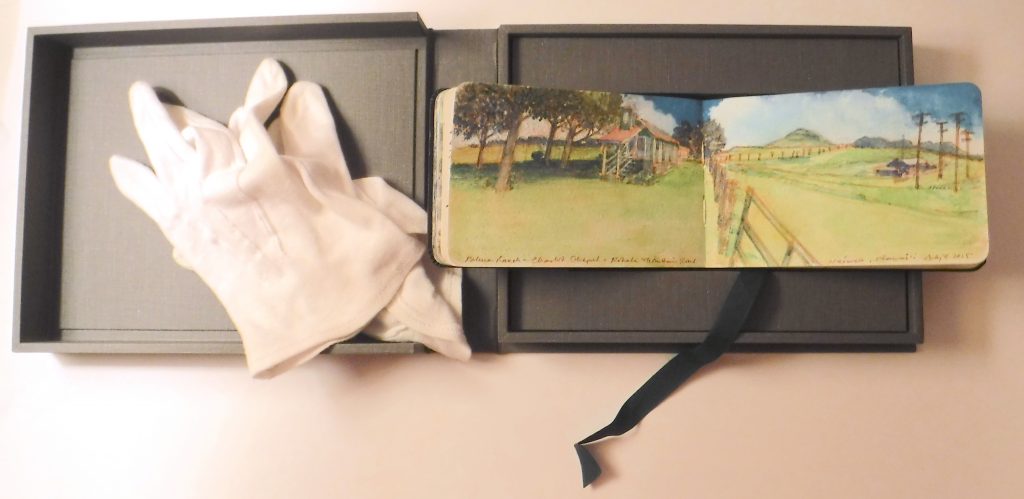
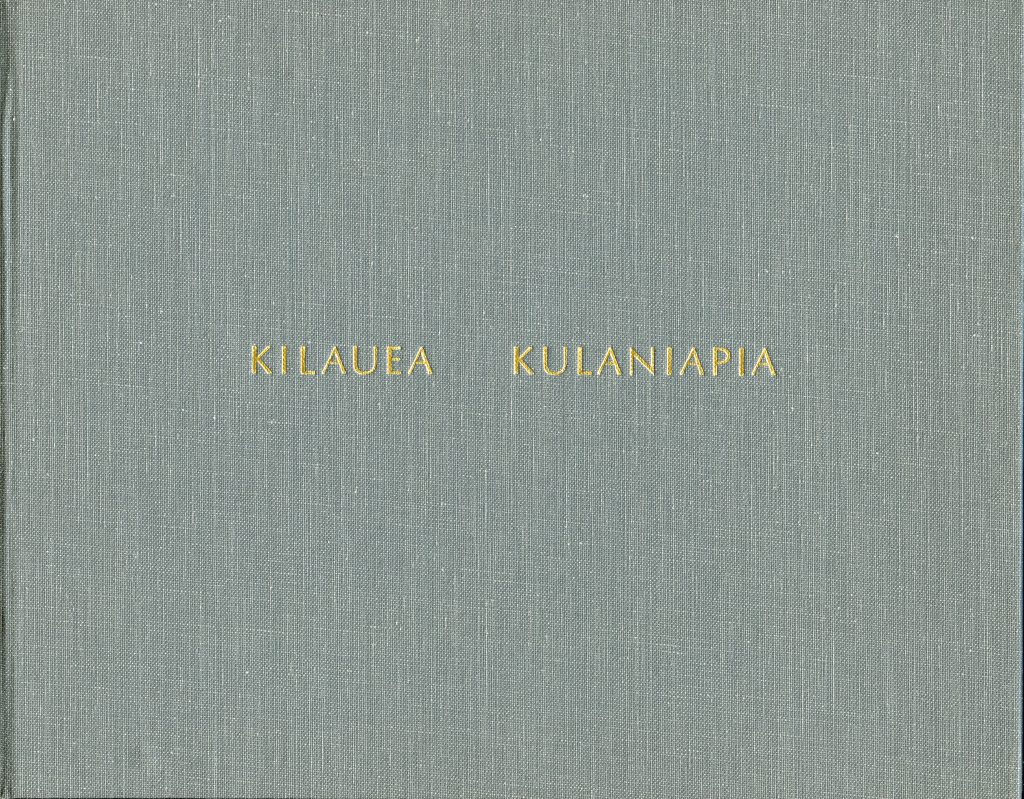
Also on view will BE KILAUEA KULANIAPIA, my Hawaiian painting journal from June 29 to July 13, 2015. The book contains journal entries, 17 color page-spread paintings, one map and two monochrome paintings, presented in a buckram-covered foil-stamped handmade Solander (clamshell) box produced by Cat at The Wyvern Bindery in London.
Other artists featured in the virtine at Bravin Lee Prorgams include Robert Birmelin, Brian Butler, Douglas Florian, Dianna Frid, Judith Henry, Elektra KB, Jonathan Lasker, Marilyn Minter Jason Polan, Charles Ritchie, Martin Wilner, and Amy Wilson

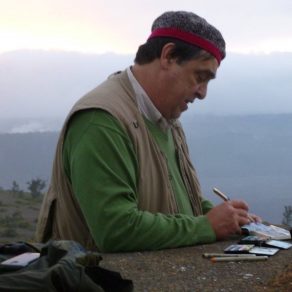
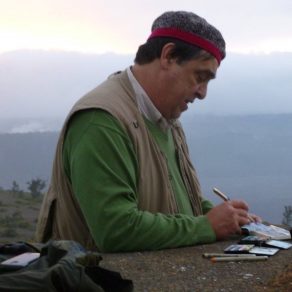
(Above) Painting the crater at Kilauea at dawn, July 2, 2015, using the summit marker as a worktable


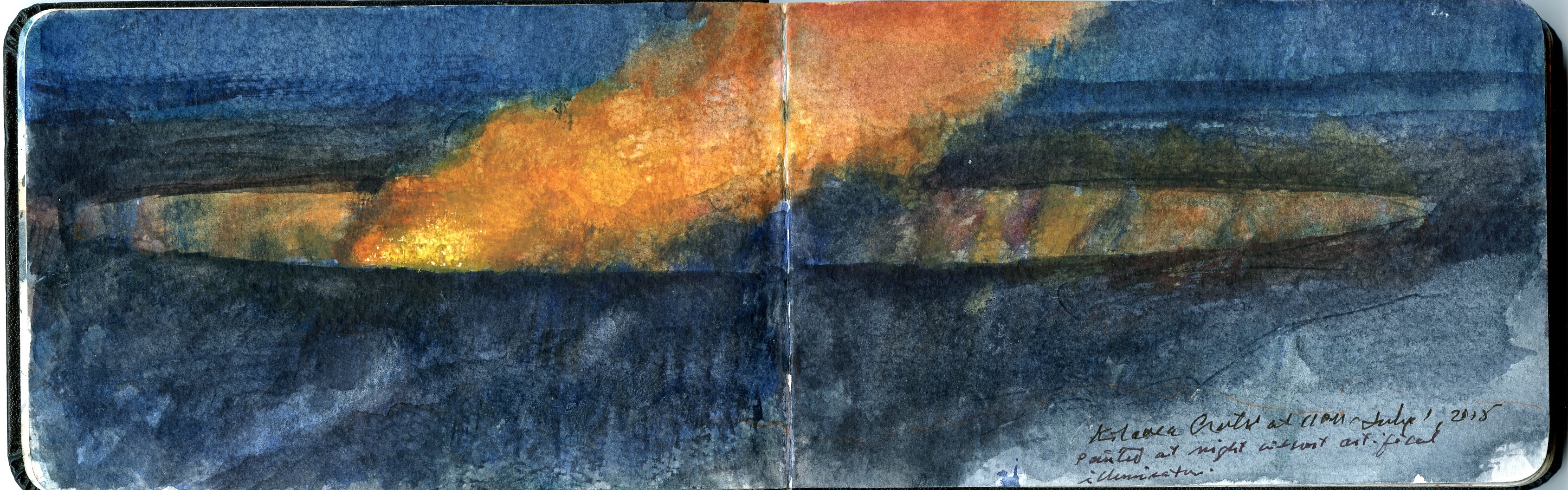
Kilauea. 11:00 pm. July 1, 2015


Pu’uhonua O Honaunau. July 9, 2015


Twin Rocks, Omea Bay. July 4, 2015


Kilauea. July 2, 2015


Punalu’u. July 2, 2015


Pu’uhonua O Honaunau. July 9, 2015


Kahua Ranch Chapel. July 8, 2015


Fresxco by Jean Charlot, Kahua Ranch Chapel. July 8, 2015


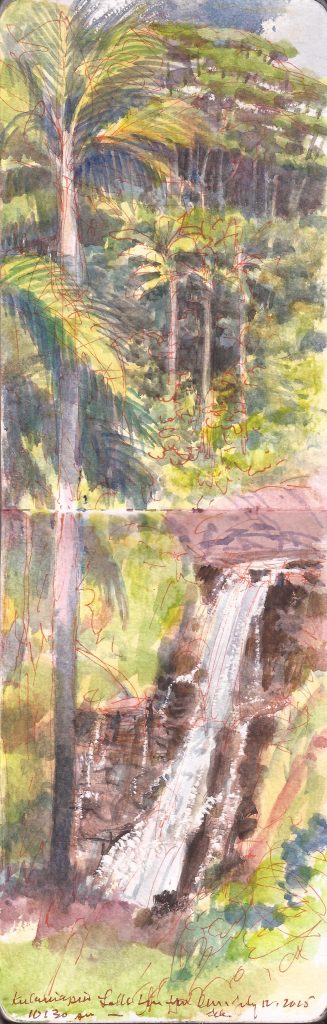
Kulaniapia Falls


Omea Falls. Saturday July 4, 2015


Palm at Hunanunau; Kulaniapia Falls


Sorry engaging the zoom feature is beyond my present skill-set.
Please visit Bravin-Lee Programs at Untitled Miami, tonight though Sunday December 10

“HUDSON HIGHLANDS” on View at Bravin Lee Programs, UNTITLED Miami. December 6-10, 2017

HUDSON HIGHLANDS, a suite of seven archival digital prints of James Lancel McElhinney journal paintings, in a limited edition of fifty copies, set in a blind-stamped cloth covered clamshell box with title page, colophon and chapbook, was published on November 17, 2017.
Prior to this date, nearly half of the edition had been either purchased by subscription, or spoken for. Since then more have sold, and one has been acquired by the collection of the West Point Museum.
The HUDSON HIGHLANDS suite, together with McElhinney’s 2015 Fieldbook number 10: KILAUEA KULANIAPIA will be on view at Bravin Lee Programs at UNTITLED art fair in Miami Beach, from December 6-19, 2017.

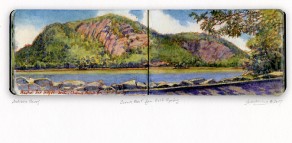
Here is a preview of the print suite. A PDF of the chapbook follows these images


Download (PDF, 5.47MB)

UPDATE: HUDSON HIGHLANDS. NORTH RIVER SUITE, Volume One: Finishing touches

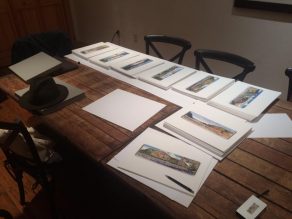
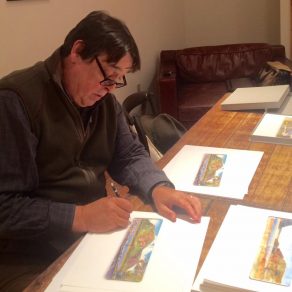
Last Friday, October 27, I visited the Brilliant Graphics production facility in Exton, Pennsylvania, to sign, date and number 350 prints for the limited edition of Hudson Highlands: North River Suite Volume One. The debossed clamshell boxes just arrived from the bookbinder, who did a fabulous job.

The suite has been assigned an ISBN number, a Library of Congress Control Number and has been registered with the U.S. Copyright Office.
The final version of the companion chapbook was submitted to the printer on November 2nd. We have set the official publication date of the limited edition as November 24.
It has been a long haul, with an unforeseen number of details needing to be addressed. The good news is now that the first iteration is nearly ready to launch, we now have a template for future editions.

October 27 was be the last day for subscribers to the listed on the acknowledgements page of the chapbook. The limited edition remains on sale at the discounted price of $1,000.00 USD, through November 24, 2017.

Orders received by mail must be postmarked no later than November 24, 2017.
PayPal orders must be received by 11:59 PM on the same day.
(New York State resident add 8% sales tax)

Retail price after 11/24/17 will be $1,500.00

Click on the link below for more details:

HHS_Brochure_October 4

To pay by check: PO Box 142, West Haverstraw, New York. 10993

To pay by PayPal, send payment to

ed******@ne***********.com


. Click on the link below:


LAST CHANCE. HUDSON HIGHLANDS SUITE: Special Subscriber Discount extended to October 27

Everything is coming together. This coming Friday I will be signing prints. The clamshell boxes just arrived from the bookbinder, who did a fabulous job. One-third of the edition has already been sold. On Friday we also finalize the content of the companion chapbook.

October 27 will be the last day to purchase at the discounted price of $1,000.00 USD, and to be listed on the acknowledgements page as a subscriber.

Post-publication retail price will $1,500.00

(New York State resident add 8% sales tax)

Click on the link below for more details:

HHS_Brochure_October 4

To pay by check: PO Box 142, West Haverstraw, New York. 10993

To pay by PayPal, send payment to

ed******@ne***********.com


. Click on the link below:


A FLY ON THE WALL: RE-ENVISIONING ART AND ENTERPRISE. Lecture and Discussion

Professional Development for Artists Seminars

Where:
Greenwich Art Society
299 Greenwich Ave, 3rd floor
Greenwich, CT 06830

When:
Thursday, October 5
from 5:00-7:00pm
G.A.S. Gallery, 2nd floor.

What can we make of today’s rapidly evolving art-world? Urban centers have been replaced by global networks. Galleries are in decline. Art Fairs and Auction houses dominate the scene. Creative investment and online resources have redefined the market. Government support has all but disappeared. Private museums are on the rise. Sea-changes in patterns of patronage and young collectors motivated by new priorities raise many questions. Has the MFA culture kept pace with these changes? How relevant is higher education? Is it still a haven for creative practice? How will an artist survive? Where can they find success? What will be their legacy?
For more than ten years, author, artist and educator James Lancel McElhinney has conducted nearly one hundred interviews with some of America’s top artists, collectors, dealers, critics and art-historians. In these conversations, McElhinney found simple answers to difficult questions, and reasons why artists should welcome the end of an era, and the dawn of a new age. This talk will update the road-map and chart new pathways for art as enterprise.

To attend, call the Greenwich Art Society at 203-629-1533
(Members $25 / Non-members $45)

The Genesis of the HUDSON HIGHLANDS Suite

Images (left to right: In the Hudson Highlands, Atop Mount Greylock, Dawn: Kilauea Summit)

For the past ten years the majority of my new paintings have migrated into books. The change occurred gradually, not as any kind of plan. No theoretical epiphany preceded the shift. The idea just caught up with me. As a bibliophile fond of travel, I succumbed to my fate without protest. It was liberating. Personal mobility actually expanded my artistic practice. Whatever materials I might need could be carried in my pockets, travel-vest or shoulder-bag.

Someone asked me, “Where is your studio”
“You’re looking at it” I replied

Having completed hundreds of page-spreads, the question that arose was how to exhibit them. The traditional solution would be to lay them out in vitrines, open to single page-spreads. Another method was to transform painting-journals into animations, such as those that greet visitors to this website’s homepage. Neither mode of presentation could simulate the experience of perusing one of these books manually. Given their nature, it would be complicated logistically, exposing the objects to potential damage. If I were to exhibit these works in the conventional way, I had to be open to selling the books without cutting them up to accommodate some form of wall-display. Receiving a list of book-binders from the Center for Book Arts in New York City I found a few who could build me an octavo-sized solander (clamshell) box in which the original painted books could be housed. Following every conversation I came away with a case of sticker-shock. Many of these skilled craftspersons had a backlog of several weeks. I decided to do more research.
In August of 2016 my wife presented a paper at a symposium at Tate Britain. After visiting several paper-shops and binderies in London I brought one of these books to Wyvern Bindery on Clerkenwell Road. Stepping through the storefront door transported me to a Dickensian workshop filled with rolls of fabric, glue-pots, bustling workers and front-man Mark standing behind a wooden counter. I described my predicament. At the end of the following day he presented me with the solution, at a lower cost than would have been possible in New York. Manhattanites presume that everything on the planet is for them just a cab ride away. Not so. During the past two years, we have witnessed the extinction of the last privately-owned full-service art-supply stores in New York. Many bookstores have suffered similar fates. My impression is that London retains a culture of artisanal binderies, and a deeper commitment to books as works of art–not just delivery devices for texts and images. There are exceptions of course–the museum shops and venues like Strand, Printed Matter, McNally-Jackson, relocated Rizzoli and others. Books seem to be gaining visibility in museum exhibitions. Vitrines displaying sketchbooks and ephemera were seldom seen twenty years ago, but now are de rigeur.
One question remained unanswered. As I continue to paint in books, how might I recreate for purposes of exhibition the experience of having a book in hand, open to a painted page-spread? I brought one of these books to a number of prominent New York art-dealers, who generously shared their suggestions.
With a wink, Dick Solomon wondered aloud what kind of lunatic would ever think that painting in books had any commercial value. The question he said, was “how to get the genie out of the bottle.” He suggested that I consider turning them into prints. A month later I found myself in Berlin, spending the better part of a day in the back room at Walther Koenig Buchhandlung, at 27 Burgstrasse, next to the Museum Island. While most of the books were by contemporary artists, historical precedents became obvious. Not only did I envision a dialogue with Claude Lorrain and Piranesi, but also with Hogarth and Turner. Producing a suite of prints would create a dialogue between my work, and William Guy Wall’s Twenty-four Hudson River Portfolio. Combined with Benson J. Lossing’s The Hudson from the Wilderness to the Sea my project could look to precedents in the history of American art and with expeditionary artists who described places that tourists would later visit. Thus were pictures of the land inscribed upon our collective identity.

Several challenges arose. The first was finding a printer who could transform my page-spread diptychs into archival digital prints. My visit to Walther Koenig had reinforced an esthetic decision to “break” the books into single sheets, while leaving the book itself intact. This returned me to the idea of setting the prints into some kind of portfolio, or loose binding. During a visit to Amsterdam I had taken in the Hercules Seghers exhibit, which later came to the Metropolitan Museum of Art. The bookstore at the Rijksmuseum had commissioned a suite of reproductions of seven Seghers etchings, housed in a rigid portfolio with side-ties. The companion booklet (chapbook) was the same size as the prints. I found it unwieldy, but the idea of seven prints resonated with me. Dick Solomon has recommended six, but I liked the idea of a baker’s half-dozen.
While I was at Yale in the mid-1970s, I had acquired a suite of reproductions of Henri de Toulouse-Lautrec’s circus drawings, with text by William Seitz, published by Harry Abrams in 1967. Like the Seghers, the prints were held in place by a series of paper flaps, inside two boards hinged at the spine. The Lautrec suite did not have the vexation of grosgrain ties. Too me it did not feel enough like a book. And so I settled on the idea of a cloth-covered Solander (clamshell) box, like the one that had been built for me at Wyvern Bindery in Clerkenwell. Likewise I settled on a chapbook that would be closer to the size of a 19th-century chapbook; octavo, landscape.
The prints were developed with help from the production team at Brilliant Graphics in Exton, Pennsylvania, to recreate the feeling of a whole book, open to a single page-spread. Some aspects of each painting is easier to read in this secondary iteration, than in its original book-form. For this reason, it was important that the prints not be seen as reproductions, but as enhancements of the originals.
I had settled on Brilliant on the recommendation of friends, and positive experiences I had in my interactions with them. The fine work they do for galleries and museums in producing books and catalogues tipped the balance for me, and we went to work.
One hurdle remained, which was how I would be able to pay the printer.
My first solution was to work through a fiscal sponsorship with an organization I shall refrain from naming. After shepherding my proposal through all the proper channels, others who had not been privy to the conversation about this project created a misunderstanding that proved mortal to this particular partnership. Following weeks of conversations back and forth between accountants and others, failing to make any progress, I walked away and shifted direction.
Follow a subscription model, sufficient funds were raised to pay the printer. In mid-August a sudden windfall in the form of a Pollock-Krasner Foundation artist-grant gave me the flexibility needed to move forward. Without it I might have been forced to cut corners, or to sacrifice key elements of the publication. News of the grant stunned me. It also motivated me to work harder, to be worthy of such recognition.
This week (September 5) I placed the order for the boxes and committed to a production schedule. The Hudson Highlands suite will be published officially on November 1, 2107. There will be launch events and other festivities, to be announced very soon. All will be posted both here, and on social media.

Below is a preview of the limited edition, with two PDFs; a prospectus, and a sample copy of the chapbook. Comments are welcome. Please share this link with others who might like to know about Hudson Highlands.
 

JLM_Ballyheerin_from_Leatbeg_17-5x25-5_chalk_on_paper_2011_sm

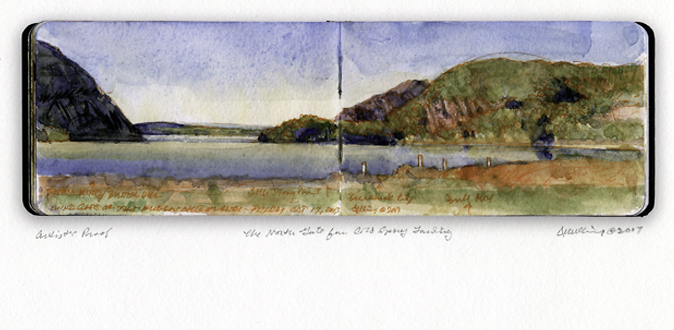
North Gate

JLM_Bastion_Belvedere_Thoroughfare_17-5x25-5_chalk_on_paper_2011_sm

Storm King

HHS_Crows-Nest647_sm

Crows Nest

HHS_Western-Highlands653_sm

Western Highlands

HHS_Boscobel648_sm

Boscobel

HHS_South-Gate651_sm

South Gate


HHS_West-Point654_sm

West Point

Look inside the chapbook:
Download (PDF, 414KB)

For more information on the Hudson Highlands Suite, please see the PDF below:

Download (PDF, 353KB)

To order: