All posts by James L. Mcelhinney

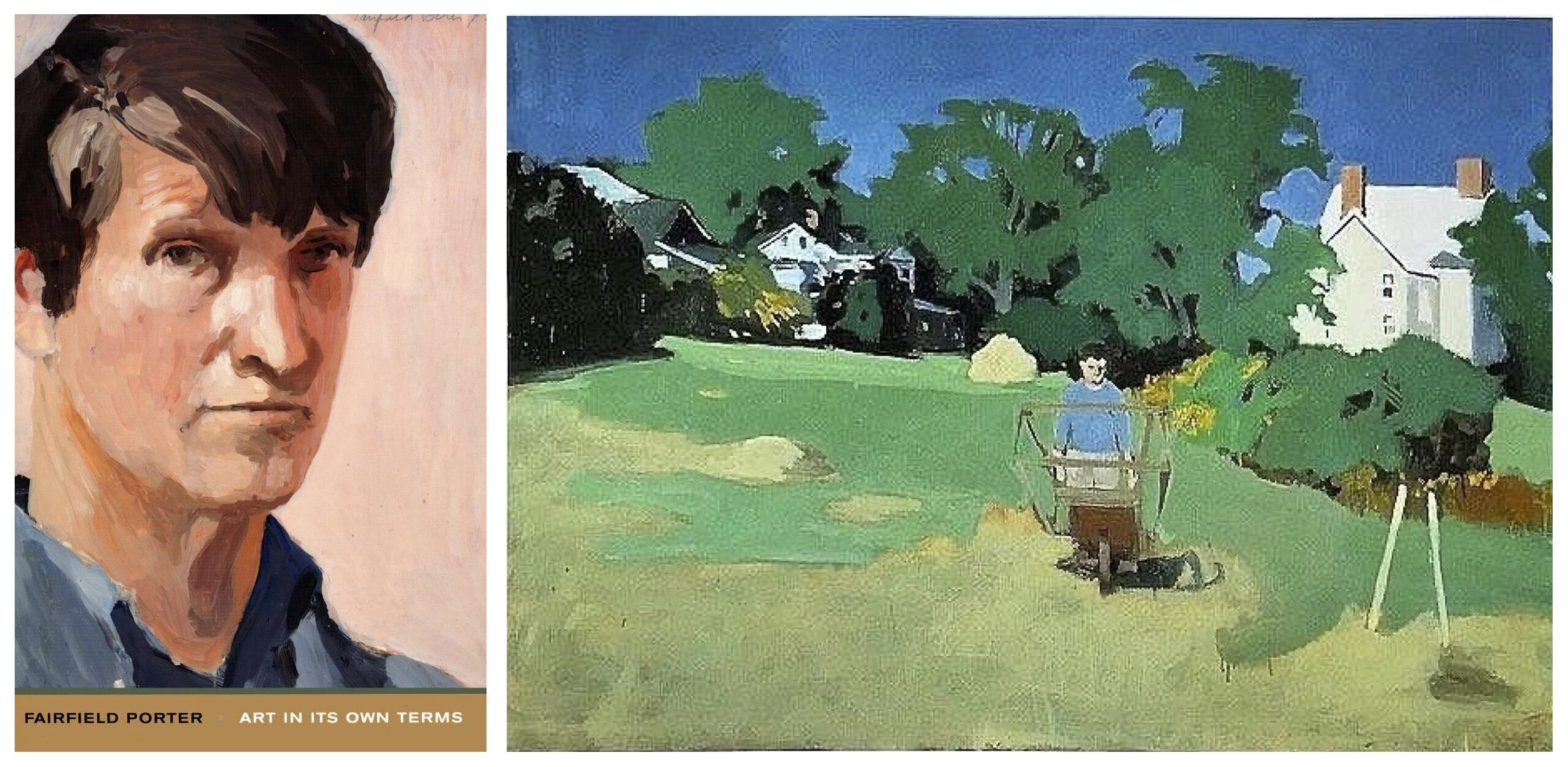
FAIRFIELD PORTER: ART IN ITS OWN TERMS

I spent a day with Fairfield Porter when he visited Yale in the fall of 1974. My assignment was to meet him at the train station and deliver him to the School of Art, where apart from lunch at The Old Heidelberg on Chapel Street, his day was filled with critiques and an evening lecture.
My 22-year-old self had not sufficiently developed to pose the best questions, but I was struck my his gentlemanly demeanor that stood in contrast to the truculent swagger adopted by many painters at that time. Porter’s passing in 1975 was unexpected. A collection of his essays, articles, and lectures was assembled and edited by Rackstraw Downes. His lucid prose conveys a blend of erudition and delight in making and looking at art, in a voice from a time when the art world had not forgotten the true value of art.

DOWNLOAD a FREE PDF of Art in Its Own Terms: Selected Essays 1935-1975. Edited with an Introduction by Rackstraw Downes. Taplinger Publishing. New York. 1979.

Download (PDF, 13.93MB)

THREE WORKS ACQUIRED BY PLATTSBURGH STATE ART MUSEUM

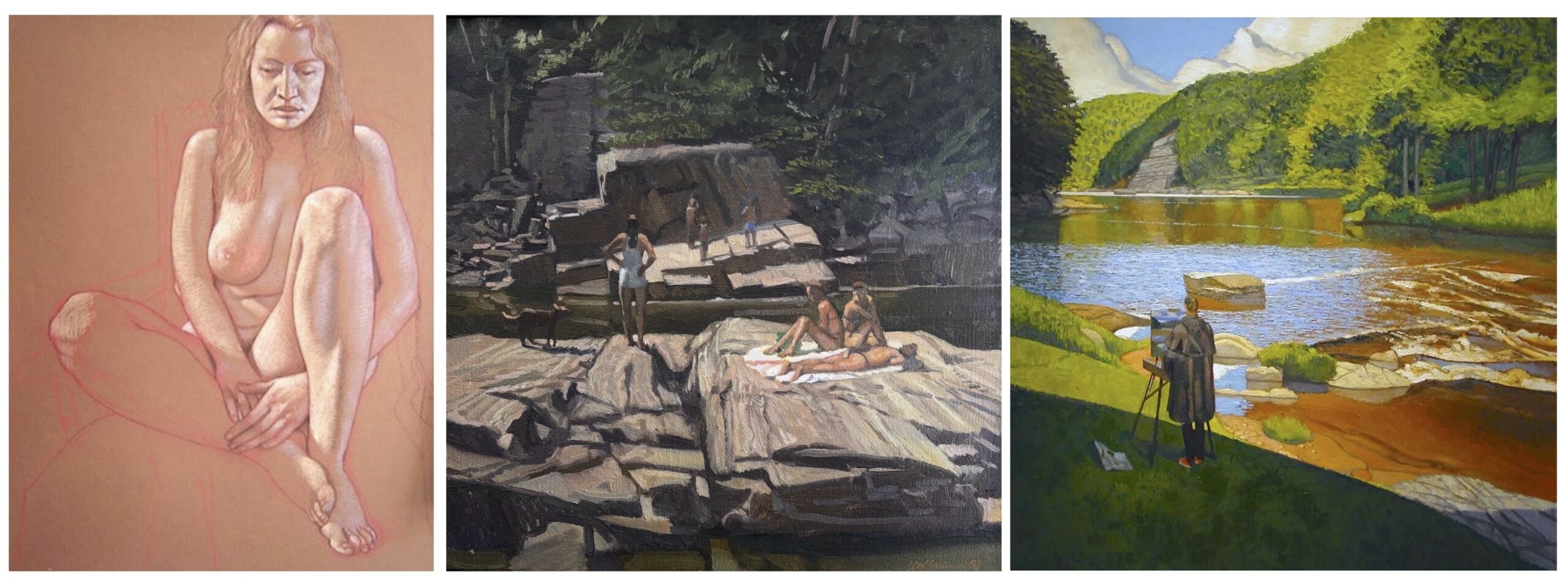
Three artworks by James Lancel McElhinney—two paintings and one drawing—have entered the permanent collection of the Plattsburgh State Art Museum, which is a facility of the State University of New York at Plattsburgh. The museum holds than 10,000 objects including the most comprehensive collection of artworks by Rockwell Kent (1882-1971). McElhinney purchased a home in the Champlain Valley in 2020, with his wife Katherine Manthorne PhD, who is a noted scholar of Art of The Americas.
McElhinney received an MFA in Painting from Yale and completed his undergraduate work at Tyer School of Art. He is also an alumnus of the Skowhegan School of Painting and Sculpture. McElhinney is a recipient of grants from the National Endowment for the Arts and the Pollock Krasner Foundation. He is the author of six books on painting and drawing, and numerous essays on various subjects in periodicals and peer-reviewed journals. McElhinney’s artwork can be found in the collections of the Albany Institute of History and Art, Asheville Art Museum, Chrysler Art Museum, Denver Art Museum, New York Public Library, Pennsylvania Academy of Fine Art, West Point Museum, Yale Beinecke Rare Book Library, and the Hudson River Museum, where he now sits on the Board of Trustees. In 2024 he established a studio in the Town of Jay, not far from Rockwell Kent’s farm Asgaard.

MORE ABOUT THE MUSEUM:https://www.mcelhinneyart.com/jlmcelhinney/a-visit-to-plattsburgh-state-museum/

Details about the individual works will appear in subsequent posts

LISTEN

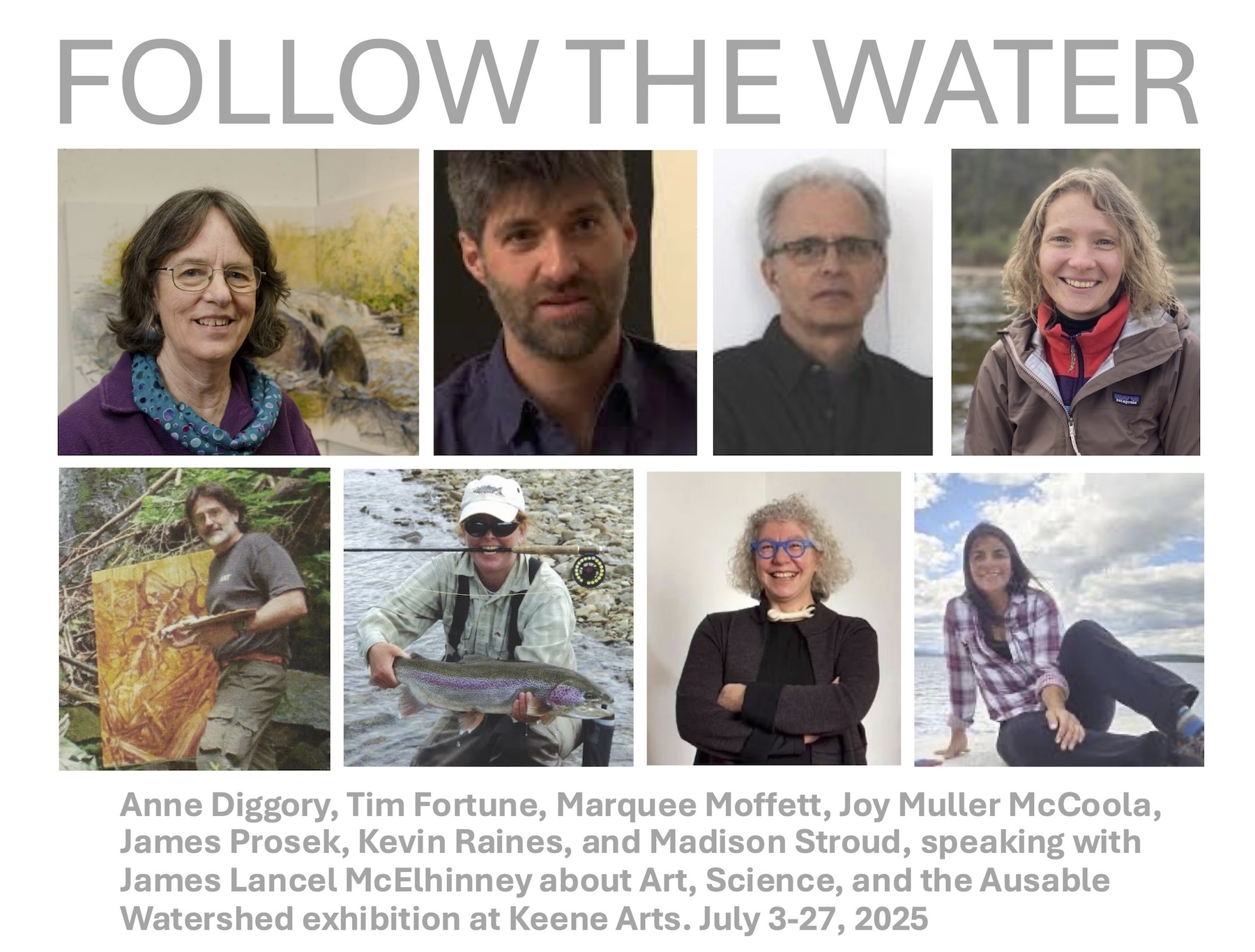
Artists and scientists speak about the conservation and management of our most precious natural resource:


Download the press release
Download the Catalogue


The Art of Seeing Part One

“Vision is a faculty. Seeing is an art”

                          —George Perkins Marsh, author of Man and Nature

Visual literacy requires fluency in drawing. Looking at something is a far cry from understanding it. The best way to comprehending design is by learning how to draw. Nearly everything produced by industry for use in the built environment begins with drawn plans that were inspired by sketches. The man-made world is shaped by decisions made legible by drawings. Everyday design would remain an impenetrable mystery, without some proficiency in drawing,

 Visual experience is best understood through drawing. It slows us down, focuses our attention, to explore how forms and spaces fit together. Pictures are byproducts of this process, not the goal. Success is achieved when our drawings are legible. But even when they are not, the mental exercise can reconcile empirical observation with personal response. According to Johann Goethe, “Only when we hold the outer world with that of our inner being, do we have full reality.”

We learn to see in increments. British painter Joshua Reynolds reportedly began each of his portraits by placing the sitter in a darkened room. Reynolds would slowly admit more light into the room until the sitter was fully illuminated for the finishing touches. The more we look, the deeper we see. Making marks on a page while looking at something is a sensory-tactile-cognitive activity that can strengthen visual memory and develop a more discerning eye. One must embody the work of art before they can produce it. To quote naturalist John Burroughs—

“You must have the bird in your heart before you find it in the bush.”

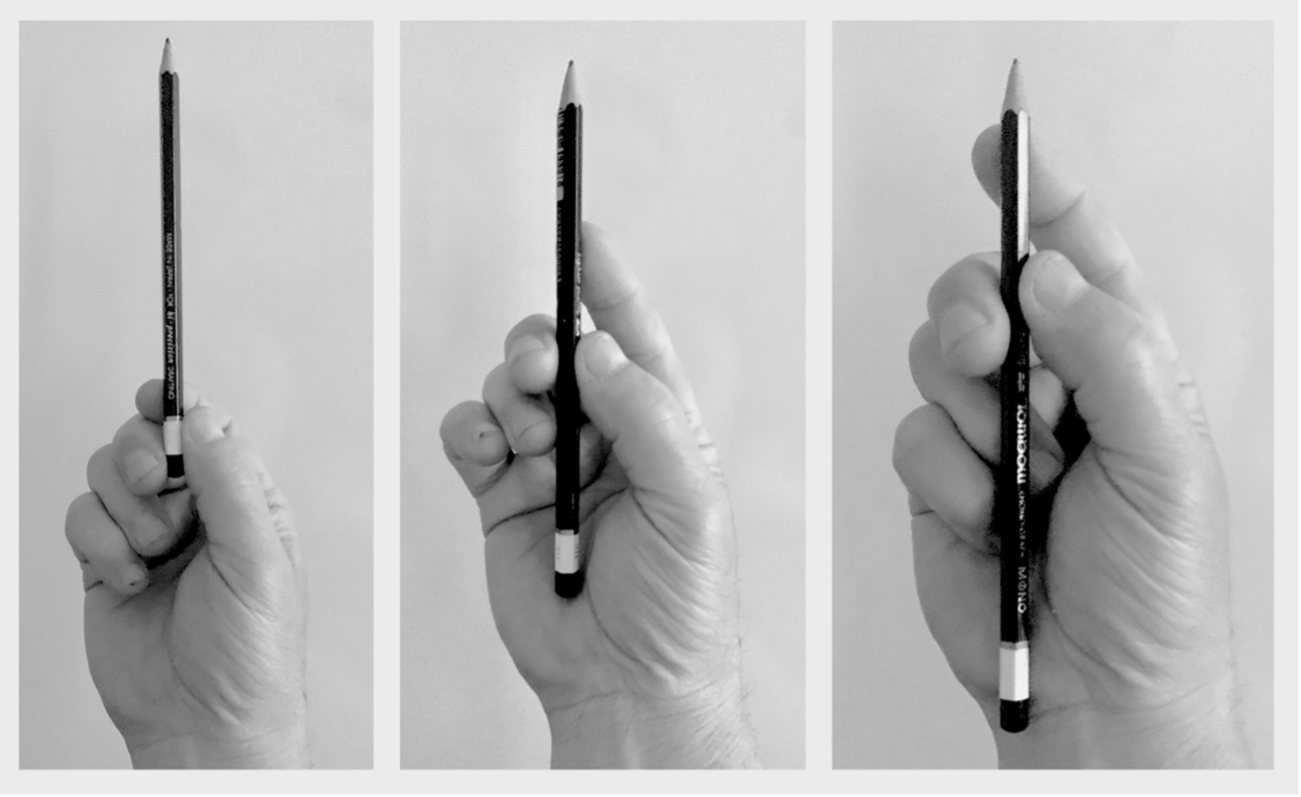
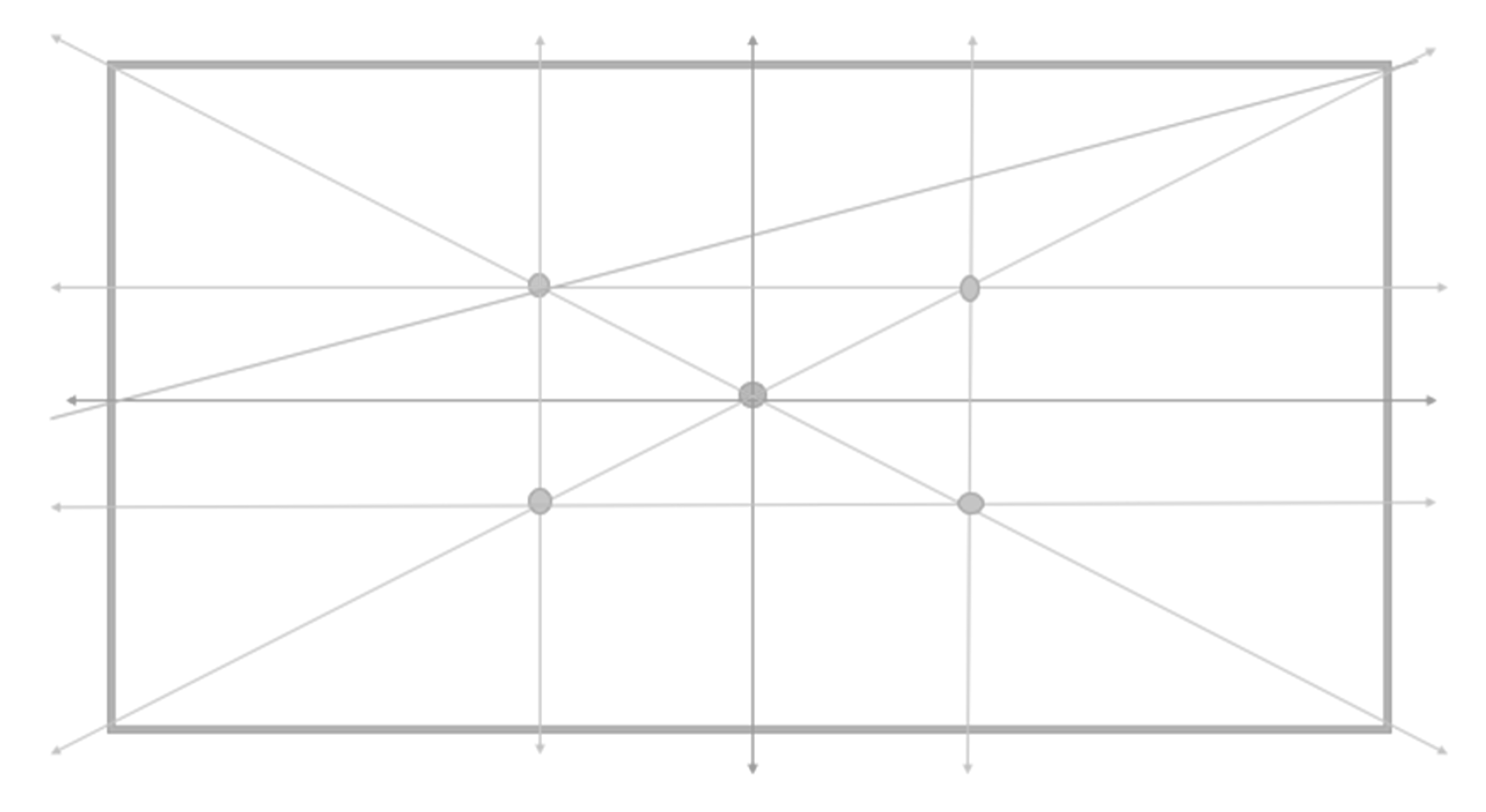
Below:  Plotting “The Law of Thirds” —The first step toward understanding dynamic composition

Download the PDF:

Download (PDF, 15.63MB)

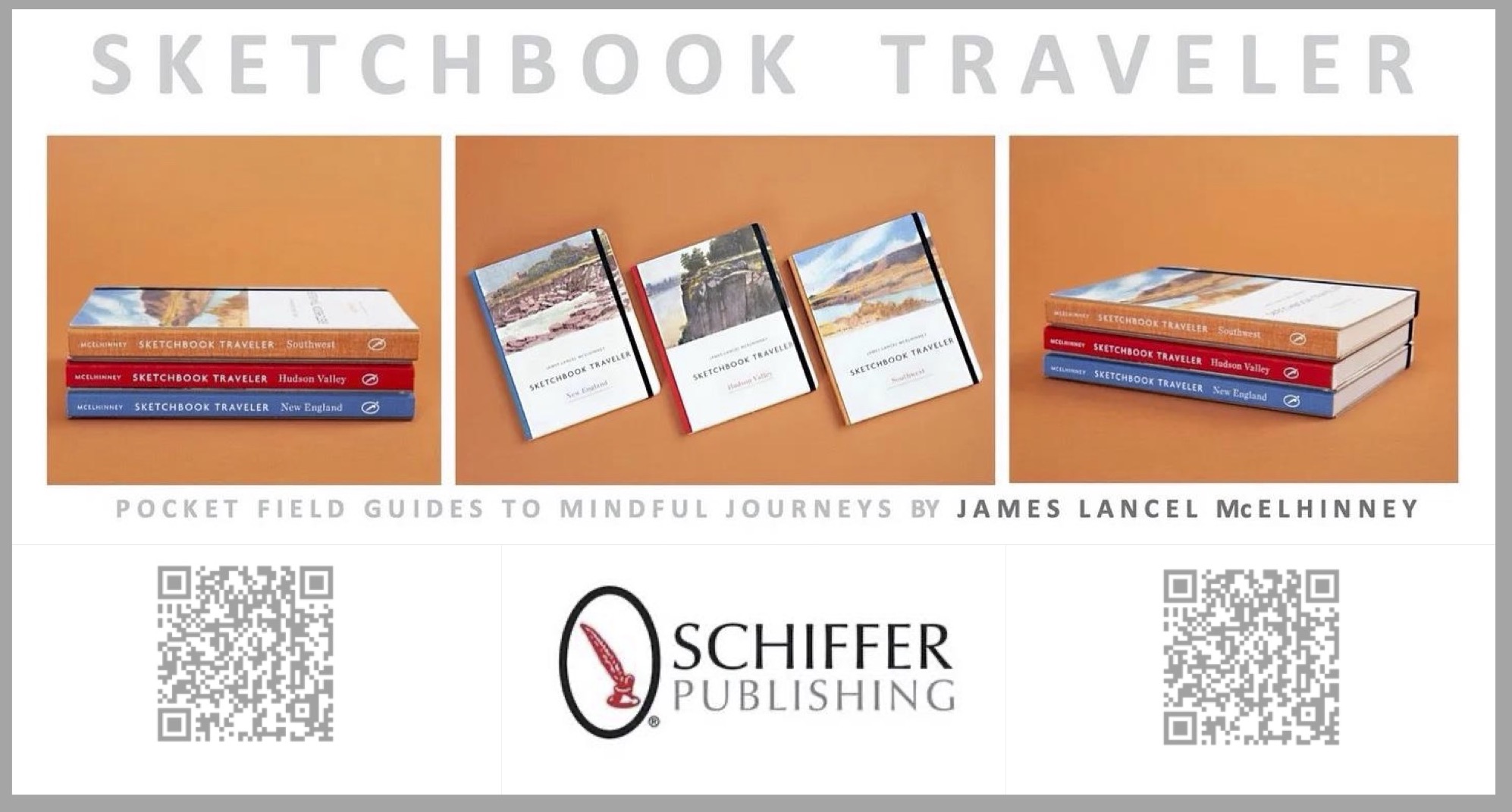
Own them now: Field guides to mindful travel:
Follow James on  TRUE PLACES Substack:
https://jameslmcelhinney.substack.com


FREE Plein-Air Drawing meetup @ New Vida Preserve

Anyone can learn to write can learn drawing, as a pathway to personal growth and wellness. Classes are designed for all adult learners, regardless of artistic talent. The only masterpieces we hope to create are better versions of ourselves.

FREE Plein-air drawing workshops are being offered for a limited time by award-winning artist and author James Lancel McElhinney. Discover New Vita Preserve. Learn more. Follow this link— https://newvida.as.me/the-mindful-eye, or send an email to—

ne*************@gm***.com


James Lancel McElhinney is the author of six books on drawing and painting. He is a Pollock Krasner Foundation and National Endowment for the Arts grant recipient. McElhinney holds a Master of Fine Arts degree from Yale. His work is found in numerous museum collections. McElhinney is a Trustee of the Hudson River Museum in Yonkers, New York. He resides in the Champlain Valley and Manhattan. His studio is in the Ausable Valley. Find out more:  https://www.mcelhinneyart.com


PAINTING ON THE SPOT: Genesis of the Plein-air Landscape

“. . . aqueous media such as ink and watercolor were more portable than egg-tempera or oils, expeditionary artists preferred it for fieldwork, as did Grand Tour diarists. JMW Turner produced oil-paintings for the fashionable art market, but always traveled with watercolors. Oil painting may be more durable than aqueous media, just as canvas is more durable than paper. But whether or not one is better than the other depends on whether one values luxury home goods more than knowledge. One could argue that because cartographers, naturalists, and military topographers were generally smarter than painters, watercolor might reflect greater intellect. At very least it required greater an enormous amount of patience.

CONVERSATIONS WITH A NAKED FEMINIST: Tales from the Models’ Stand

(Excerpt)
I first met Nicole Iverson when she reported for work in my life drawing class in 1995. She describes herself as “a deep feminist, raised by deep feminists.” Having grown up in the suburbs of New York City, Nicole was accustomed to a far more diverse demographic than one found in Old Dixie. Her thick black hair and bronze complexion seemed exotic to pallid southerners.
“Coming from New York, I had just never seen only black and white and no other shades of anything. People would ask me, ‘What kind of Mexican are you? What kind of Indian are you?’ And I’m like—”The kind that eats ravioli? I don’t know if you’ve ever heard of us . . . I just felt so completely out of place. I’d ask them, ‘What’s your background, what’s your ethnicity?’ and they would say ‘I’m a white American’. And I’m like, ‘That’s a cheese. That’s not an ethnicity.’ They just didn’t grasp it at all. It was interesting. When I was a kid, I got called an ethnic slur, but nobody I knew did that because there’s a derogatory term for everyone.”
Nicole later entered a graduate program in the Rocky Mountain west, where she continued to work as a nude model at universities, and for artists in the region
            “I worked with a photographer who taught a nude photography class. I hung some photos of me in my bathroom. People would see them and say, ‘Oh . . . you model nude. Isn’t that uncomfortable?” And I would say ‘not for me.’ It never has been. I love an all-over tan and prefer to swim in the nude. My favorite beach is at Sandy Hook, New Jersey.  What am I covering up, and for whom? When society tells me to cover up—it’s sexualizing my body, at a time and a place where I don’t feel sexual—so don’t view me as a sexual object. . . I love the work that I’ve done, and I’d love for it to be seen. And if people aren’t into it, well . . . there are plenty of people who’ll approve of me, and plenty who won’t. I’m okay with that.”

A VISIT TO PLATTSBURGH STATE ART MUSEUM

Since establishing our second residence on the Adirondack Coast of Lake Champlain, Kathie and I have made a concerted effort to visit many of the museums and cultural centers in the region, which presented certain challenges. Unlike western Vermont, The Berkshires and the Litchfield Hills, there is no singular transportation corridor to guide visitors through a daisy-chain of charming villages like Route 7; or US-1, which follows the Maine coast. Within The Blue Line encircling the Adirondack Park roads follow rivers and lakes in circuitous loops that link scattered self-focused municipal inholdings.
Lake Champlain is one link in a chain of waterways that stretches from the Saint Lawrence River in the north, to portages connecting Lakes George and Champlain to the Hudson Valley and the Atlantic seaboard to the south.
The city of Plattsburgh saw a pivotal American victory during the War of 1812, and was home to active military bases until 1995. The State University of New York established a Normal School (teachers’ college) at Plattsburgh in 1889. The college welcomed students the following year, and was ranked as a university in 2023. Its art museum was formed according to Andre Malraux’s concept of “a museum without walls;” exhibiting its a permanent collection of more than 10,000 artworks and artifacts not within a dedicated building, but at various spaces around the campus.

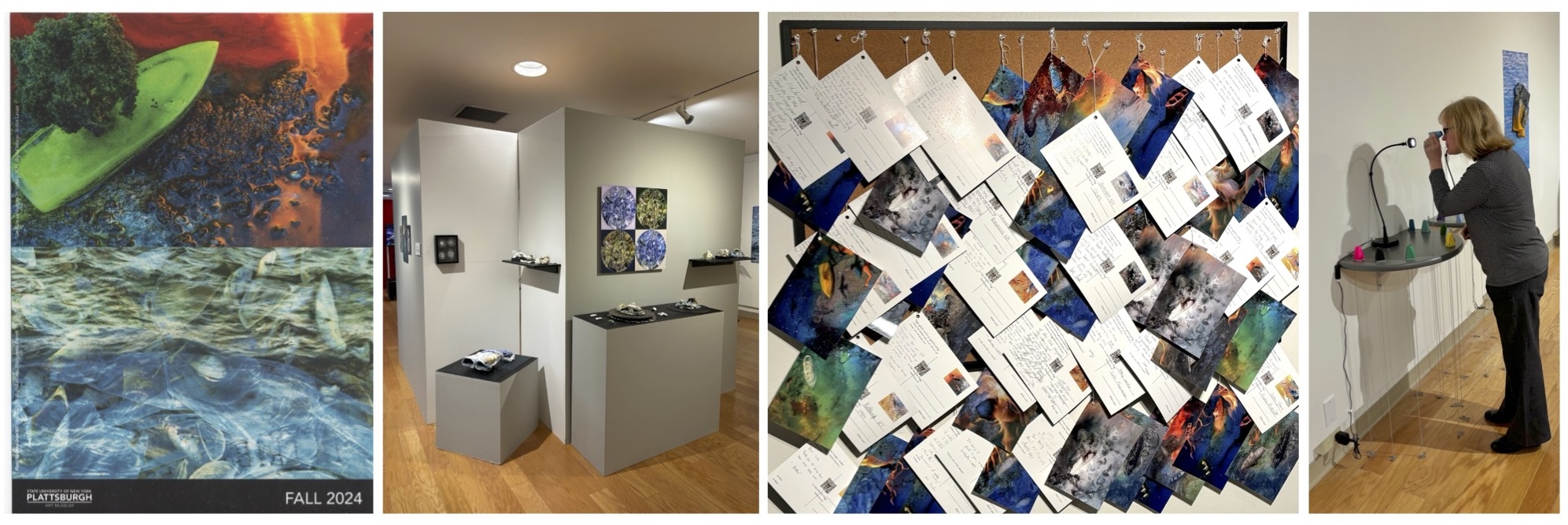
Yesterday I had the pleasure of meeting with Plattsburg State Art Museum director Tonya Cribb, collections manager Kara Jefts, and curator/preparator Walter Early. The reinstallation of the newly-renovated Rockwell Kent Collection is now underway. I was surprised by the diversity of Rockwell’s output; from prints and bookplates to textile designs and transfer-ware. I learned how during the McCarthy era, the local barber in Ausable Forks required Kent to enter and leave through the back door, in fear that he might be blackballed for cutting a known communist’s hair. As an aside, the storefront workspace I just rented had once been that very same barbershop. Another highlight of the visit was a pair of installations unpacking environmental narratives. Climate’s Shipwreck Ballad by Robin Lasser explores how the more than 300 shipwrecks submerged in Lake Champlain “. . .may serve as an iconic metaphor for the current state of the earth.” Transmutation Traces by Marguerite Perret ‘. . . surveys our relationship to water regionally and globally.” The installation includes “. . . casts of anthropogenic debris and recreational boating paraphernalia, laser cut noxious aquatic weeds, and photographs taken with a toy microscope of things found along shorelines at various locations.” An interactive component of the installations were postcards, upon which visitors are invited to write love-letters to water.

A number of these are pinned on a bulletin-board hanging just outside of the gallery, beside a table filled with books about water for readers of all ages,
Like many university art galleries, the museum at SUNY Plattsburgh has a mission to serve a diverse community of academics delivering degree-track classes to a combination of commuting and resident students. Like many institutions of higher learning focused on preparing students to enter the job market, S.T.E.A.M. can be a tough sell. Many in positions of power are Baby Boomers trained in 20th century silos, and thus resistant to blending the arts, sciences and humanities, to expand critical thinking in ways that enhance creativity. Since the onset of the pandemic, Champlain Valley and the Adirondack region have attracted an influx of cultural professionals. As their numbers grow, linking scattered communities might assemble a critical mass, positioning the Plattsburgh State Art Museum to serve the greater Adirondack region, and beyond. Montreal is just an hour’s drive away. For more about the museum: Click here

—James Lancel McElhinney © 2024

Watch a short video in Robin Lasser’s installation Climates’s Shipwreck Ballad:  IMG_2498 (1)

SOLVING AN ART-HISTORICAL MYSTERY

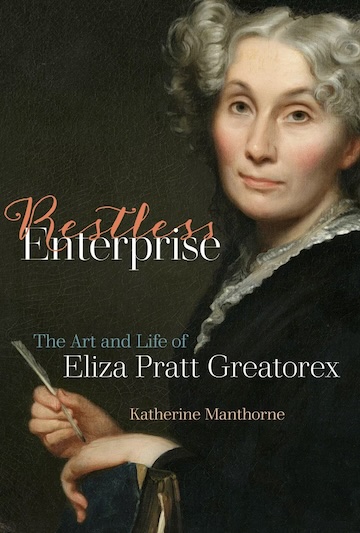
On September 16, 2019,  Kathie Manthorne and I arrived in Moret-sur-Loing—a medieval town located 74 kilometers southwest of Paris. Kathie was putting the finishing touches on her latest book Restless Enterprise; The Art and Life of Eliza Pratt Greatorex, which would be released the following year.  Eliza Greatorex (1819-1897) was an Irish-born American artist who belonged to a circle of leading New York feminists. She spent her final years in the town where her friend Alfred Sisley resided. Kathie had followed Eliza’s footsteps from her birthplace in Donegal, to Upstate New York and Manhattan, and from Hudson Valley to the Rock Mountains of Colorado, England, and now France. A few days before Kathie was to address a conference at Musée d’Orsay, we spent two days in Moret, hoping to locate Eliza’s final residence and her grave, if time allowed. This is the tale of what happened.
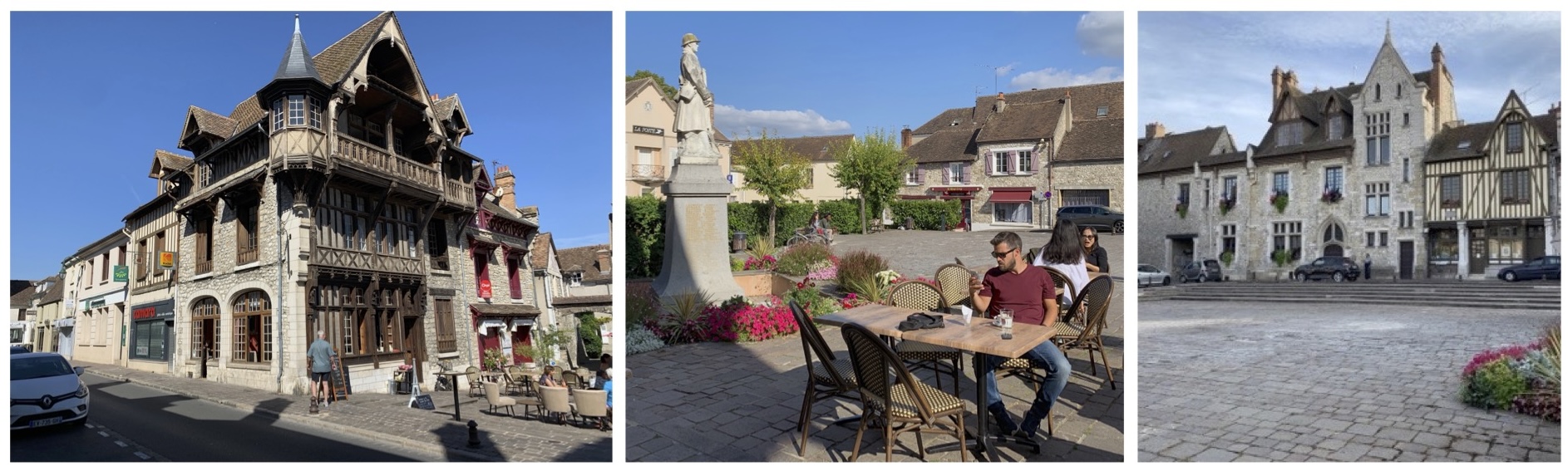
 

Neither Kathie nor I knew the town, and no street address had been found to guide us to Eliza’s final abode, except for a single word—Ramparts. Our only other clues were two letters—one written by Eleanor Greatorex sometime before 1908, and another by an American woman visiting Kathleen Greatorex in 1909. Neither are very specific. Both describe a house and its garden, nestled among ancient walls. The return address on the letters is simply Ramparts, Moret-sur Loing. Twelfth-century walls punctuated at regular intervals by cylindrical towers still encompass much of the town. Pressed for time to unravel this mystery, we sprang into action and went in search of the nearest café.

Approaching noon on Monday, all of France would be shutting down for its quotidian midday pause. We walked through the Tour de Samois to the Rue des Granges, where a young man was setting out tables and chairs under red umbrellas along the narrow byway. Europop music flooded into the street from the open door of Le P’tit Moret restaurant, which was just getting ready to open. Having eaten nothing since what passes for meals in Economy Plus, we were famished and decided to press on. Rue des Granges led us to the Place de l’Hôtel de Ville; a broad, open square paved with flagstones, which inclined gently upwards toward Rue Grande. The town hall had originally been the residence of a wealthy bourgeois family, built on the remains of a much older inn. Napoleon  Elba, slept in the house following his escape from Elba, on the night before his return to Paris. Adjacent to the Hotel de Ville stands a timbered building with a glazed storefront; the home of Les Amis de Sisley—a benevolent society dedicated to promoting the legacy of the famed Impressionist painter who lived and died in Moret.

A lanky waiter waves us into a pair of empty chairs. His long hair is knotted up into a chignon-de-homme, which sounds a lot better than man-bun. He hands us two menus and explains that while the bar is open, the kitchen is not. I looked at my watch. As it would be happy-hour in Manhattan, I ordered a beer for myself and a Chardonnay for Kathie. We drained our glasses and ordered a second round. When the waiter returned with the drinks, he announced that the kitchen was open. We ordered a charcuterie plate, a couple of salads, and a large bottle of Badoit. The restaurant—La Maison des Arts—occupies the ground floor of Maison Racollet—an ornate, half-timbered medieval-revival building designed by a local cabinetmaker, whose personal avatar was a rat dipping its tail in a glue-pot; a jeu-des-mots of his name. The French word for “rat” is the same as it is in English, but pronounced with a silent “t.” A homonym of “. . . collet” is coller, which in French means “to paste.” Racollet’s sense of humor is evident in a tiny self-portrait, and other small figures carved into the wooden pilasters of the building’s façade. I was reminded of the caricature of Tintoretto, carved above one of the stall-seats on the piano nobile of Scuola Grande di San Rocco in Venice, and of Tilman Riemenschneider’s limewood holzschitzerein; an art-form preserved to this day by Oberammergau wood-carvers.

Click on the image below to lean more about Restless Enterprise: The Art and Life of Eliza Pratt Greatorex. University of California Press. 2020


Ten Years Later. . .

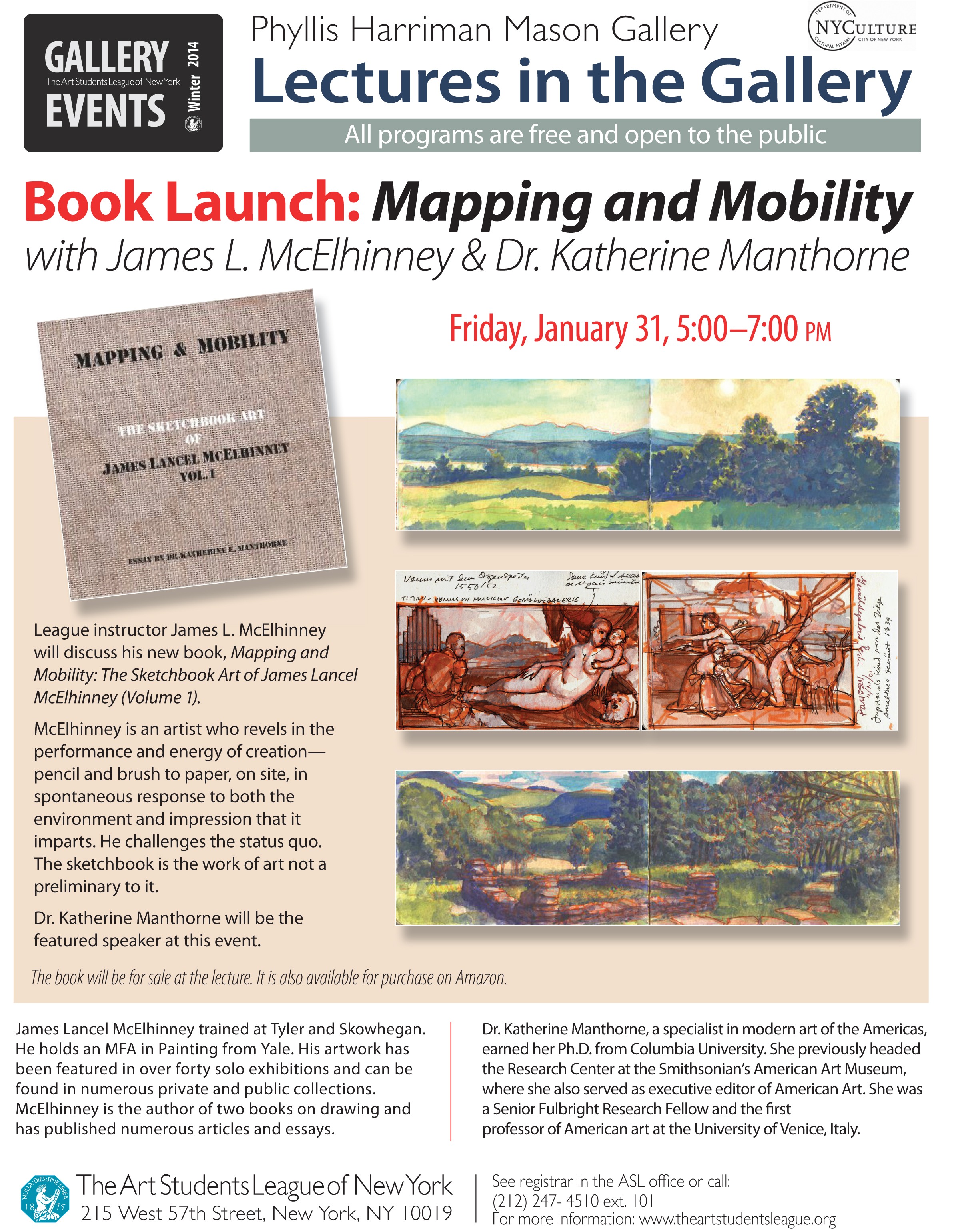
Nearly 20 years ago I refocused my creative practice on painting in travel-journals. More than ten years ago, New Arts Publishing in Litchfield, Connecticut released Mapping and Mobility: The Sketchbook Art of James Lancel McElhinney.  At that time, most painters were still focused on producing art for the wall. It is gratifying to see that more than ten years later, many artists are using the open page-spread of sketchbooks as substrates for their paintings. Not that I would dare claim to have revived this historic pratice, but its beneits are incalculable, as ways to transform personal experience into knowledge and ideas.  —JLM. July, 2024


On on Friday January 31, 2014, there was a launch-party and book signing at the Art Students League of New York’s Harriman Gallery, from 5:00-7:00 p.m.,
215 West 57th St, New York.

Featured speakers: Dr. Katherine Manthorne and James L. McElhinney.

Mapping & Mobility: The Sketchbook Art of James Lancel McElhinney, Volume 1.
Essay by Dr. Katherine E. Manthorne. New Arts Publishing.