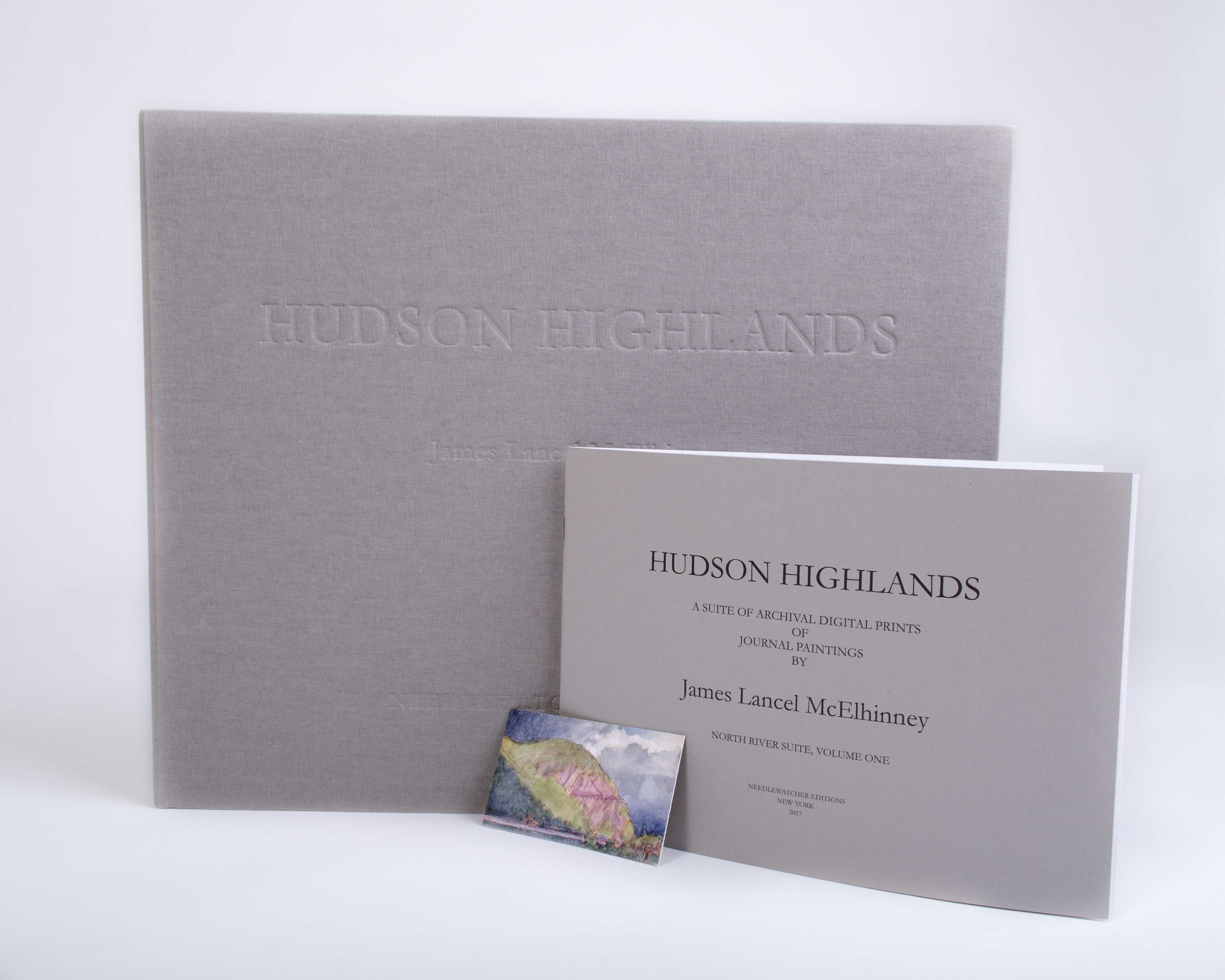
For the past ten years the majority of my new painting activity has migrated into books. The change occurred gradually, according to no specific plan. No theoretical epiphany preceded the shift. The idea just caught up with me. As a bibliophile fond of travel, I succumbed to my fate without protest. It was liberating. Personal mobility actually expanded my artistic practice. Whatever materials I might need could be carried in my pockets, travel-vest or shoulder-bag.
Someone asked me, “Where is your studio”
“You’re looking at it” I replied
Having produced hundreds of page-spreads in dozens of sketchbooks, the question that arose was how to exhibit them. The traditional solution would be to lay them out in vitrines, open to single page-spreads. Another method was to transform painting-journals into animations, such as those that greet visitors to this website’s homepage. Neither mode of presentation could simulate the experience of perusing one of these books manually. Given their nature, it would be complicated logistically, exposing the objects to potential damage. If I were to exhibit these works in the conventional way, I had to be open to selling the books without cutting them up to accommodate some form of wall-display. Receiving a list of book-binders from the Center for Book Arts in New York City I found a few who could build me an octavo-sized solander (clamshell) box in which the original painted books could be housed. Following every conversation I came away with a case of sticker-shock. Many of these skilled craftspersons had a backlog of several weeks. I decided to do more research.
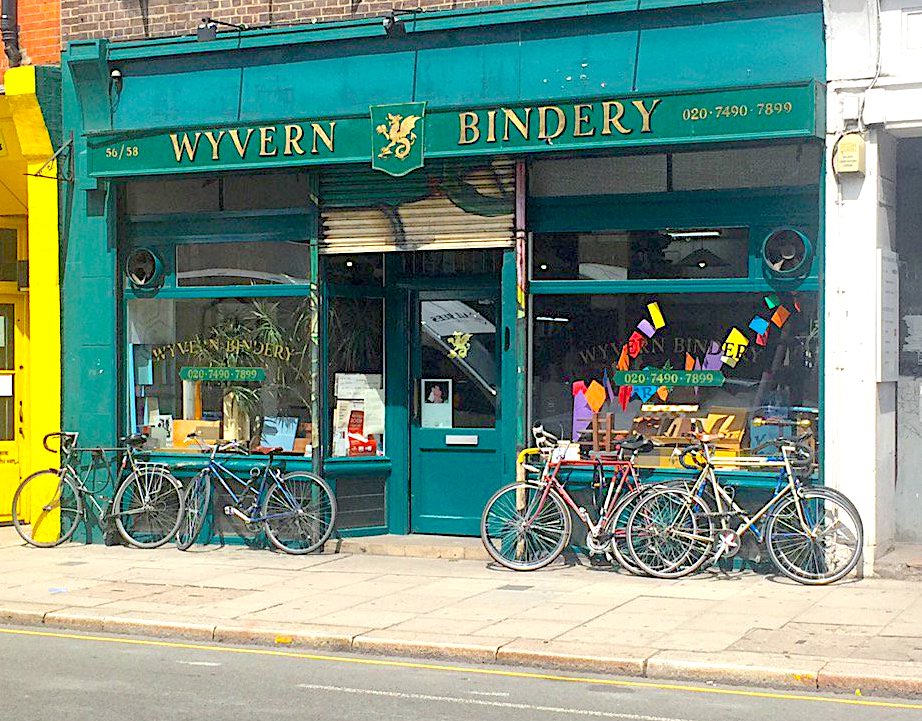
In August of 2016 my wife presented a paper at a symposium at Tate Britain. After visiting several paper-shops and binderies in London I brought one of these books to Wyvern Bindery on Clerkenwell Road.
 />
/>
Stepping through the storefront door transported me to a Dickensian workshop filled with rolls of fabric, glue-pots, bustling workers and front-man Mark standing behind a wooden counter. I described my predicament. At the end of the following day he presented me with the solution, at a lower cost than would have been possible in New York. Manhattanites presume that everything on the planet is for them just a cab ride away. Not so. During the past two years, we have witnessed the extinction of the last privately-owned full-service art-supply stores in New York. Many bookstores have suffered similar fates. My impression is that London retains a culture of artisanal binderies, and a deeper commitment to books as works of art–not just delivery devices for texts and images. There are exceptions of course–the museum shops and venues like Strand, Printed Matter, McNally-Jackson, relocated Rizzoli and others. Books seem to be gaining visibility in museum exhibitions. Vitrines displaying sketchbooks and ephemera were seldom seen twenty years ago, but now are de rigeur. One question remained unanswered. As I continue to paint in books, how might I recreate for purposes of exhibition the experience of having a book in hand, open to a painted page-spread? I brought one of these books to a number of prominent New York art-dealers, who generously shared their suggestions. With a wink, he wondered aloud what kind of lunatic would ever think that paintings in books would be marketable. The question was “how to get the genie out of the bottle”, and suggested suggested that I consider turning them into prints. “You’re reviving a two hundred year old practice. You need to revive a two hundred year old business plan”. Audubon was mentioned.
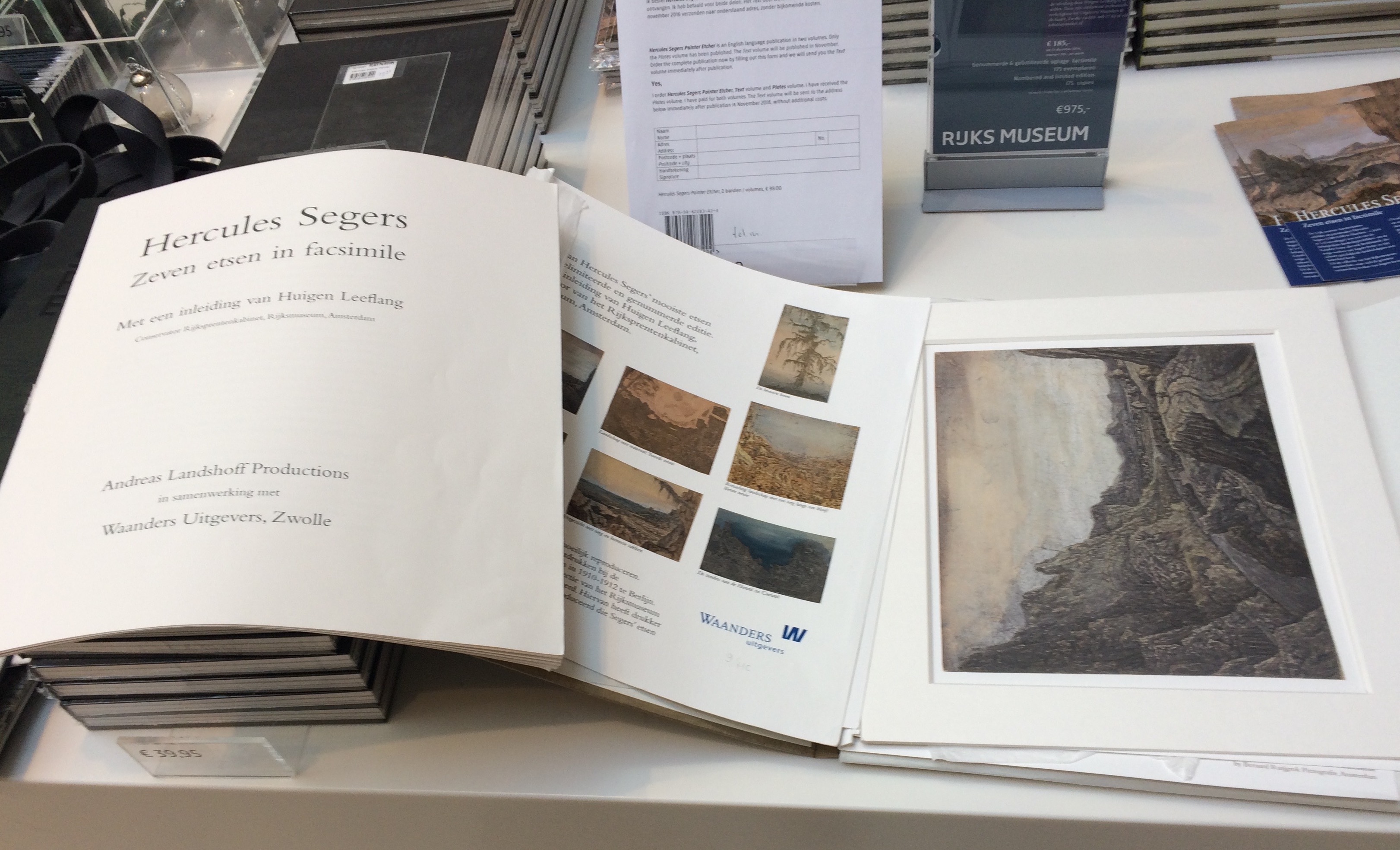
A month later I found myself in Berlin, spending the better part of a day in the back room at Walther Koenig Buchhandlung, at 27 Burgstrasse, next to the Museum Island. While most of the books were by contemporary artists, historical precedents became obvious. A few days later, while attending a retrospective of Hercules Segers at Rijksmuseum, I noticed for sale in the bookshop a facsimile set of Seger’s etchings. Seven archival pigment prints were offered in a limited edition, bound in a linen-covered portfolio.
Not only did I envision a dialogue with Claude Lorrain and Piranesi, but also with Hogarth and Turner. William Guy Wall’s Twenty-four Hudson River Portfolio, combined with Benson J. Lossing’s The Hudson from the Wilderness to the Sea, anchored my project within the history of American art, and with exploratory expeditions blazing trails that tourists would later follow. Visions of the land were thus inscribed upon national identity.
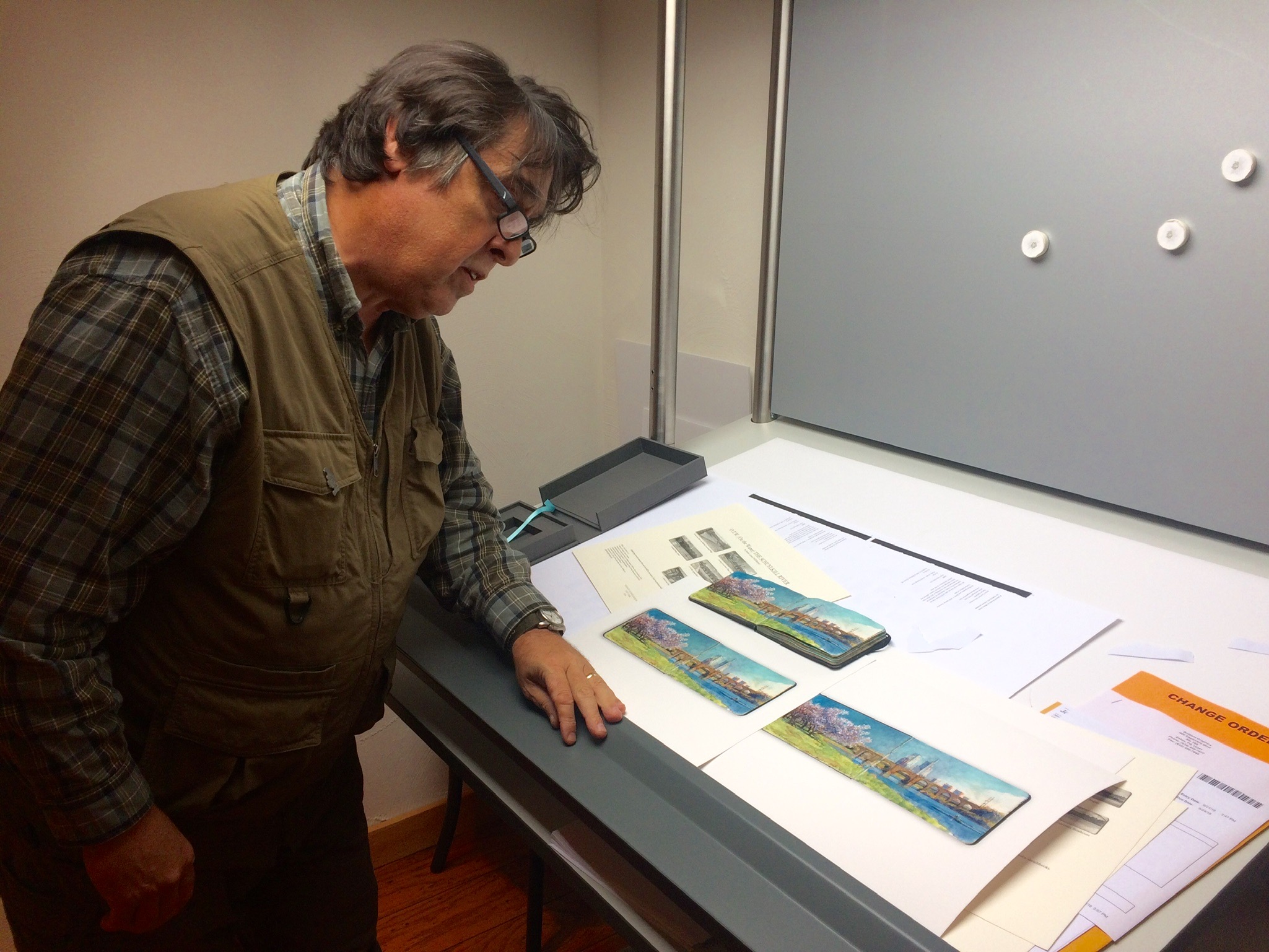
Reviewing proofs at Brilliant Graphics, Exton, Pennsylvania.
Reviewing proofs at Brilliant Graphics, Exton, Pennsylvania
These prints, developed in collaboration the skilled production team at Brilliant Graphics in Exton, Pennsylvania, recreate the feeling of a whole book, open to a single page-spread. Some aspects of each painting is easier to read in this secondary iteration, than in its original book-form. For this reason, the prints must not be seen as reproductions, but as reiterations enhancing the original. See below:
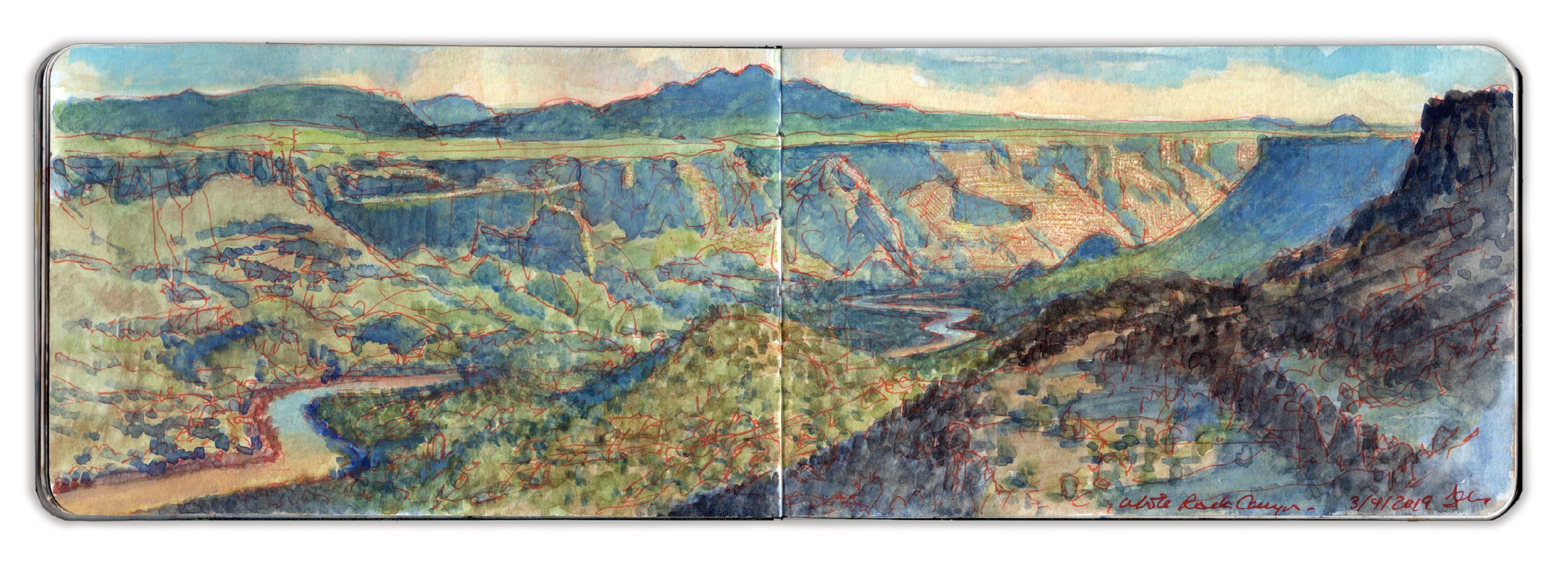
THE PALISADES: North River Suite, Volume Two
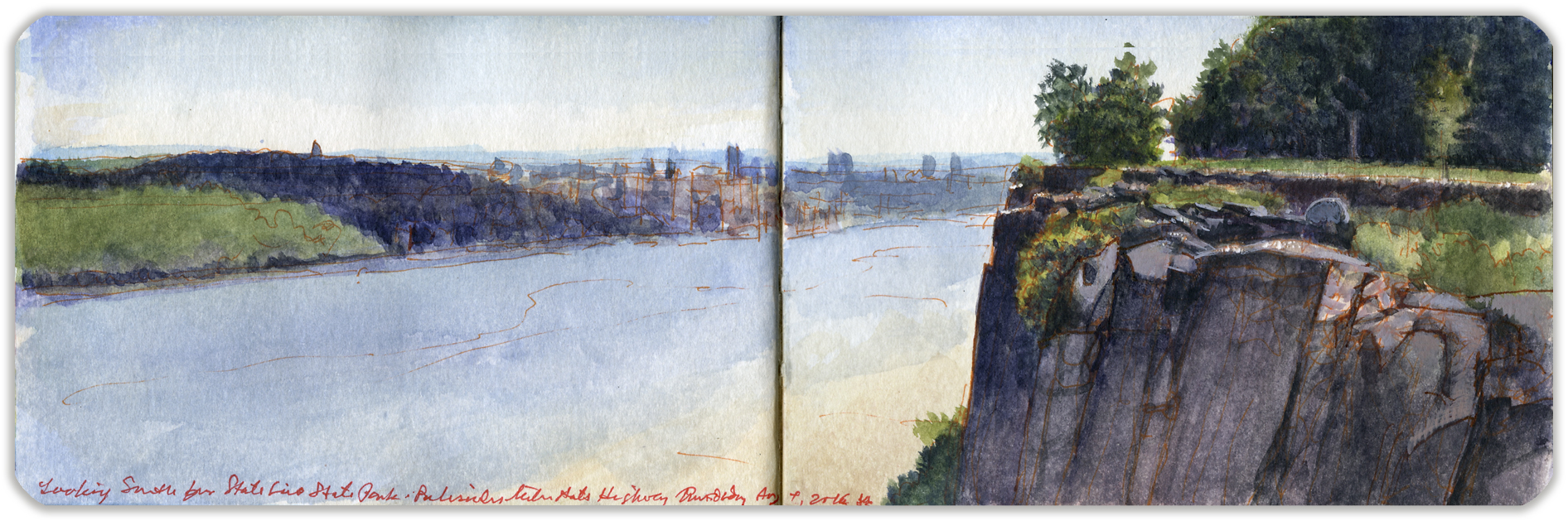
O.T.W. THE SCHUYLKILL RIVER
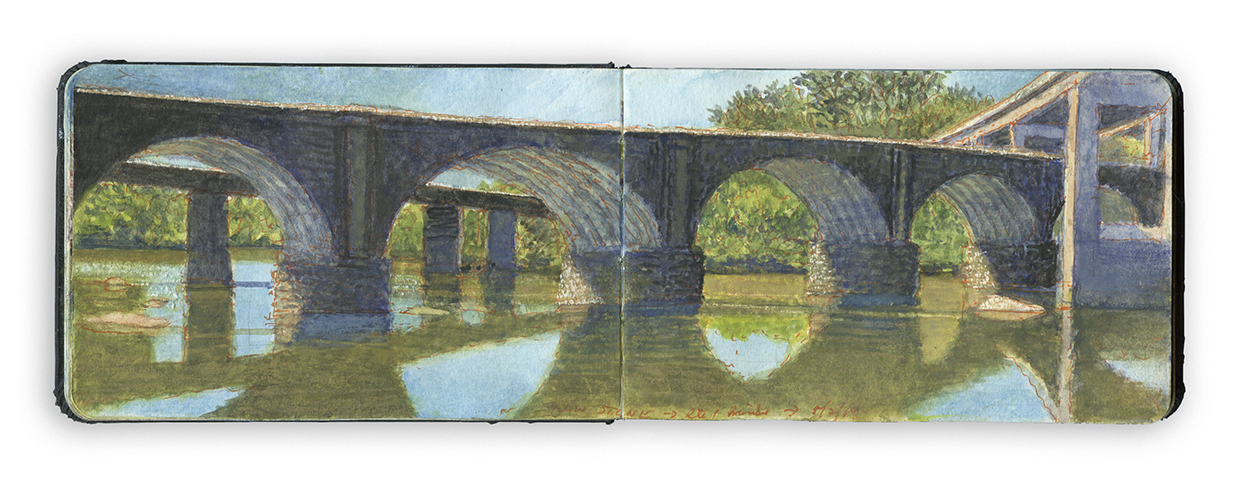
Twin Stone. 3.5 x 10 inches. Archival pigment print from watercolor sketchbook. 2018
HUDSON HIGHLANDS: North River Suite, Volume One
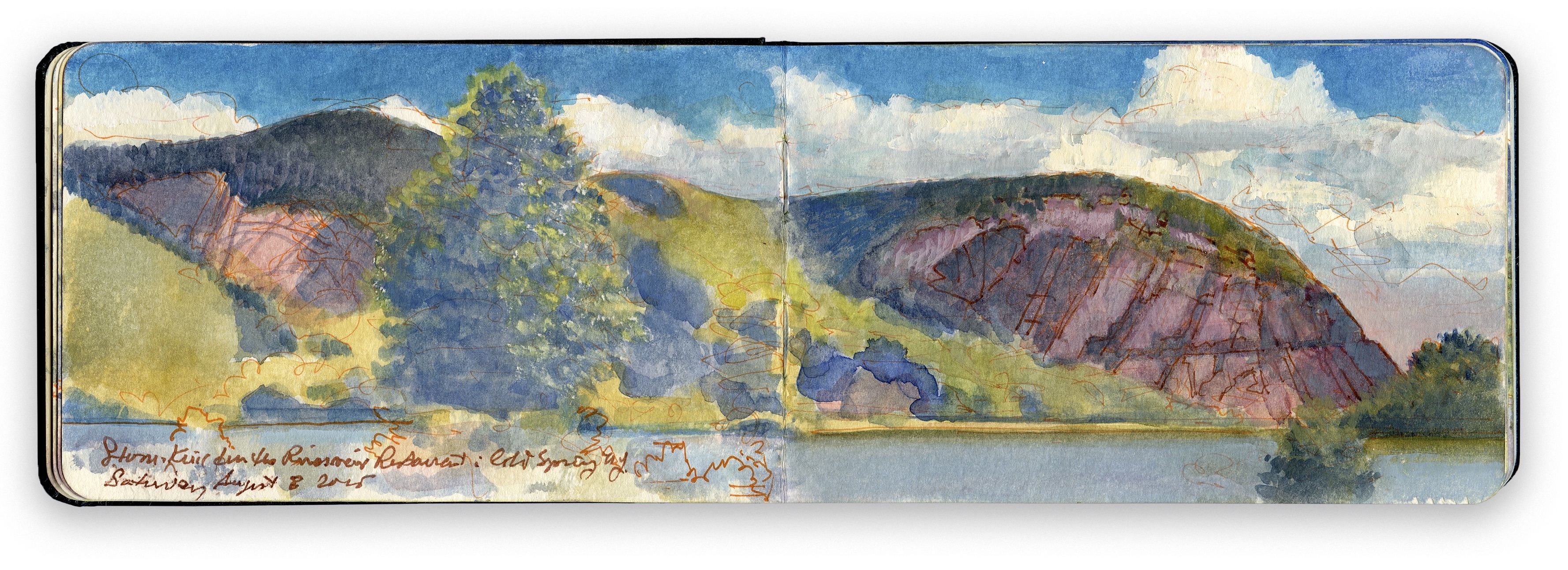
Storm King from Cold Spring. 3.5 x 10 inches. Archival pigment print from watercolor sketchbook. 2016