Read the Full Article from Fine Art Connoisseur magazine (scroll down)
 “For the first time in history, a considerable number of visual artists have amassed vast fortunes. Lavishly endowed eponymous artist-estate foundations herald a new species of philanthropy: many possess sufficient funding to maintain a permanent staff to pursue their missions in support of education, research, and helping artists in need. In some cases, these foundations establish museums and research centers or collaborate with existing institutions. Among the leaders in this sector are Robert Motherwell’s Dedalus Foundation, the Joan Mitchell Foundation, Robert Mapplethorpe Foundation, and Andy Warhol Foundation for the Visual Arts.
Such ambitious goals are beyond the means of many notable artists, even those of considerable fame. So what options are available to them? What must the heirs of noteworthy and moderately successful artists do to prevent works that once won laurels from being flogged for pennies or carted off to landfills?
…Augustus Kollner (1812–1906) was born in Stuttgart, Germany. Immigrating to the United States in 1839, he settled in Philadelphia, a hub of print publishing. Working as an illustrator and engraver, Kollner gained recognition for his city views and landscapes. He outlived his career, however, and died forgotten at 94. In life Kollner had organized his oeuvre into an orderly collection. yet his daughter let the junk man have it all for two dollars. Recognizing the quality of what he had just purchased, the canny scrap dealer preserved the artworks, which over time made their way into private and public collections. Later, philanthropist Joseph M. Fox donated his collection of Kollner’s graphic works to the Free Library of Philadelphia. While much of this artist’s visual output is preserved, most of his correspondence and records has been lost.
Famed as a teacher, Ashcan School painter John French Sloan (1871–1951) pioneered a gritty brand of realism that presaged WPA-era regionalism. Widowed in 1943, Sloan married his former protégé and extramarital lover Helen Farr (1911–2005) two years later. When Sloan passed away, Helen devoted herself to preserving his legacy. A decade later, she reached an agreement with the Delaware Art Museum, which received thousands of works representing each phase of Sloan’s career. A century after the Ashcan painters fell from favor, Sloan’s reputation endures.”
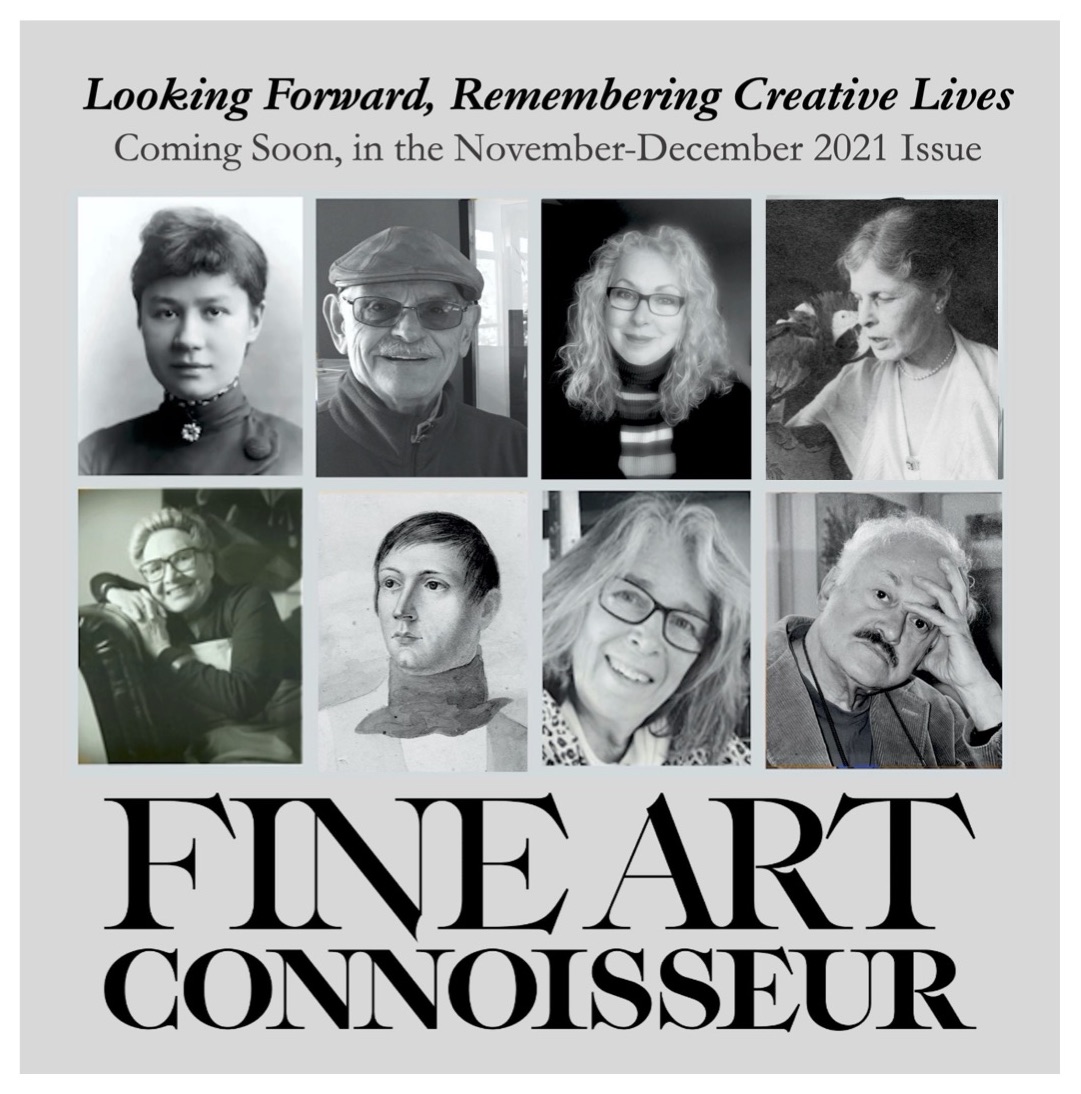
–excerpt from “Looking Forward. Remembering Creative Lives” in the November-December 2021 issue of Fine Art Connoisseur magazine. Scroll down to a link & download a PDF of the article
Beginning in 2006, for more than ten years I collected oral history interviews for the Smithsonian Archives of American Art and other organizations.These conversations made me keenly aware of how many practicing artists, especially those working in higher education, misunderstood the nature of the art market, and their roles in it.
The event that got me involved in legacy planning was the death of my grad school mentor Bernard Chaet (1924-2012). Following his retirement from Yale he devoted himself to painting with astounding vigor. His prolific output was exhibited widely to growing acclaim. Pressing on as his health declined, he continued to produce new work until he was no longer able. When he passed away in the fall of 2012, his widow and daughter were faced with the daunting task of organizing countless postcards, letters, drawings, watercolors, prints and paintings. Bernie threw nothing away. Nor did he make plans for what was to be done with all that material. Putting his estate in touch with the Archives of American Art provided guidance in organizing Bernie’s papers, which I delivered in person to the Victor Building in Washington DC. Since then I have provided professional consulting, research and appraisal services to a number of artists’ estates.
The more involved with this work I became, the more aware I became of others engaged in similar work, including a number of artists stealing a march on time. Nobody wants to confront their own mortality, nor consign a productive lifetime to oblivion. My hope is that by unpacking a number of case studies, this article will motivate artists to play a proactive role in estate planning, by embracing the task as part of their creative practice
DOWNLOADABLE PDF. LINK: LOOKING FORWARD, REMEMBERING CREATIVE LIVES. Fine Art Connoisseur magazine. Streamline Publishing
SUBSCRIBE: FINE ART CONNOISSEUR
THE AUTHOR: James Lancel McElhinney is owner of Needlewatcher Arts Advisory (Needlewatcher LLC) Enquiries: PO Box 233, Essex, New York. 12936-0233.
ap********@ne***********.com