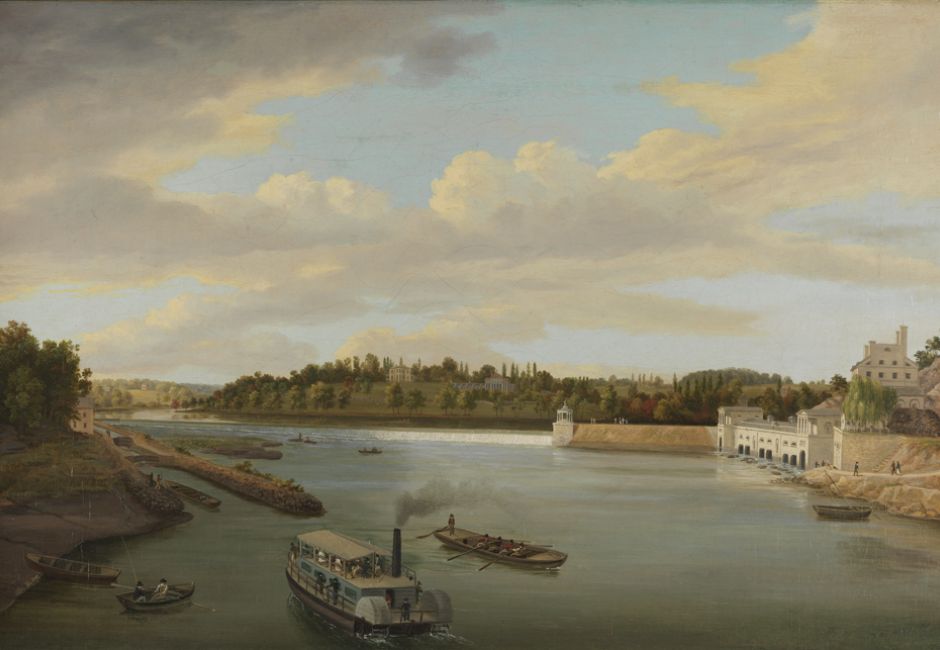
I am very excited about this exhibition curated by Anna Marley for several reasons, the first of which is that the Hudson River School did not spring up out of nowhere. Something had motivated Thomas Cole and others to venture upriver to mine the terrain for pictorial treasure. Cole was no Natty Bumppo, hacking his way through virgin forest to get to million-dollar vistas. The places he visited in 1825 were accessible by steamboat and stage coach. In other words, he was a tourist.
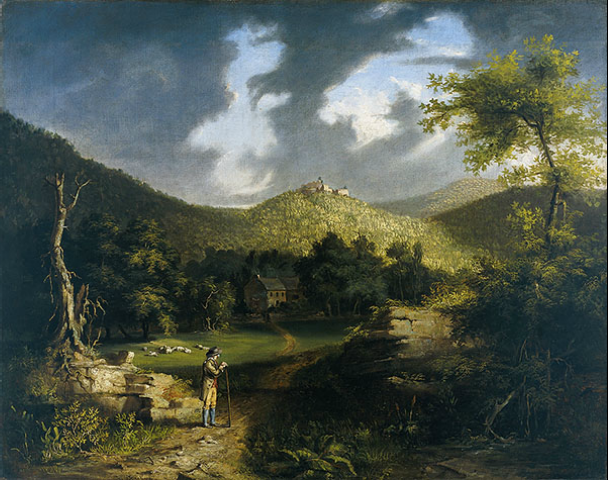
View of Fort Putnam. Thomas Cole. 1826.
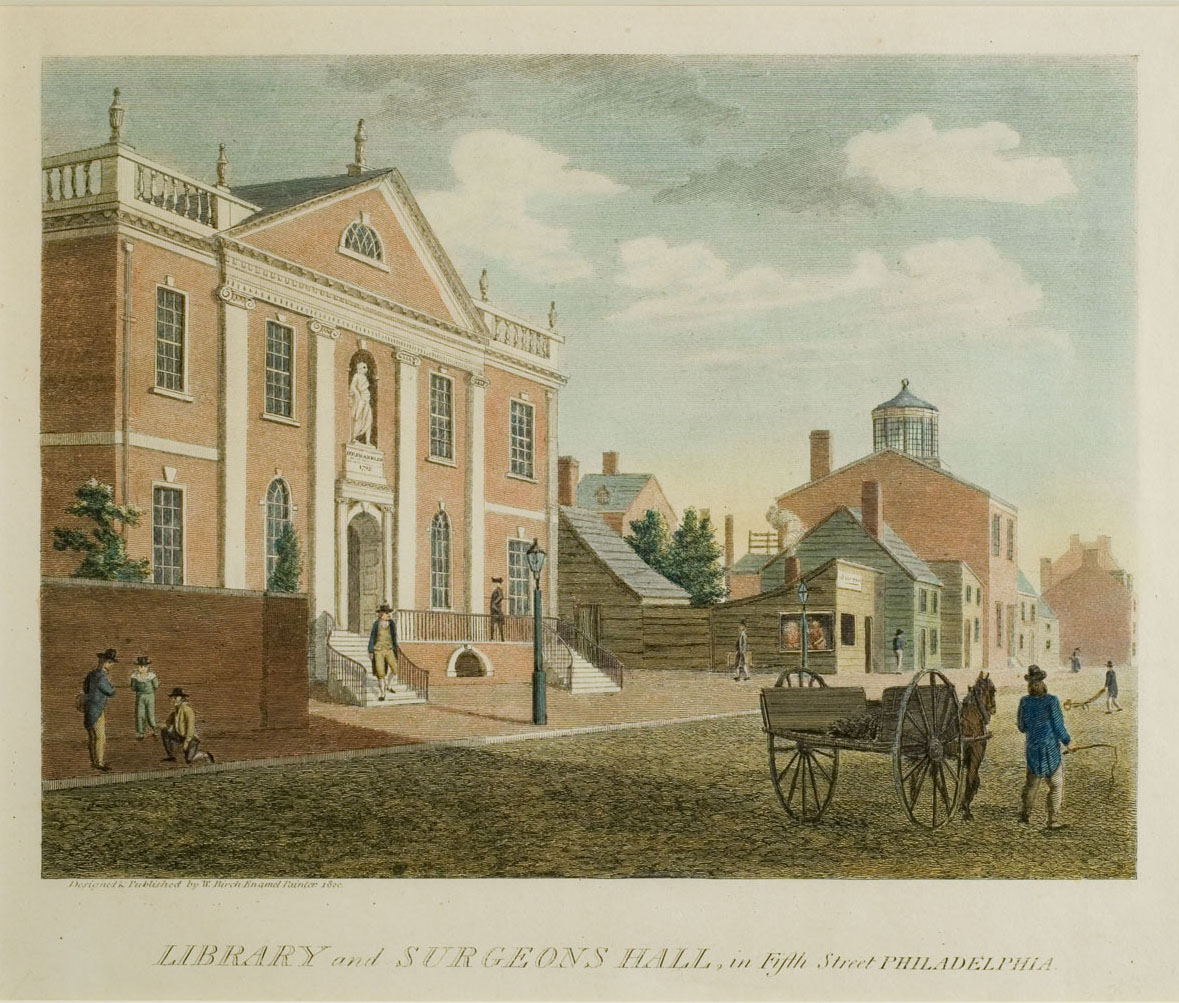
Born in England, he moved with his family from Lancashire to Steubenville, Ohio. Prior to his arrival in Manhattan, he had spent time in Pittsburgh and Philadelphia, where he exhibited at PAFA. As the place where the Declaration of Independence had been signed, Philadelphia attracted a steady flow of tourists, hungry for prints of sites like Independence Hall and Fairmount Water Works. The year before Cole’s birth, another Briton named William Birch had self-published a series of engravings; views of the city.
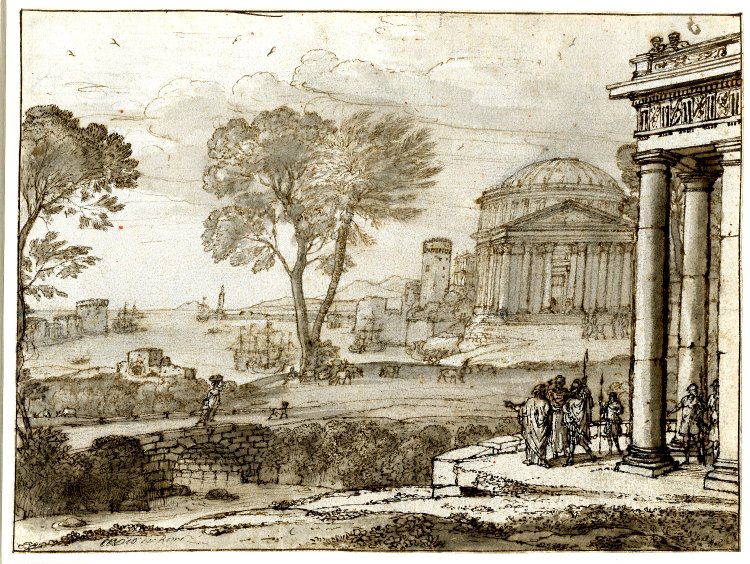
By the time Cole got there, Philadelphia had become the epicenter of a revolution in publishing. A number of European and British artists tried their hand at earning a living by making portraits of the land. The first coherent attempt to portray the Hudson Valley was William Guy Wall’s suite of twenty-four hand-colored aquatints, published between 1821-1825 in sets of six (a magical number in the multiples market). My feeling is that Wall’s patrons must have backed the project in part to promote hydro-power industry and tourism in the upper Hudson Valley. The final six were never published, perhaps because the opening of the Erie Canal had caused investors to look west, instead of north. And then Cole came onto the stage. I for one (perhaps because of my Philadelphia roots) never bought the standard Hudson River School creation-myth. Since the seventeenth century, landscape painting and print publishing were closely intertwined. Turner published his “Liber Studiorum” (Book of the Studio), inspired in part by Claude Lorrain’s Liber Veritatis (Book of Truth), which in effect served to copyright these artist’ compositions.
It is no coincidence that Hudson River School artists like Asher B. Durand and John Frederick Kensett began their careers as engravers. It is high time for a prequel to the legend taught by received wisdom, mostly because it’s a better story.
https://www.pafa.org/exhibitions/schuylkill-hudson-early-american-landscapes
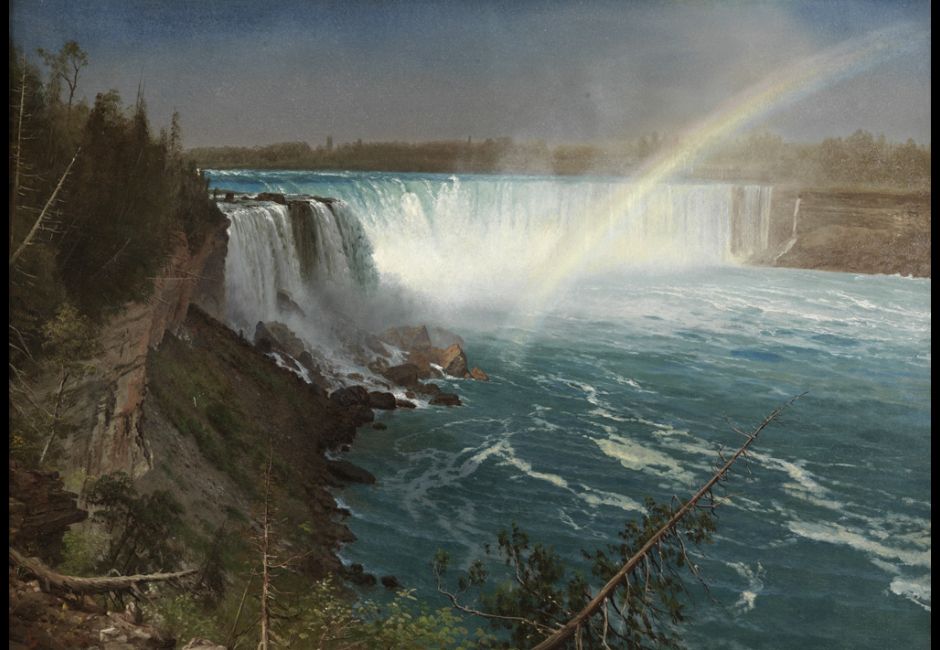
Niagara. Albert Bierstadt
View from Fort Montgomery. David Johnson. In fact, Fort Montgomery is on the riverbank at the lower left-hand side of the image. Fort Clinton was on the adjoining bluff across the creek to its right. Fort Clinton is today the western terminus of Bear Mountain Bridge. The body of water beside it is Hessian Lake. I have come across numerous misidentified landscape paintings. The actual prospect for this picture is from a ridge on the West Point Military Reservation, today off limits to the public.
For more information, follow this LINK