Category Archives: Dispatches

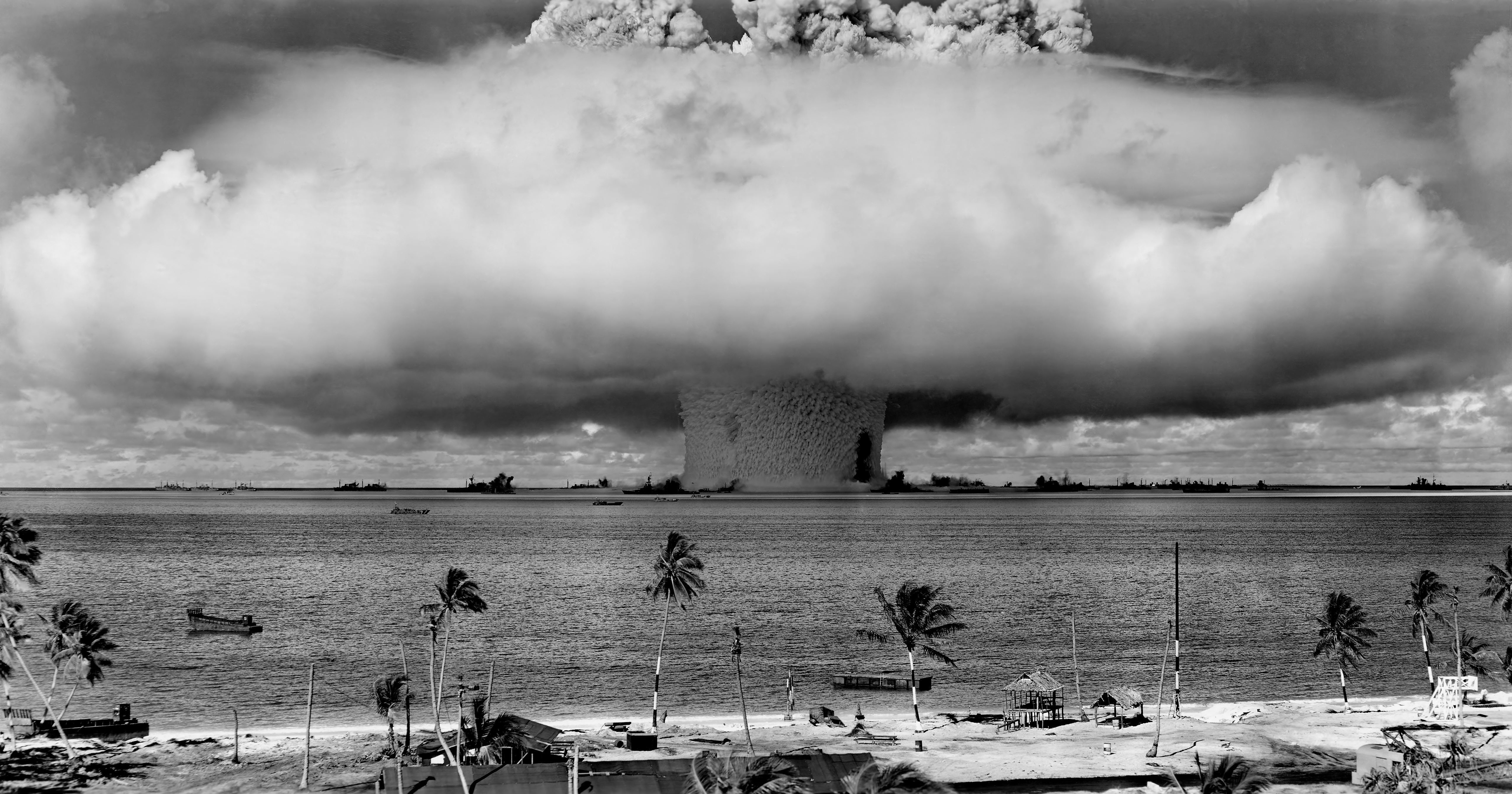
PENMANSHIP AND NUKES: A LOVE STORY

Operation_Crossroads_Baker_Edit
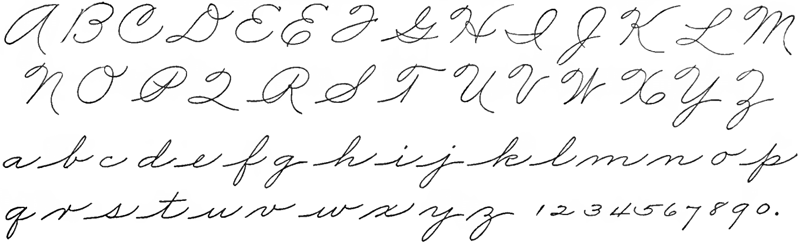
palmer-method-cursive

PENMANSHIP AND NUKES: A LOVE STORY
James Lancel McElhinney © 2014

Recent articles in the New York Times and other news feeds revealed that many K12 school districts are doing away with penmanship in favor of keyboarding. The pet canary in the educational coal mine stopped singing years ago and is now dust and feathers, proving once and for all that very smart people can do extremely stupid things.
This latest stroke of curricular folly is the brainchild of highly educated but visually illiterate decision-makers, whose educational reforms are delivered by compliant teacher-corps of cowering jobholders to willing victims and their clueless parents.
It is pointless to spill more ink trying to argue how unrelated activities can reinforce learning or enhance performance, such as singing the alphabet, or marking cadence with sea-shanties , keeping step with marching songs, or nursery rhymes as aides-de memoire.
Music reinforces math. Poetry and literature inspire eloquence. Dance and sport promote physical health. Drawing develops spatial reasoning,  with penmanship being the most easily teachable form of drawing. As John Gadsby Chapman proclaimed on the title-page of his 1847 American Drawing Book. “Anyone that can learn to write can learn to draw.”
The genesis of computer games lies in the development of weapons-systems-simulations used to train pilots, astronauts and drone navigators.
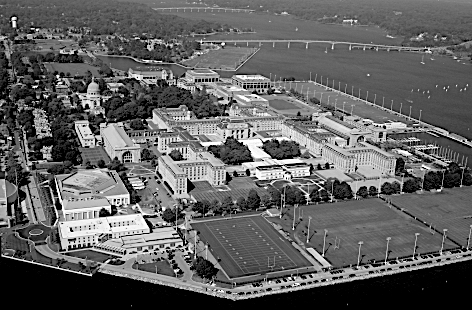
US Naval Academy, Annapolis

At a family reunion several years ago, an avuncular family friend railed against the Naval Academy dropping its course in solar-celestial navigation in favor of teaching midshipmen refinements in the use of satellite-based global positioning technology.  Uncle Bob was a graduate of Annapolis. The bulk of his career had been spent working for a certain three-letter agency headquartered in McLean, Virginia. He pointed out that without a senior chief  who knew how to handle a sextant on board, a nuclear submarine would be running blind after its payload wiped out global positioning satellites within the event horizon of the blasts. The only way for the captain to determine where he was on the globe would require reading the stars to discern the right parallel, and reckoning longitude with an analog chronometer.
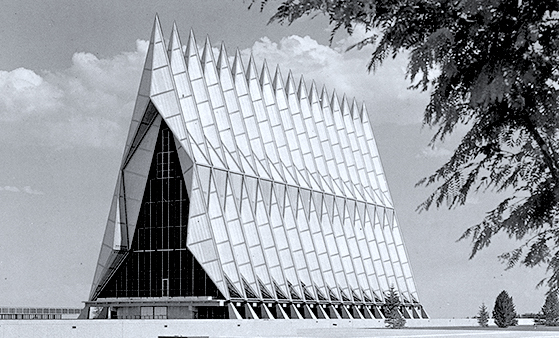
US Air Force Academy, Colorado Springs, CO

In 2001, I had been called in to pinch-hit for American Arts Quarterly senior editor Jim Cooper by delivering lectures on art at the U.S. Air Force Academy “National Leadership and Character Development Symposium”. During the midday break in the vast dining hall, I joined other speakers, cadets and senior Air Force officers around a lunch table. The conversation soon drifted from polite chatter about the menu to nuclear weapons deployment tactics.  I was fascinated by the discussion that weighed blast altitudes against megatons, to disable electronics on the surface with an electromagnetic pulse generated by detonating thermonuclear weapons just outside the atmosphere, to minimize physical damage to built infrastructure on the earth’s surface. This conversation occurred a few years before drone technology and GPS devices was marketed for civilian use. Concerns were raised that some of the electronics upon which weapons-delivery aircraft depended would be disabled by nuclear explosions. Any Navy man could have piped up and reminded the table that because a large part of America’s nuclear arsenal is aboard submarines. No fly-boys need apply. Friendly rivalry between armed forces branches of service aside, it seems that one hand knows nothing about what the other one is doing. It is this kind of compartmentalized, task-to-outcomes thinking that now afflicts our educational system today.
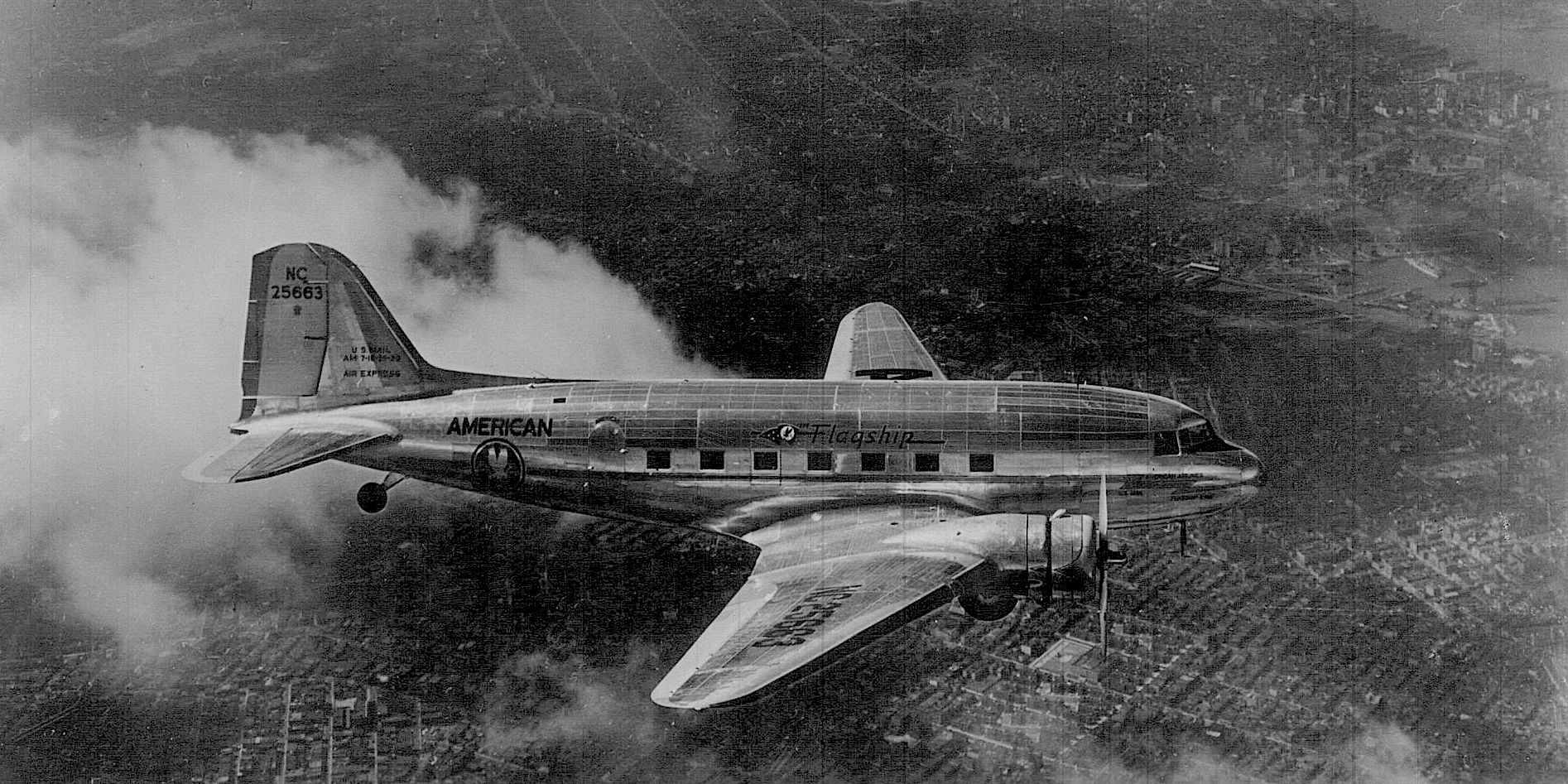
Shortly after VJ-Day, a young playwright named Arthur Miller was on a flight to Los Angeles, to deliver a screenplay he had written about the life of KIA war correspondent Ernie Pyle. Seated next to him on the plane was an engineer. Looking out the window at the desert lands below the man declared,
“You know, all that dry land could become a breadbasket. Below the desert lies one of the largest freshwater aquifers in the world.”
“But how do you get water to the surface?” Miller inquired.
“Nuclear explosives,” the engineer calmly replied.
“Wouldn’t that contaminate the water?”
“Oh that’s not my department.” The engineer replied.
Whatever skills one can learn in a flight simulator or with a X-Box are provisional, offering no guarantee that proficiency in virtual reality will be entirely applicable in physical environments.
In principle, manning the controls of a biplane or crossing the ocean in an open boat is the same as remote-piloting a drone or skippering a supertanker. Meanwhile, back at Annapolis, new classes of midshipmen are being taught to privilege their tools instead of developing a greater capacity for problem-solving traditional analog crises. In plausible battle scenarios, a nuclear detonation just outside the atmosphere could knock out every satellite within range of the blast, shutting down computers on the surfacet, including those on the sub that launched it. New tools do not render old skills obsolete. GPS, like computer keyboards, CADD and other new tools offer welcome conveniences but they have not relieved us of the necessity for us to be able to think for ourselves.
Dark days  have overtaken the overseers of pre-college and higher education. As unwitting victims of the same faulty learning-systems they now direct, they fail to grasp that they have become part of the problem.
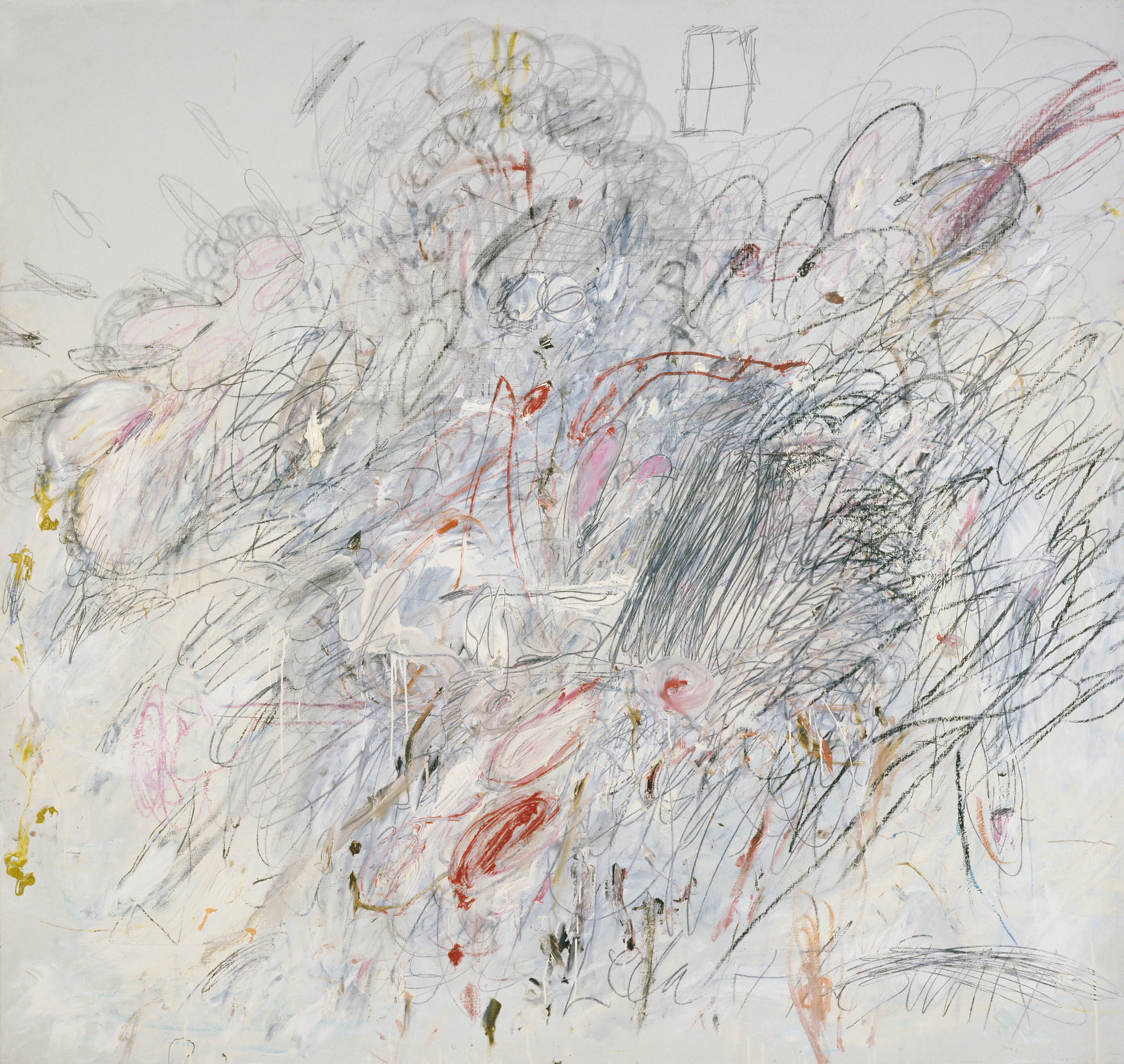
Cy Twombly. (1928-2011)

Cults of self-expression that arose during the 19th century threw the baby out with the bathwater. Spinning the history of drawing as indivualistic mark-making justified their existence, while inadvertently hijacking what once had been a widely-taught visual language into something reserved for poetic use.  English is taught to everyone; not just those with literary ambitions. Math is required for all; not only future physicists or engineers. And yet drawing, which Horace Mann called “a moral force”, and “an essential industrial skill” is reserved (under the dubious rubric of “art”) for those professing artistic aspirations, and other seeking after-school “enrichment” programs.
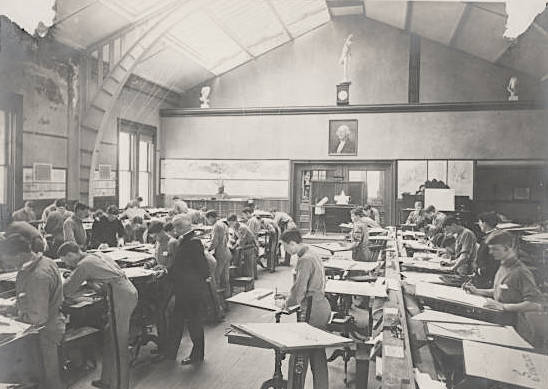
Drawing class at West Point. Second and third-year cadets were required to attend drawing classes for two hours each day.

Many artists today are unaware that drawing was a required course at the military academies of Woolich, Mezieres and West Point. Not only were cadets expected to produce mechanical drawings and maps. They were taught to render topographical views with an artistic flair. Mastering the aesthetics of drawing was believed by the high command, to make keener observers of military draftsmen in ways that might serve them as explorers, and on the battlefield. Likewise, civilian education included drawing in its curricular core. Books were published for use in schools and at home, by autodidacts and classroom instruction. Drawing manuals written by Archibald Robertson, John Gadsby Chapman and John Ruskin were best sellers. Ruskin’s The Elements of Drawing  remains in print today.  Rembrandt Peale’s 1834 Graphics broke ground by mapping out a curriculum of drawing and penmanship, in the same course of study at Philadelphia’s Boys’ High School. It’s unlikely that today’s STEM-besotted educational system will fully embrace the alternative values of STEAM, for the simple reason that the financial aparatus of performance and reward favors bean-counting outcomes over expert evaluations. For this reason, the benefits of culturally enriched education will drift back into the realm of privileged learning, which in time will only serve to deepen socioeconomic divisions within our society. Should the unthinkable occur, and our civilization is devastated by nuclear warfare, survivors who can read the night sky, use flint and steel to build fires, possess the wherewithal to kill and butcher game, raise crops, and translate ideas into visual form, will fare better than those who cannot.
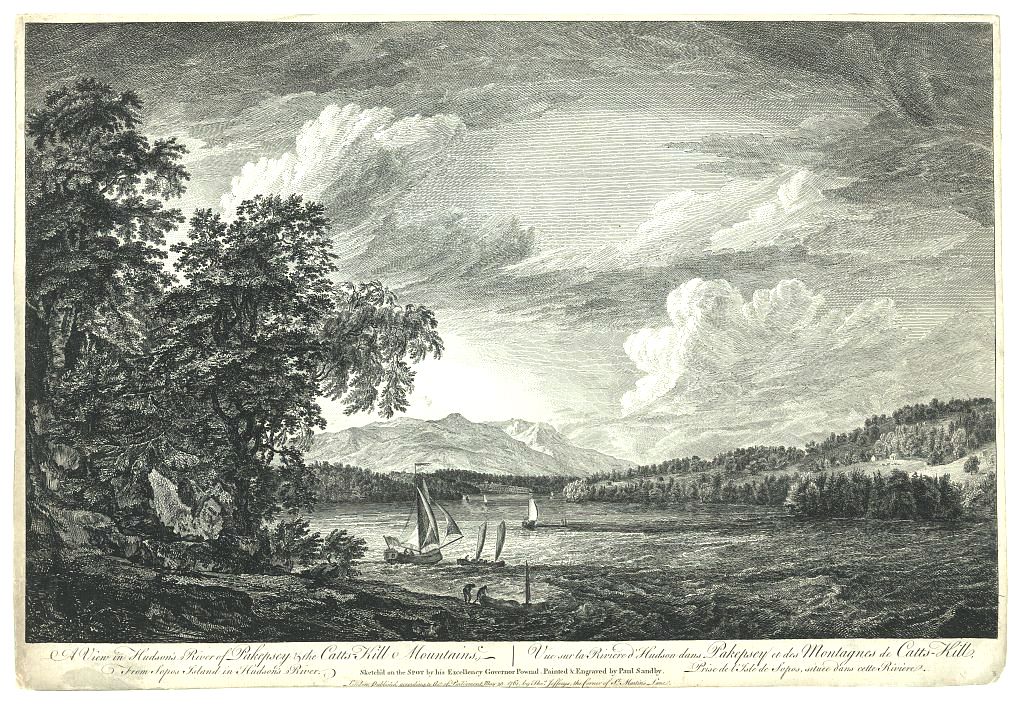
Governor Thomas Pownall. View near Esopus on the Hudson. Scenographia Americana. 1768

Report from Bentonville, Arkansas

Pea_Ridge_AR 1

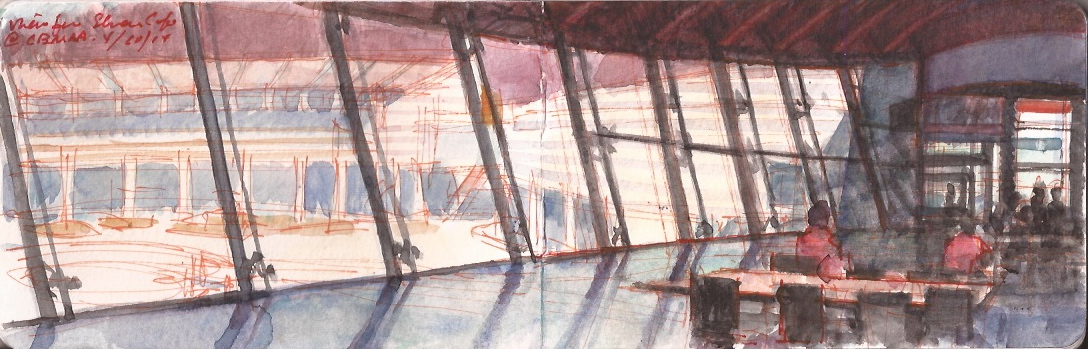
Image: Cafe Eleven, Crystal Bridges Musem of American Art.
Watercolor and Micron pens in Moleskine sketchbook
3.5 x 5.5 inches. April 10, 2014

CRYSTAL BRIDGES MUSEUM OF AMERICAN ART: THE SHAPE OF THINGS TO COME

For years it was whispered that Alice Walton, the daughter of Wal-Mart founder Sam Walton had been buying important works of American art from the colonial period to the present. Self appointed eastern elites scoffed at her plans to build a major center for the study of American art in her hometown.
Bentonville, Arkansas sits on a broad plateau west of the Ozarks, just east of the Cherokee Nation, where the western margin of the Mississippi woodlands meets the frontier of the Great Plains.
People started taking Walton seriously when she stunningly negotiated the purchase of Asher B. Durand’s Kindred Spirits from the New York Public Library.
Academics and museum specialists began to realize that the lady from Arkansas was a force with whom to be reckoned. She invited Moshe Safdie to Bentonville where together on a cold damp day they tramped through the wooded ravine where Ms. Walton envisioned her museum.
They hiked along the creek. Safdie lost his footing and fell into the water. As he scrambled out of the creek Ms. Walton asked if he wanted to cut short their tour and change into some dry clothes. Safdie insisted on completing their reconnaissance. Later, knowing that other architects were under consideration, Safdie asked Ms. Walton what process she would use to make a selection.
She smiled and said that her decision had just been made.
Safdie’s building wraps around the base of a curving wooded slope, with “bridges” crossing the pond at the bottom of the ravine. The central “bridge” is a large dining and commons area where meals are served by Café Eleven, the number being significant because the museum opened on November 11, 2011—the eleventh day in the eleventh month of the eleventh year of the new millennium.
To the north another “bridge” crosses the base of the pond, where it drains into a stream flowing northward into city parks. At the opposite end of the curving main structure is the Great Hall, an events center, auditorium and reception hall.
Many of the wall surfaces throughout the building are curved. Supporting the roofs covering the Great Hall and “bridges” are huge, arcing laminated wooden beams like ribs of ancient ships, tied together by an ingenious system of steel rods which also support walls of glass that seal the gap between the floors and the ceilings. These are the “crystal bridges”—spacious and luminous interiors, above which hover turn-turtle carapaces of wood and glass.
Upon entering the building one is greeted by friendly, attractive staffers who ask if this is your first visit to the museum, before directing you to the reception counter. Free admission is underwritten by Wal-Mart, but special exhibitions such as the William S. Paley Collection, presently on loan from MoMA, require a special ticket. School groups bussed in at the museum’s expense fill the galleries and are treated to free lunches.
I was completely ambushed by the collection, especially the American modernists like Arthur Dove, Marsden Hartley, Stuart Davis, Max Weber and Joseph Stella. The collection has a stunning Copley, a canonical Revolutionary-war era portrait of Washington by Charles Willson Peale, and a fabulous wall of hummingbirds in South American landscapes by Martin Johnson Heade. First rate works by Hudson River School artists include Durand’s Kindred Spirits and an unusually fine Crospey.
Recently Crystal Bridges paid a princely sum to Fisk University for a fifty percent interest in the Alfred Stieglitz collection, which had long been locked away from public view. Now on exhibit at CBMAA, it is full of surprises.
Also on view was a comprehensive exhibit of American watercolor painting and a contextual exhibit of drawings and studies for Edward Hopper’s Blackwell’s Island, recently acquired at auction by the museum.
Weather-permitting one may trek a series of footpaths and trails along which are strategically positioned sculptures such as a Luis Jimenez Vaquero and a site-specific light installation designed by James Turrell, one of Alice Walton’s favorite artists. Following the trails into the town center one passes through Compton Gardens, a public park extending from the former home of nature conservationist Dr. Neil Compton that winds its way behind private residences along paved walkways inhabited by sculptures from the Crystal Bridges collection, like Paul Manship’s monumental Group of Bears.
A few steps beyond Compton Gardens is 21C Museum Hotel, which one might expect to find in South Beach or Beverly Hills, not a city block from a typical Southern courthouse square with park-benches orbiting a pillar on which a Confederate soldier stands at “parade rest”.
Bordering the square are upscale eateries, banks, and private retailers. Under construction just off the northwest corner of the square is the kind of mixed-use retail-residential building advocated by New Urbanists, staunch opponents of laissez-faire zoning and the automotive strip-mall netherworlds where Wal-Mart reigns supreme.
Challenging regional philanthropists to use culture to transform hometowns into national destinations, Crystal Bridges celebrates art as medium of public salubrity, a way to build community, and a vaccine against mediocrity.
Art makes sense, like everyday low prices.

New Auction Maneuvers

https://paddle8.com/work/frank-hyder/28805-fish-egg

Most folks who associate auctions only with secondary market sales must not have gotten the memo about Jeff Koons’s new “Popeye” sculpture, or Frank Hyder’s “Fish Egg”. Both are offered for first time sale in a bidding environment. While both pieces are expected to sell for wildly different prices, these two MICA graduates represent a growing number of artists who are bypassing the galleries altogether. Stay tuned

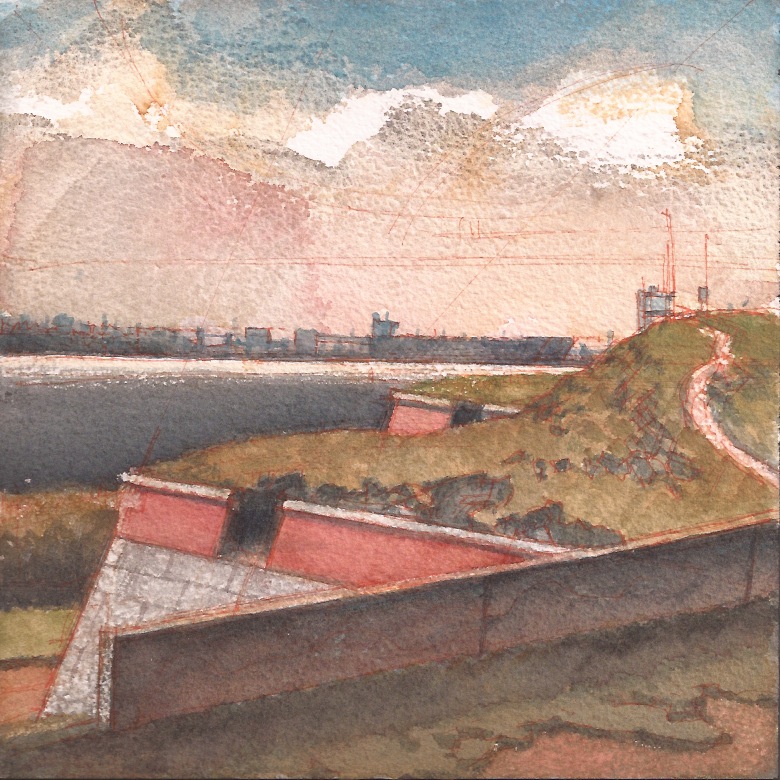
Mud Island Fort, Delaware River. Watercolor on Arches paper, 10 x 10 inches

FT Mifflin

Mud Island Fort, later renamed Fort Mifflin, was built by the British during the French & Indian War. It was later expanded, strengthened and defended by Continental Forces who lost it to the British in 1777 and recovered it the following year. During the Civl War it served as a POW camp, run by artist-soldier Seth Eastman, who later served as commandant of the notorious prison pen at Elmira. In gratitude for his life of military service the House of Representatives gave Eastman a retirement sinecure in the form of a commission to paint America’s historic forts, including Fort Mifflin. The paintings now hang in the hallways outside the House and Senate offices in the US Capitol. Eastman died at his easel working on a view of the North Gate of the Hudson from Land’s End at the U.S. Military Academy at West Point, where as a young officer Eastman wrote and published the academy’s principal text on topographical drawing. He briefly served as interim head of the drawing academy at West Point, before Robert Weir stepped in to rule the roost for the next four decades. Eastman is also the grandfather of Dr. Charles Eastman, a popular writer and a central character in Bury My Heart at Wounded Knee by Dee Brown.

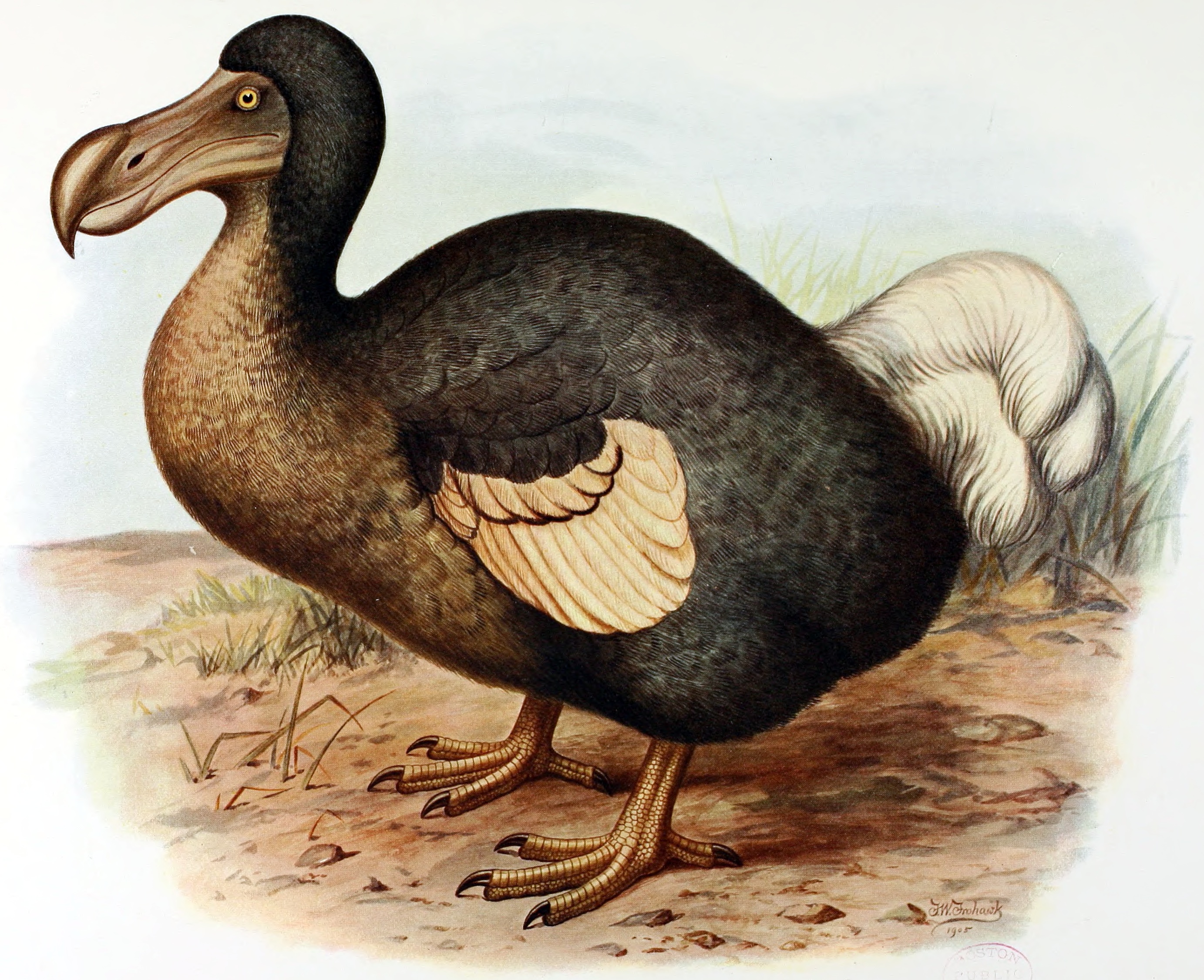
I had an interesting conversation the other day with a painter friend about issues of style, which I proposed were now obsolete, or at least far less important than perhaps they were once upon a time. I didn’t have a good reason but then after hanging up had a “L’esprit de l’escalier”. Carl Linnaeus. Like so many things in our society modes of classification (including art) derive from science, which provided the model for organizing art into movements and styles. Genetic research has shaken up Linnaean methodology, and while nobody is quite ready to throw the baby out with the bathwater, the historic paradigm needs a serious upgrade. The common thread between art and science is too obvious to mention without insulting the reader, but it is encouraging to regard sound reasons to abandon weary monikers like “realist”, “abstractionist” and “conceptualist”.

Frederick William Frohawk, 1907

Pocket Studio Mobility

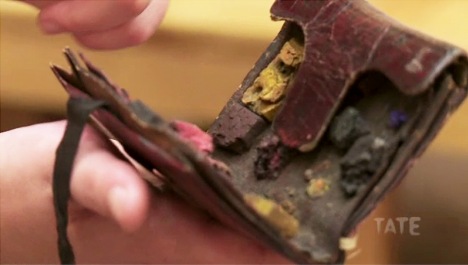
Turner leather palette

Visiting the Royal Pavilion in Brighton last year we took in an exhibition of Turner’s work in and around the seaside resort. in a vitrine was a small leather object resembling an old-fashioned wallet, which the label identified as Turner’s watercolor field palette–the precursor of Windsor-Newton bijou box. Combining ingenuity and simplicity, this humble fold-up paint caddy was for me a highlight of the show. Pigments ground in gum arabic with a small quantity of glycerin were formed into cakes and pressed into sheets of canvas sewn to a sheet of leather equipped with a tongue and strap closure. Water-activated cakes did not appear until the 1830, which puts the object in Turner’s possession closer to the end of his life. Didactic information supporting the display did not reveal what else Turner may have carried in his pockets; sketchbook, small porcelain or enameled metal mixing surface, water-flask and brush roll-up.

Talking About Art: Interviews for the Archives of American Art

From 2006 to the present I have had the privilege of interviewing many leading artists, dealers, collectors and scholars. A number of these interviews have been transcribed, others are restricted by available with permission according to conditions approved by the donor/ narrators. A link is available by clicking “Oral History”  on the toolbar.


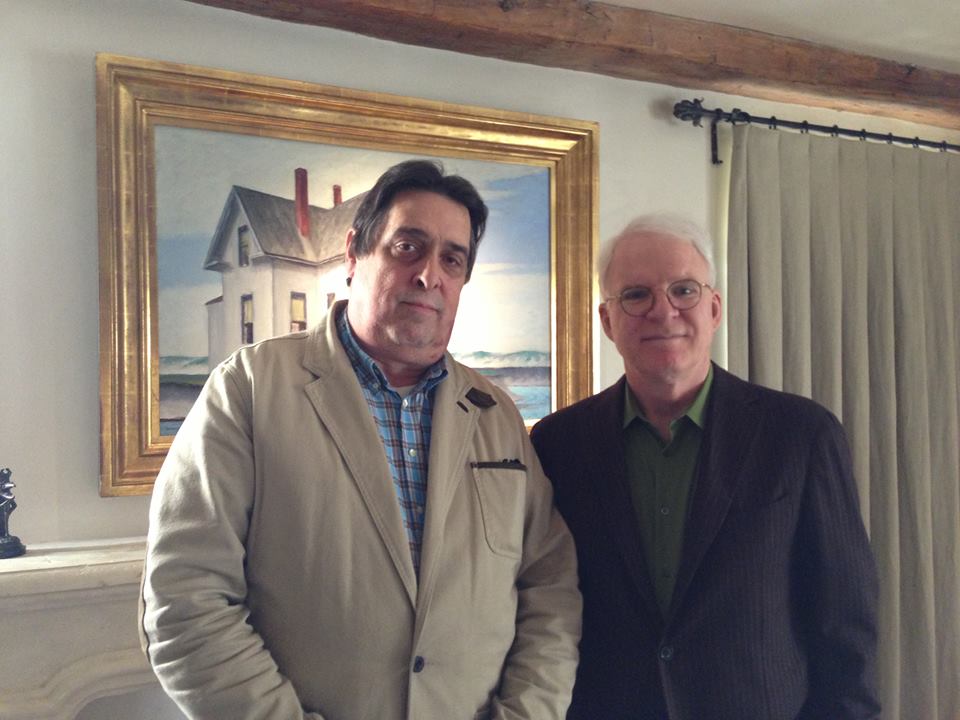
JM&SM

Starry Night Retreat

For a young program Starry Night is impressive with a residency facility in Truth or Consequences, New Mexico and programs bringing artists to Miami and New York. Plans are underway to expand operations to Hong Kong. Starry Night is one of a new crop of retreats and programs that represents a shift by younger artists away from academia, which offers fewer opportunities. Today a bumper crop of newly minted MFAs is forced to compete for jobs with mid-career artists for a dwindling number of positions. Pro-se activities by artists is on the rise. Expect to see more of it


New Arts Publishing. Litchfield, Connecticut

Tony Carretta is a visual artist who since 1996 has owned and operated New Arts Gallery on the southern fringe of the Berkshires in Litchfield County, Connecticut. In the past few years Tony has begun publishing a series of books about some of the artists he represents. The page devoted to Mapping and Mobility: The Sketchbook Art of James Lancel McElhinney still displays the poster for the launch event at the Art Students League of New York. Click on Publications in the tool-bar to find other titles.

http://www.newartspublications.com

In many ways Tony has been ahead of the curve as a growing number of visual artists are conducting themselves as entrepreneurs. A conversation with artist-attendees of the recent College Art  Association conference in Chicago like Seatttle-based artist Monika Proffitt bears this out.  Instead of rushing around to interviews for teaching jobs Monika and a few of her colleagues worked the Starry Night Retreat exhibit inside the book fair.


Greetings

Welcome to the website. For the past four years I have used Facebook as my conveyance through the Blogosphere. Graham White (http://www.gwhite.us) has done a tremendous job putting this site together. I am grateful for his patience and insight.

While I will continue to share things on Facebook and participate in its boisterous freeform banter, my more serious posts will emanate from mcelhinneyart.com.  This new blog will be focused on drawing, visual pedagogy, oral history, historical activities and new projects.

Visitors are encouraged to call on the site as frequently as they like, and to follow it on Facebook. Direct communications are welcome via the contact link on the toolbar.

JLM, New York City. January 16, 2014