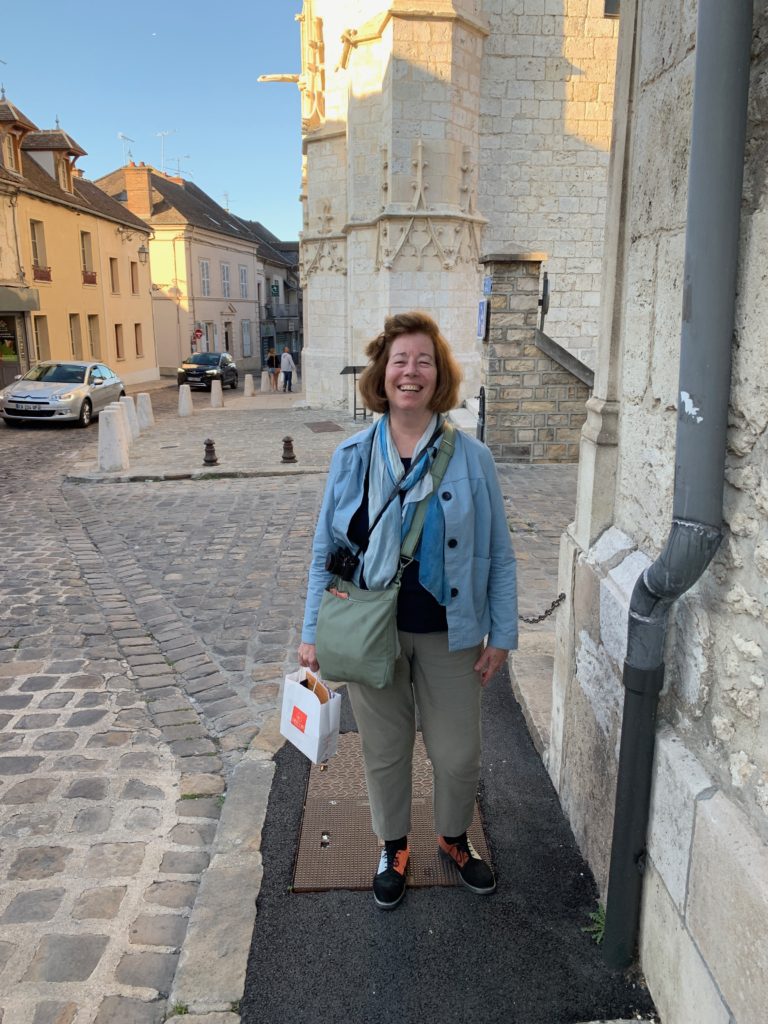
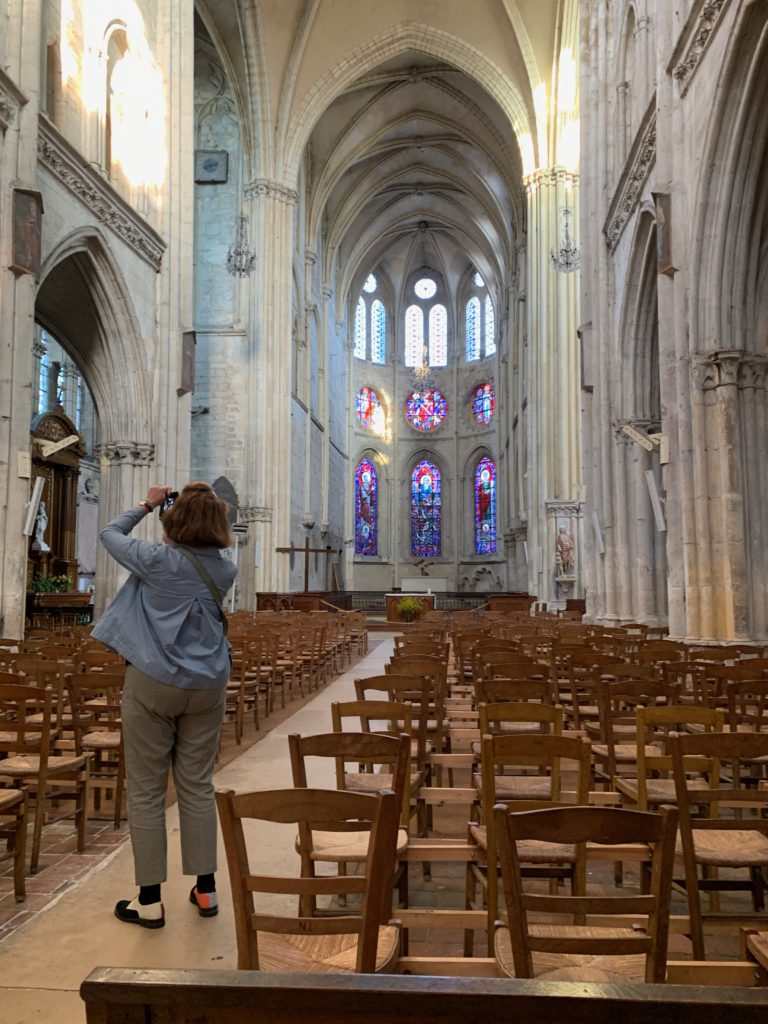
Kathie Manthorne. Boots-on-the-Ground art historian, with a bag full of barley candies. Since people will ask, the polychrome Oxfords are by Camper, acquired in June at On Your Feet in Santa Fe, New Mexico
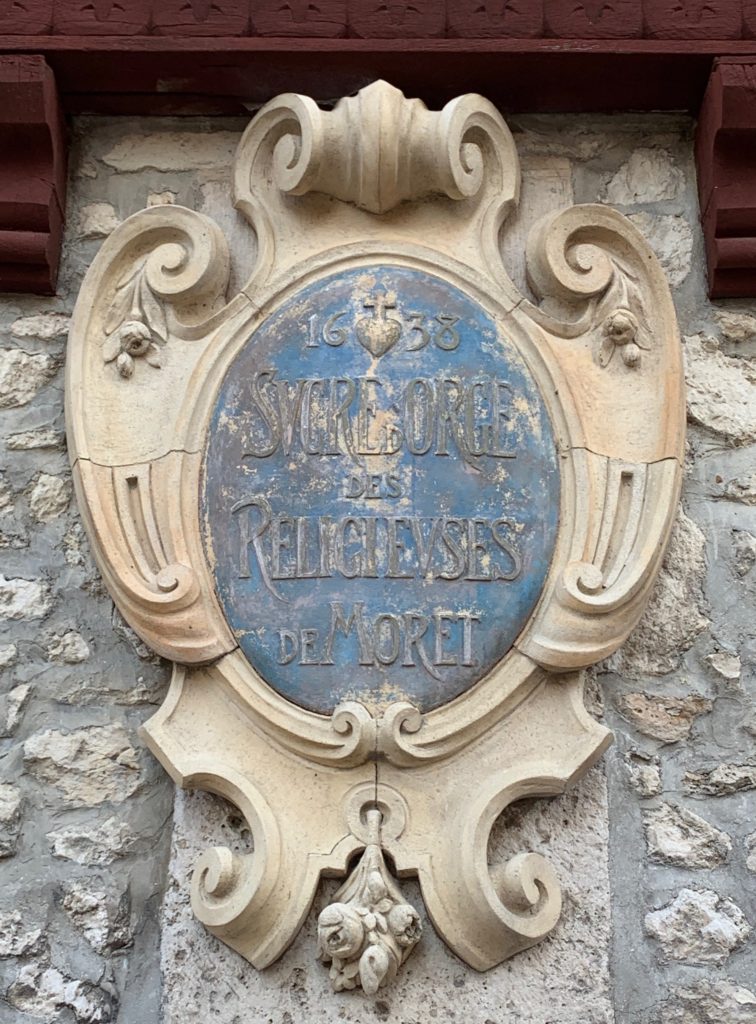
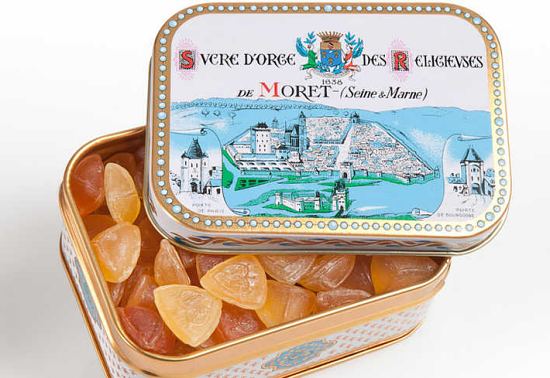
Backtracking past the city hall, we walked along Rue Pave Neuf until we came to Rue de l’Eglise. Kathie had decided that we urgently needed to acquire a quantity of the famous local barley-candy for future use as gifts. Previous attempts to visit the shop had found the place closed. Turning right onto Rue de l’Eglise, we walked uphill a few blocks to the church. Beyond it on Place Royal we espied our objective, lo and behold–open for business. A painted stone cameo framed in carved heraldic scrollwork, announced that Sucre d’Orge Religieuses de Moret had been in business since 1638. These sweets were first produced in Moret by Benedictine nuns, although their origins surely date to a much earlier time. De Lis Chocolat has preserved its historic appearance, behind a half-timbered shop-front. Wooden shelves and countertops were piled high with sucker-candies, packaged in everything from small sacks to colorful painted tins. An attractive matron stood at the ready, to assist shoppers and take their payments.
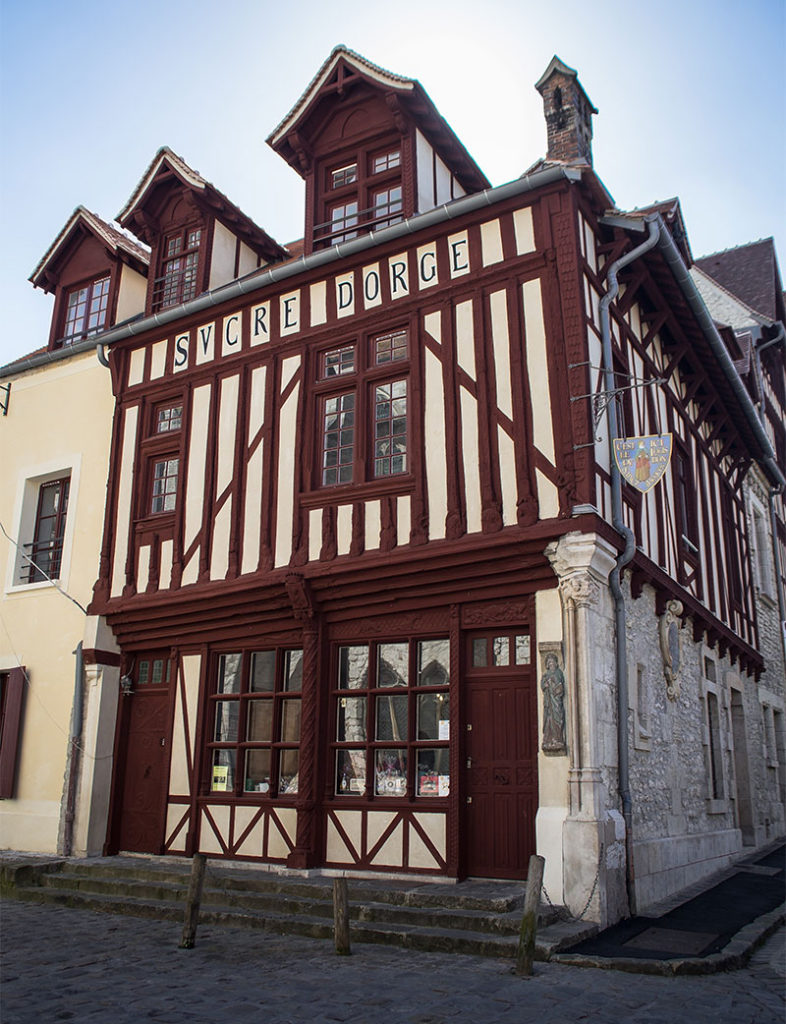
Des Lis Chocolat.Boutique Sucre d’Orge des Religieuses de Moret. Rue de l’Eglise and Place Royale, More sur Loing, Ile de France.
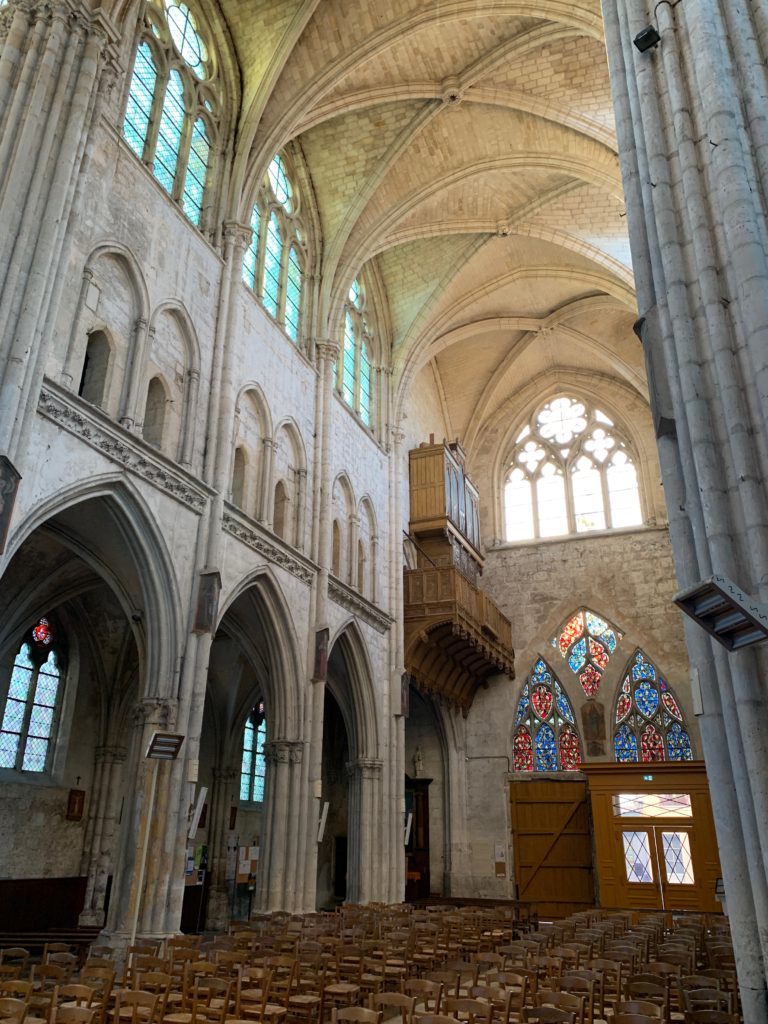
Our first mission accomplished, we seized the opportunity to visit the church. Finding it open, we entered and lit candles in memory of the recently departed. Notable for its historic pipe-organ, l’Eglise de Notre Dame de la Nativite is a cathedral in miniature, with soaring vaults above light-flooded spaces. Construction began in the 12th century, around the same time as the Donjon and city walls. Suffering physical damage during the revolution of 1789 and employed for a variety of secular functions for the duration. It served as a subject for a number of paintings, including one by J.B.C. Corot, and later by Alfred Sisley, whose house stands around the corner and up the hill. Today the church serves an active congregation as a place of worship, and the general community as a concert venue.
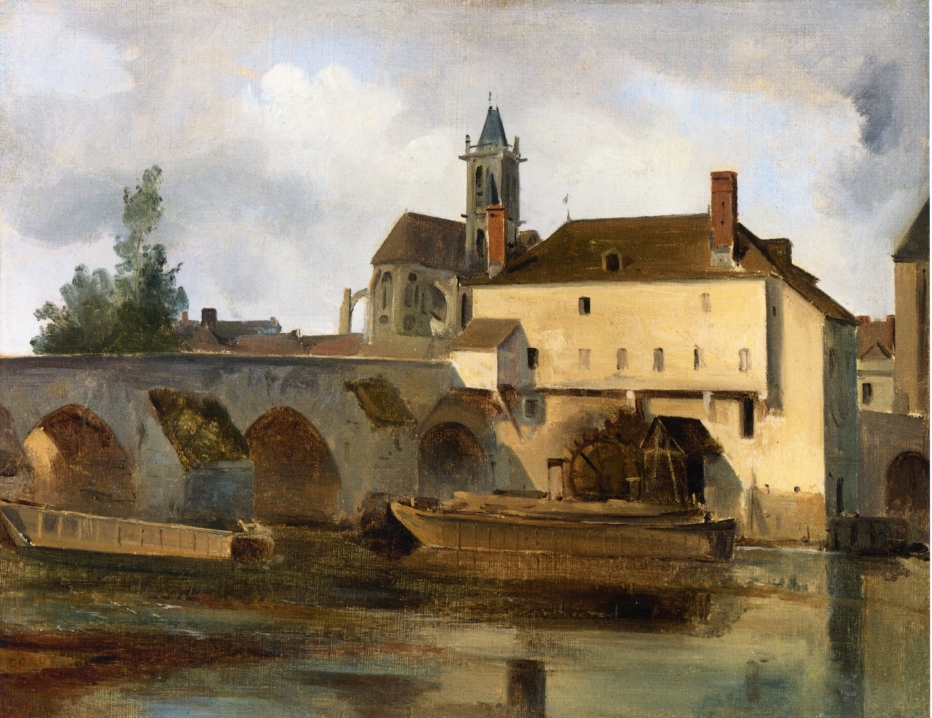
View of Moret by J.B.C. Corot. 1822
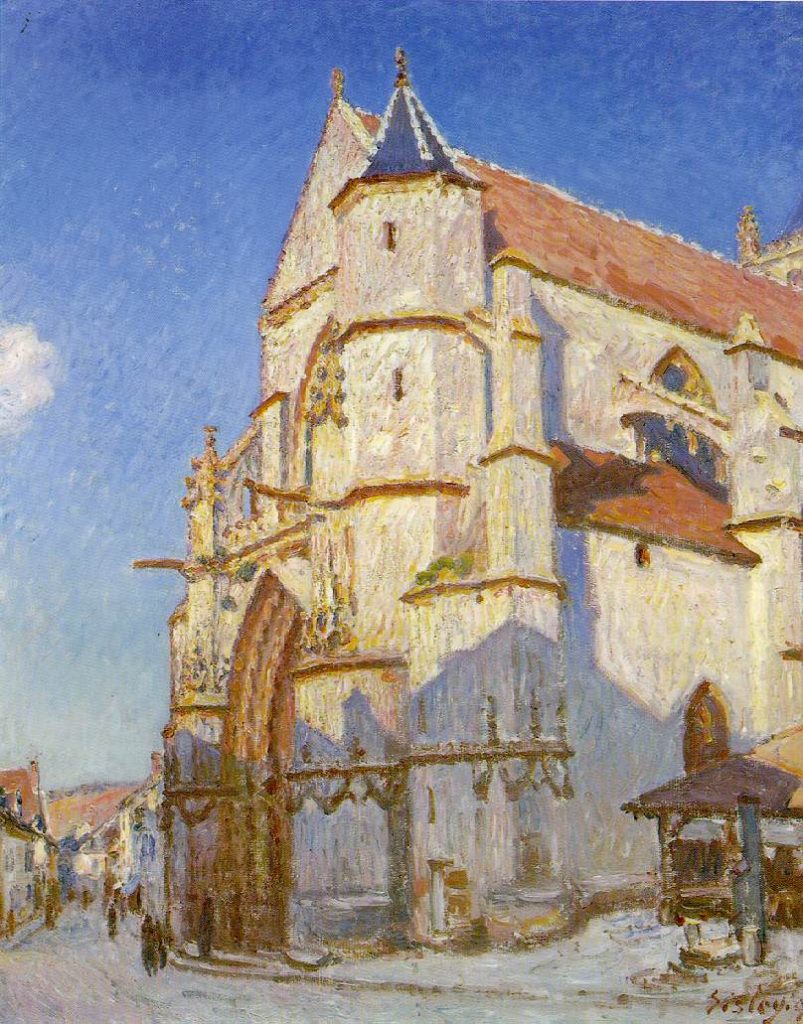
The Church at Moret by Alfred Sisley. 1894. The view is from the corner of Place Royale looking north along Rue de l’Eglise, next to Boutique Sucre d’Orge
According to Kathie’s research Kathleen Greatorex had developed a close friendship with Sisley near the end of his life, buying paintings to provide him with some financial support. Her grandfather had been a Methodist circuit-preacher. In spite of that, and her own Anglican upbringing, Kathleen Greatorex must have shared her mother’s ambivalence about sectarianism. Eliza Greatorex once had an audience with Blessed Pope Pius IX, and had become a close friend of the parish priest during her sojourn in Oberammergau. Contemporary accounts characterized her beliefs as more spiritual than religious. We had come to Moret to find a piece of real estate. We also found ourselves walking in the footsteps of three remarkable expatriate women, whom we had come to know over the years. We stood in the nave. Light streamed through the windows. A chill ran up my back. For a moment, I had the feeling that were I to turn around, they would be there behind me. Having accompanied Kathie on many research trips in search of Eliza Greatorex and her daughters; to Cragsmoor, Ireland, Bavaria, Manitou Springs and now Moret-sur-Loing, nowhere else had I felt their presence so palpably. Throughout the process of reassembling their lives into a coherent narrative, Kathie had been challenged at every turn. Eliza Greatorex once said, “I hate to write letters”. What personal correspondence she left behind is scattered through a variety of private and public collections. Much of the factual details of her biography is drawn from newspaper articles and accounts left by others. Like many Irish parents, she kept her children close. Supporting Eliza’s enterprise in many ways, the daughters never married perhaps because they were always doing her bidding. By the time they had reached Moret, Eliza was slowing down and both of her girls would have been considered old maids. Having come this far, we decided to take a final pass at reconfirming the location of their residence, on our way back to the hotel.
Upon leaving the church we turned left, walked south up Rue de l’Eglise, to its intersection with Rue des Fosses at the top of the hill. Here we turned right, heading back toward Place de Samois. I had the idea that perhaps we might get a glimpse behind the walls, in order to get a better sense of the scope of what we now believed to have been the Greatorex establishment. The only confirmation we had received so far concerned the modest house on Rue Pave Neuf. Questions remained. Where was George Barnard’s studio, that almost was rented by Rodin? Where was the garden described in letters written by Eleonore Greatorex and Sarah Hallowell? Where were the boundaries? What was the extent and configuration of the property? We passed Rue du Clos Blanchet, which led back to the labyrinth of alleyways we had explored on Monday. Rue des Fosses then veered to the right. At the foot of the hill I recognized the now familiar Place de Samois, our final destination. Rooftops were awash in golden light, like the church in a painting by Sisley. Across the street a woman collected her mail. We asked if she knew anything about a group of American women artists living nearby, long ago. She shook her head. When I mentioned the word “ramparts” she replied “la”, pointing to a rough stone wall with a garage-door, painted green. Next to it was a shuttered building with pitched roof and brick chimney that a real-estate agent might call a cottage. In a letter to a friend in 1909, Sarah Hallowell mentioned that “…Miss (Kathleen) Greatorex has her home on the extremity of her property”. If she had sold the house on Rue Pave Neuf to the Hallowells, and was renting buildings to the likes of George Barnard, where had her residence been located? At the far end of the facade was small arched doorway. Just beyond that, set back atop the wall that runs along the sidewalk, was a small stone plaque into which was set a mail-slot. On its metal flap was inscribed “STOP PUB MERCI” (No junk-mail please). Onto the stone surface above the mail-slot was carved: LES REMPARTS. (The Ramparts). Could it be?
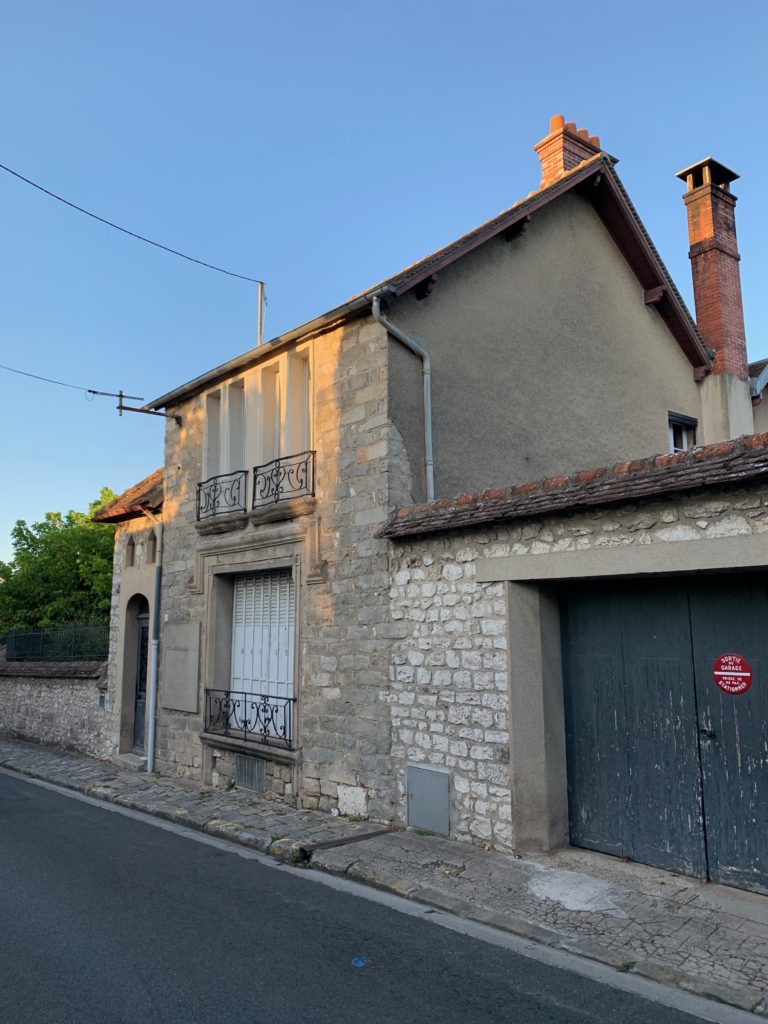
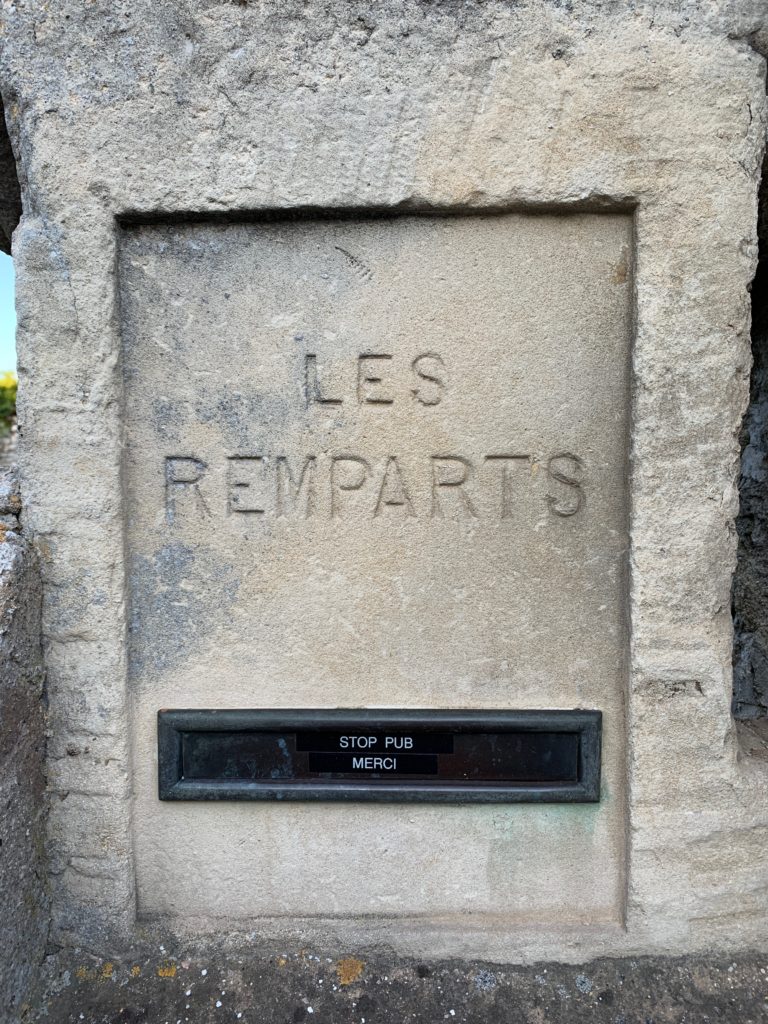
Craning my neck, standing on my toes, I peered over the wall to behold a beautiful sunken garden, enclosed by stretch of the old city walls. It was just as Eleonore had described it, like an amphitheater. At its southern end stood an elegant home, tucked up behind the smaller building that faced Rue des Fosses. The street was on the same level with the second floor of the main house, or the premier-etage if one starts counting above the ground floor. Making note of the name on the doorbell we made some inquiries and discovered that the current residents treasured their privacy, which we were eager to respect. In just two days, our goal of discovering the final residence of the Greatorex women had been achieved. Astonished by our luck, we marched down to the Cheval Noir, where Anne informed us that a meeting had been arranged for us the following morning with Les Amis de Moret and Les Amis de Sisley. Anne then made a dinner reservation for us as the creperie next door. With a couple of hours to kill we returned to our room, opened a bottle of wine we had been saving, settled ourselves on the deck, and took stock of the day.
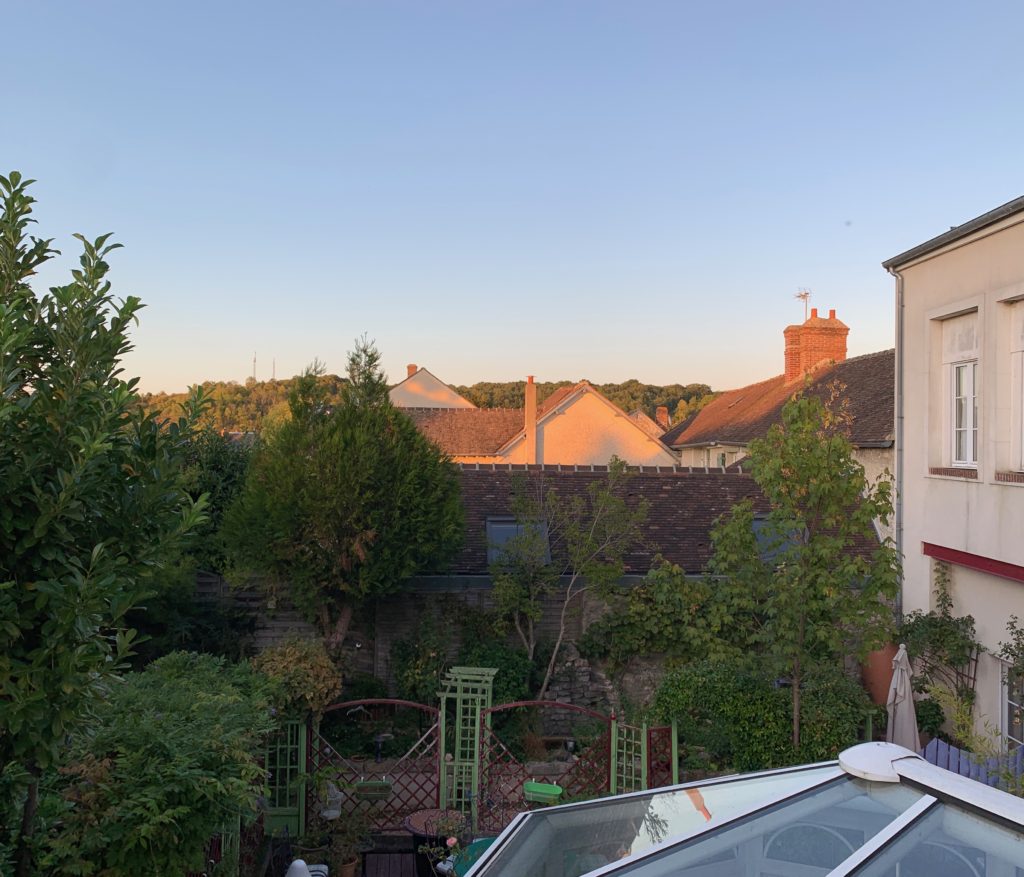
Rooftops of Moret at Sunset, from the deck behind the Chambre Monet above Courtyard of Hostellerie du Cheval Noir
(To Be Continued)