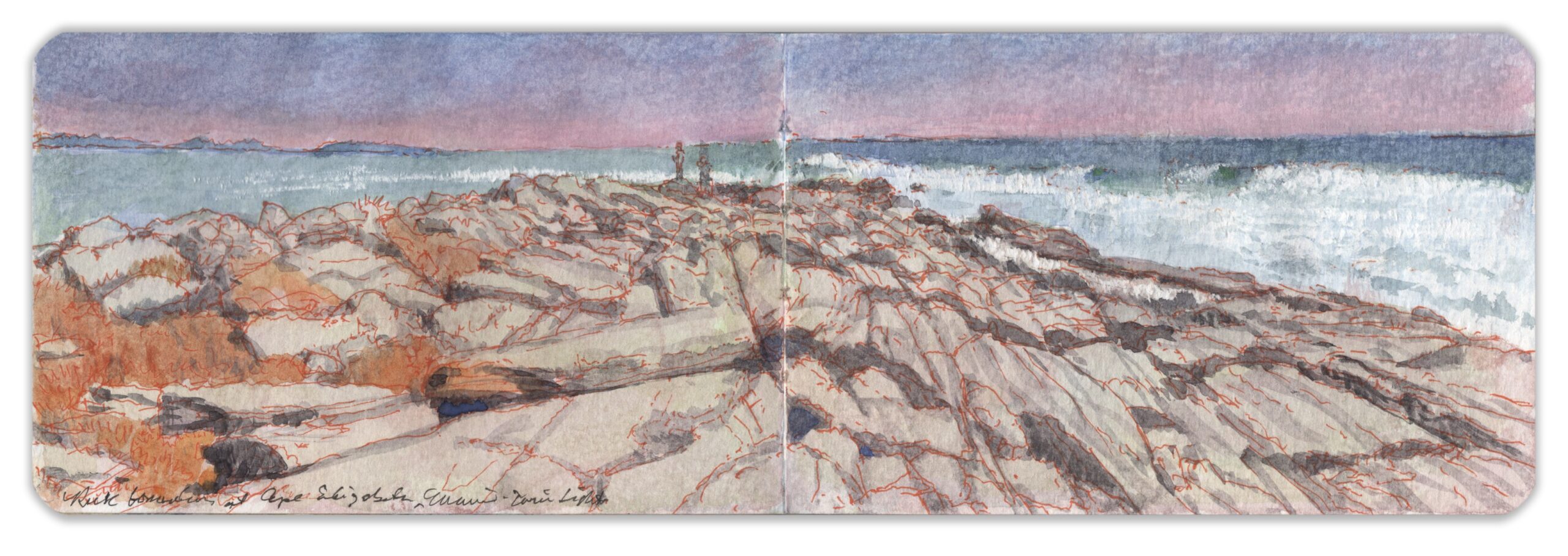
Rock Formations at Dyer’s Point. Cape Elizabeth, Maine. Northeast from 44.5648 x 70.1978. March 20, 2018. Watercolor and pen on Moleskine watercolor journal. 3.5 x 10.5 inches.
Southeast of Portland, projecting into the Gulf of Maine, Cape Elizabeth divides Saco Bay to the south from Casco Bay to the north. Like other headlands and promontories girding the shores of northern New England, it has rocky formations that provide a time capsule of geological history shaped by sedimentation, plate tectonics, and volcanism. Visible today are fragments of the micro-continent of Avalonia, scattered along the Atlantic rim into Canada, Iceland, Cornwall, and Gibraltar. Exposed to intense heat and crushed between colliding land masses, sedimentary bedrock was folded and compressed into stratified formations resembling petrified wood. As it cooled, the rock became brittle. Fractured by pressure exerted by the continuing motion of continental plates, plumes of magma arose through the fissures, forming basaltic dykes similar to those found at Cathedral Rocks on Cape Ann, the Jersey Palisades, and the Spanish Peaks area of southern Colorado. Scoured by glaciation and eroded by the constant pounding by the sea, the rocky shoreline resonated with the romantic trope of the power of nature, inspiring awe and terror, embodied by the poetic Sublime. Built in 1828, a pair of masonry lighthouses alerted mariners to submerged ledges, which, combined with ten-foot tides, remain a constant threat to shipping. The original lights were replaced by cast-iron towers in 1874, at a time when the Maine coast was being developed as America’s vacation land. The ubiquitous Shingle Style seasonal homes were popularized by architect and erstwhile landscape painter John Calvin Stevens, who worked on the renovation of Winslow Homer’s home and studio at Prouts Neck.
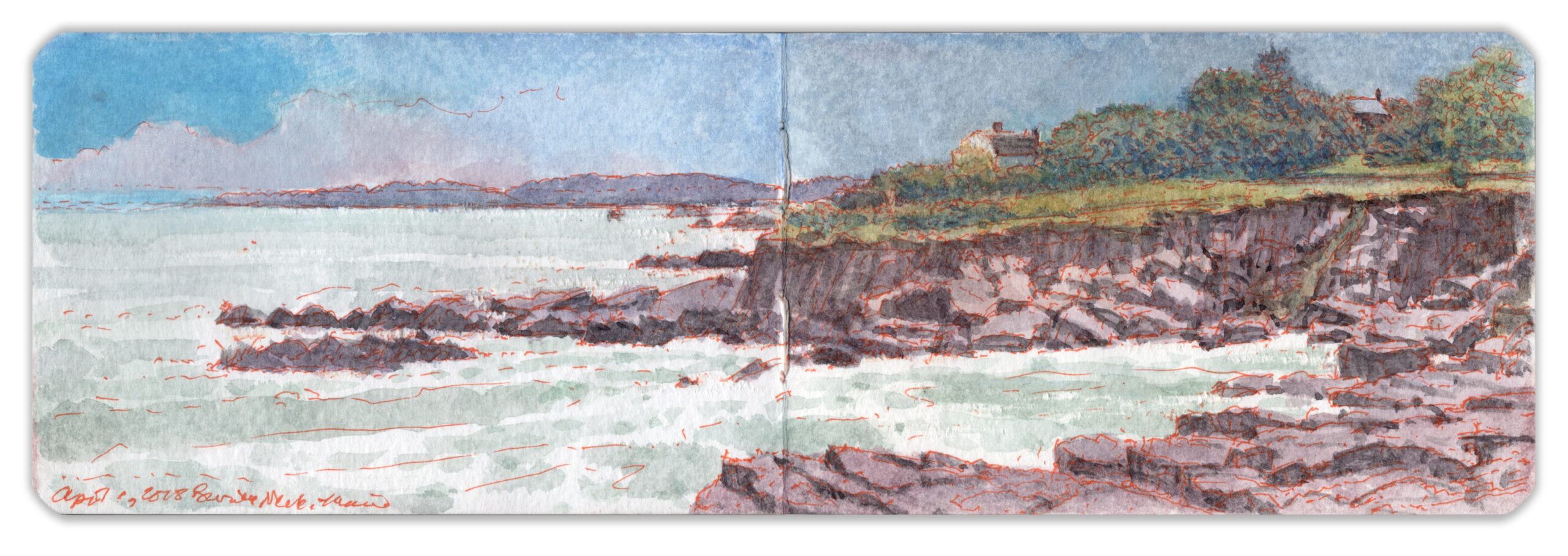
During his New York City years, Winslow Homer would hide out in his studio with a sign on the door that read, “Mr. Homer is not at home.” Following a summer on Ten Pound Island and a two-year retreat in Cullercoats on the Northumbrian coast, Homer returned to the United States. During a visit to the Maine coast, he decided to establish a permanent residence and studio at Prouts Neck, renovating a carriage house on property owned by his brother. He moved the building closer to the shoreline and provided the modest structure with a wraparound porch for painting in all seasons. Prouts Neck is connected to the mainland by a bottleneck rimmed with sandy beaches; its geology is the same as that of Cape Elizabeth—folded and fissured Silurian bedrock crisscrossed by basaltic upflows. Revealed by ten-foot tides, crevasses draped with marine flora form tidal pools teeming with life. In violent weather, rough seas crash against the shore, launching great plumes of spray that fall like rain on glistening rocks. This tiny headland became Homer’s muse for the rest of his days. His studio has been preserved and is maintained by the Portland Museum of Art. A son of Irish immigrants later recalled watching Homer sitting out on the rocks, at work on a canvas. Working at the Gem Theater on nearby Peak’s Island, the teenage Sean Martin Aloysius Feeney fell in love with the movies. Hollywood later lionized him as the iconic film-director John Ford.
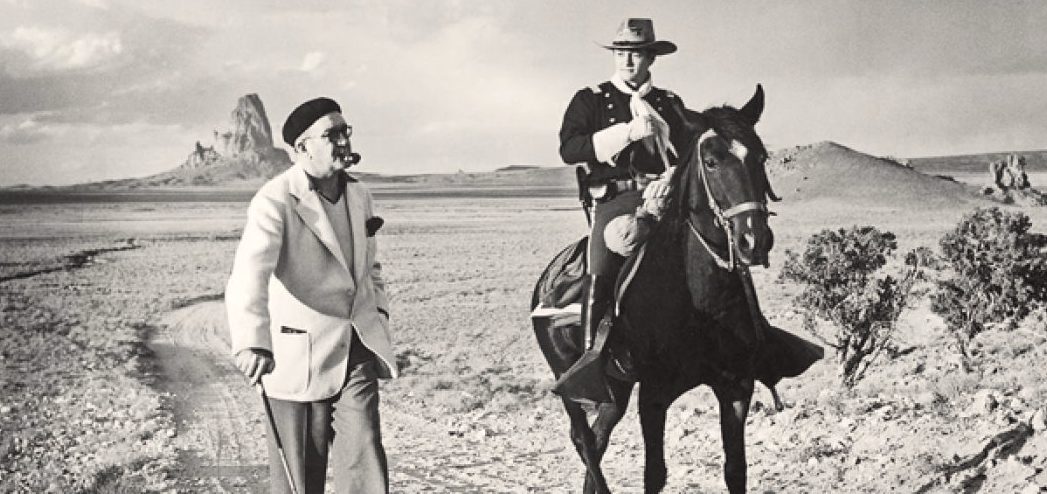
John Ford (left) with John Wayne during the filming of “Fort Apache” at Monument Valley in 1948
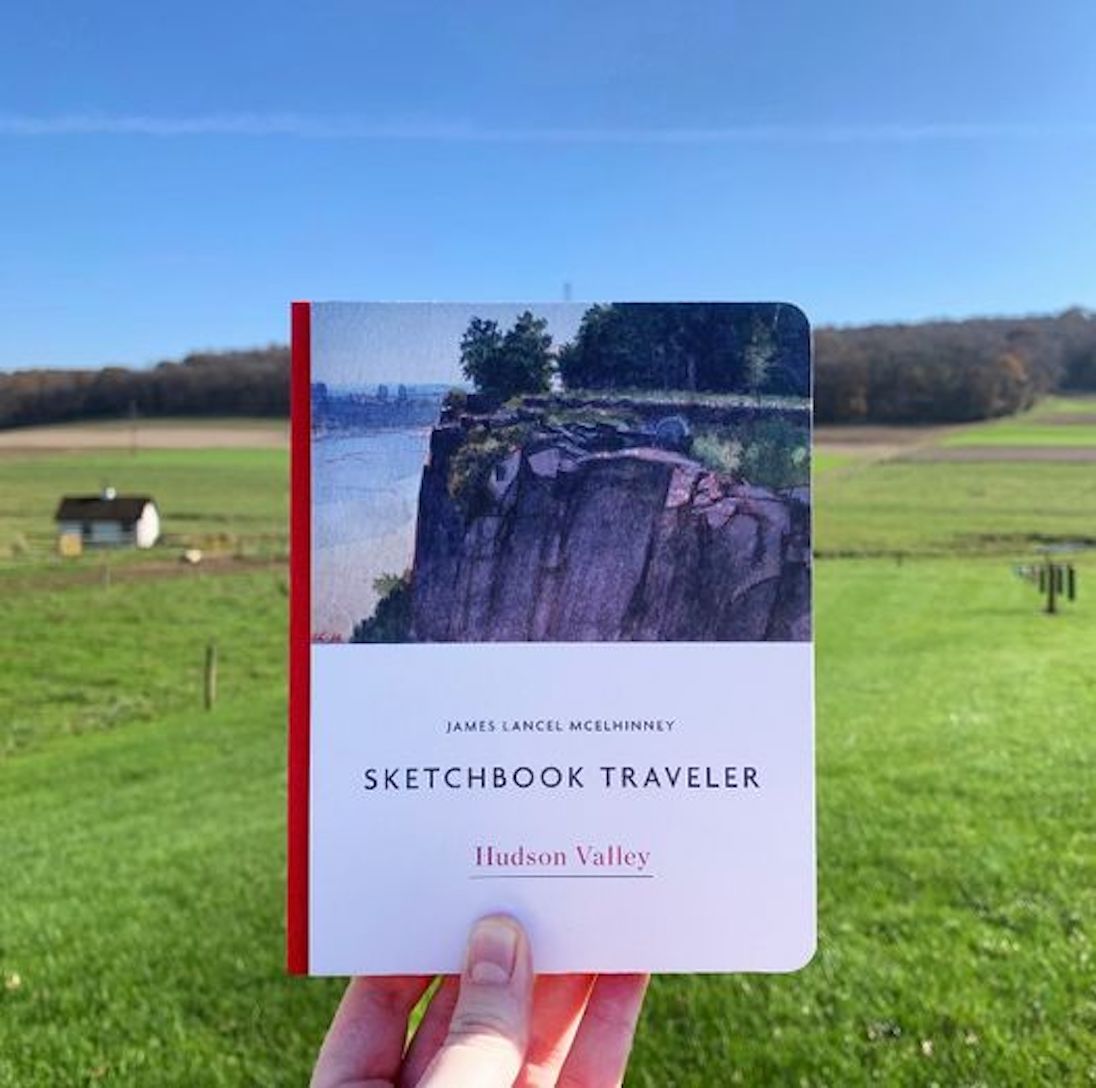
Now available to own: Sketchbook Traveler: Hudson Valley
Explore my Quaranteam Dispatches, from April 1-June 8, 2020