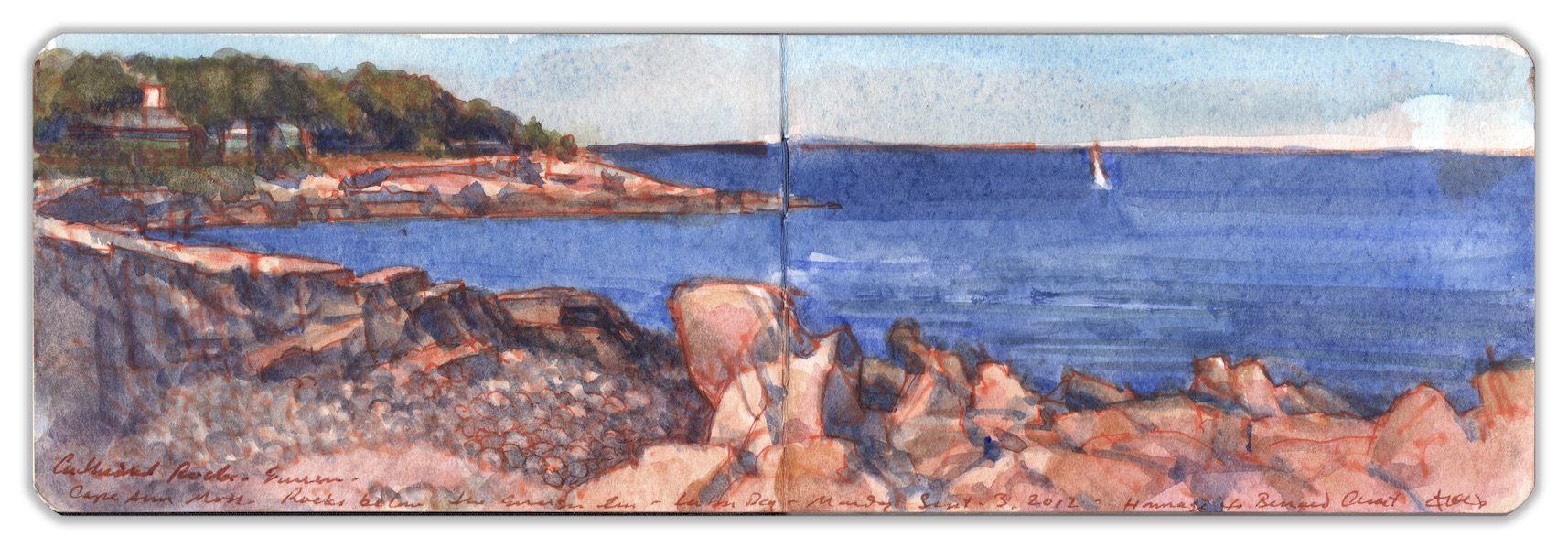
Cathedral Rocks below Emerson Inn. Labor Day. Monday September 3, 2012. Homage to Bernard Chaet
At Joshua Tree National Park, rocky outcroppings were formed as a byproduct of plate tectonics and shaped by erosion. The fractured granite headland known as Cape Ann was generated in much the same way, with a few noticeable differences owing to climate. While the southern Mojave formations were sculpted by wind and chemical erosion, the granite shoreline at Cape Ann is also subject to extreme fluctuations in temperature. Water seeps into tiny crevices during the warmer seasons. As the mercury slips below freezing, trapped water expands, widens the fissures and eventually shatters the rock. This proceeds at a slower pace in substrates covered by sand, soil and vegetation. Just north of Pigeon Cove, just south of Hoop Pole Bay is a wide crescent of shoreline littered with boulders, a popular and potentially dangerous scuba-diving attraction. Traversing this natural rip-rap is a wall of granite. Jutting into the waters of Sandy Bay, Cathedral Rocks have resisted the wrecking-ball, but must one day succumb to tempests and breakers. All along the New England coast, tidal pools teem with life, from sea-urchins and starfish to mollusks and crustaceans; a smorgasbord for terns and gulls. Loons and diving Cormorants fish the waters just offshore. Like an earworm that just will not get out of your head, it is impossible to confront a vista such as this without Cézanne looking over your shoulder. Not that it looks anything like Provence, but Cezanne might have been enthralled by its geology. During our last visit to Bernard Chaet’s summer home a year or two before, he had aged noticeably. Departing for lunch at The Lobster Pool near the northern tip of Cape Ann, he passed me the keys to his minivan. I was stunned. Bernie had long cultivated a special relationship with motoring, manifested in a demonstrative approach to highway safety. As I sat drawing, on a low escarpment behind the Emerson Inn, Bernie was on my mind. Mindful that he was failing, not knowing that soon he would be gone, I dedicated this painting to him; a prayer for the dying, a way to say thanks and farewell.
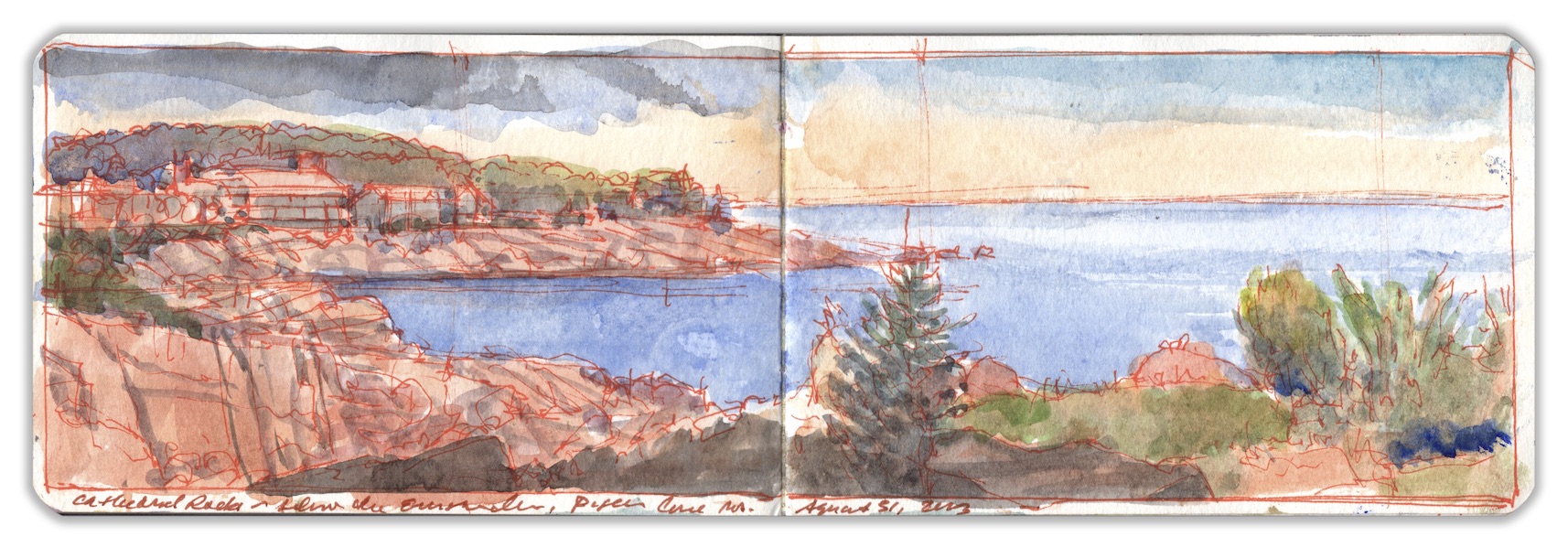
Cathedral Rocks below the Emerson Inn. Pigeon Cove, MA. August 31, 2013.
Having visited Cape Ann once or twice as a teenager I was curious to see it anew, through the eyes of a freshly minted graduate of the Yale School of Art. Bernard Chaet had been a mentor and advocate during my two years in the program. Working as his teaching assistant in an undergraduate drawing class launched me into a career in higher education. His way of leading students to knowledge, and motivating them with curiosity continues to influence my approach to teaching, including the creation of the book you are reading. In the summer of 1976, a few months after graduation, my then partner and I traveled to Manchester-by-the-Sea to have lunch with friends of her family. Following a splendid repast surrounded, by works by the American Impressionists, we drove north on Route 128 to Cape Ann. The Chaets summered in a charming cottage on Granite Street, aka Highway 127; the two-lane highway that leads through Rockport around the tip of Cape Ann to Lanesboro. It was the first of many visits. In the decades that followed, Bernie was drawn to the rocky shoreline, the sea, and the sunrise, which became his muse. Chaet’s lifelong passion for Jazz undergirded his drawing and painting compositions; manifested in rhythmic juxtapositions and pictorial patterns. In his final works, brushes loaded with color jammed with Django, Bird, Dizzy and Miles; the earth, the sea and the air.
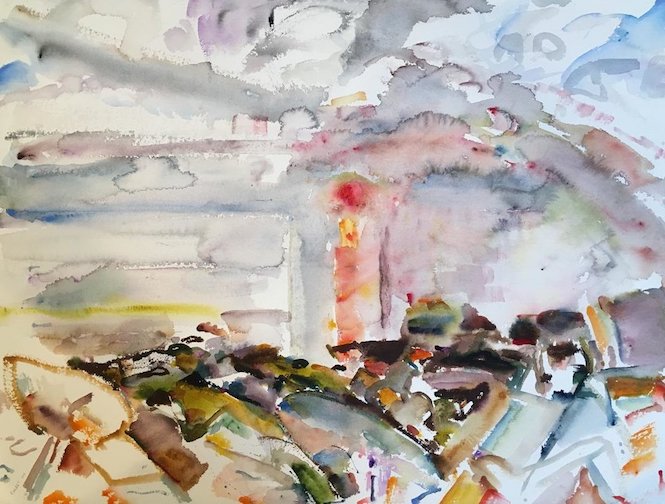
Bernard Chaet. Untitled. Watercolor on paper. 22 x 30 inches. Courtesy Alpha Gallery, Boston,
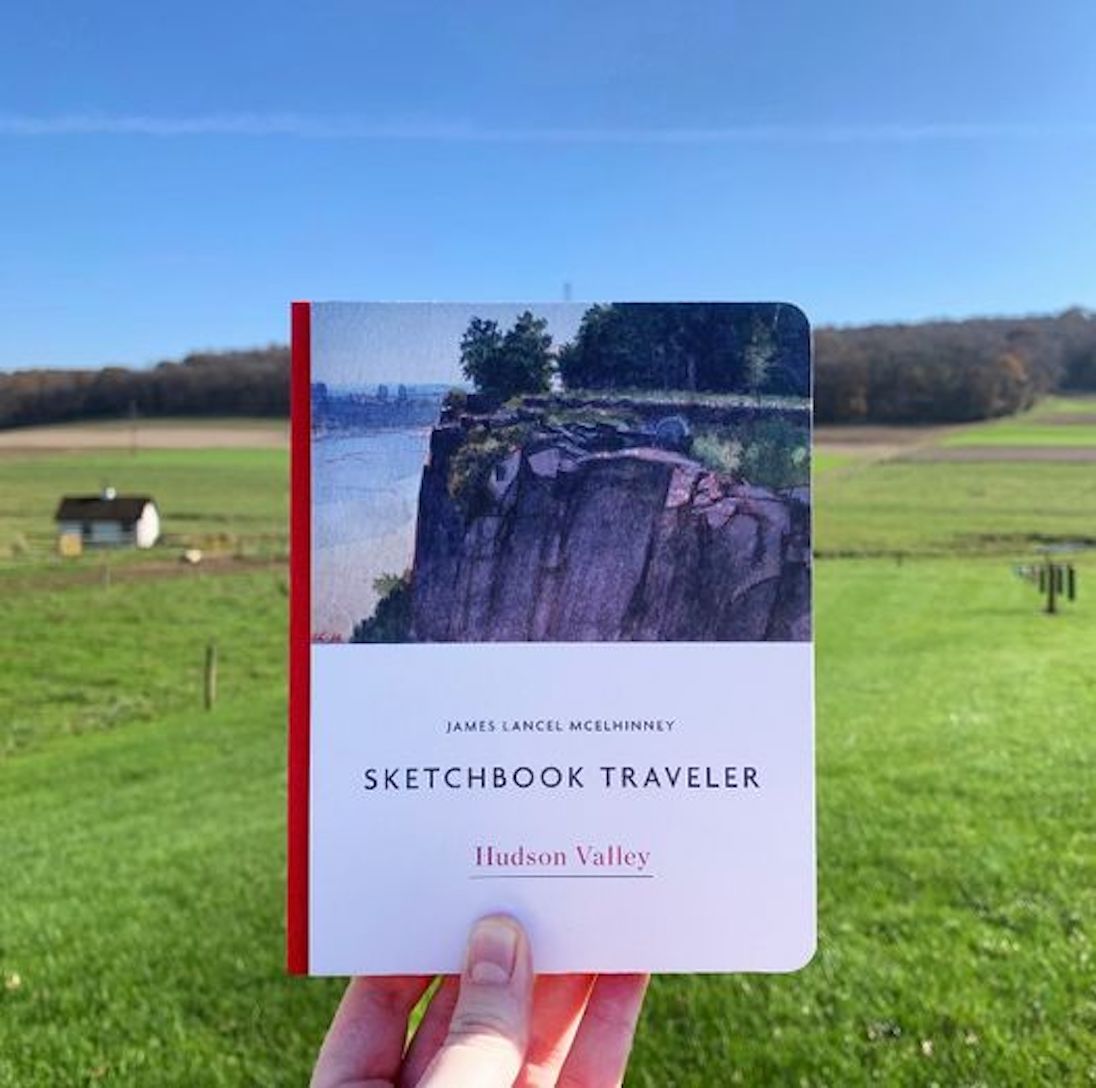
Now available to own: Sketchbook Traveler: Hudson Valley
Explore my Quaranteam Dispatches, from April 1-June 8, 2020