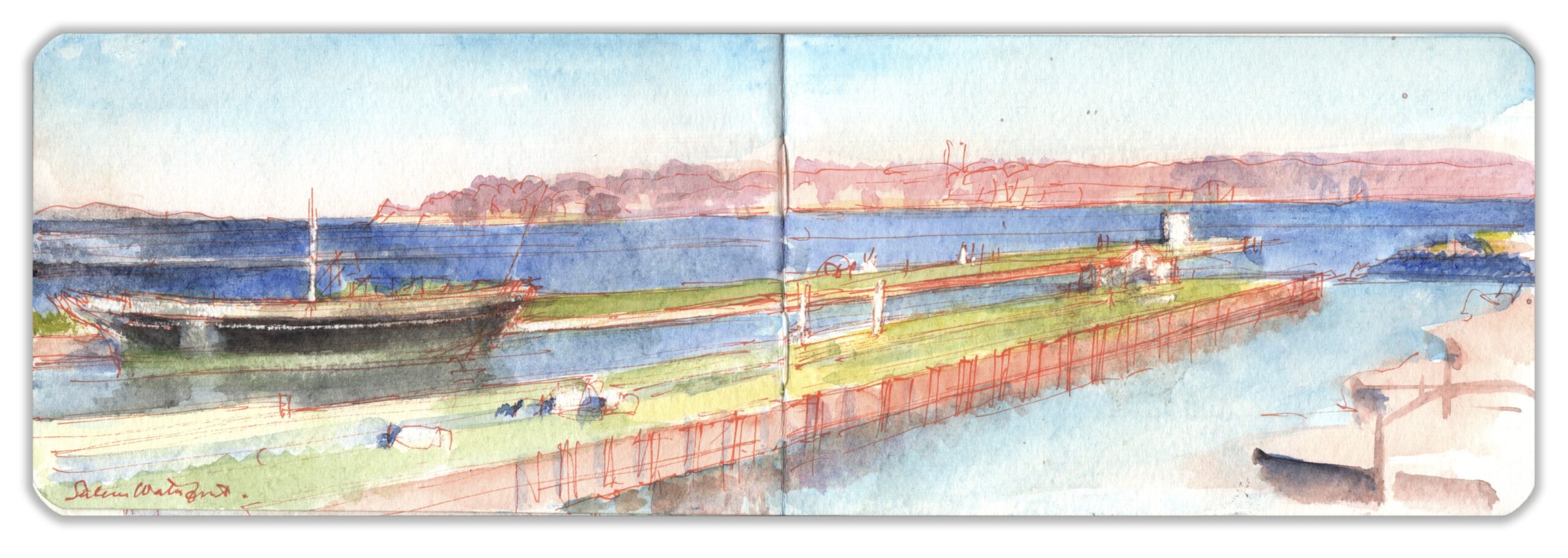
Salem Harbor. Derby’s Wharf
Puritan clergyman Cotton Mather regarded the wild spaces of New England as the domain of Satan, and his fellow Puritans as agents of Divine Will, winning for Christendom dominion over a spiritual desert inhabited by savage heathens. As the promoter of an early Smallpox vaccine, Mather was deeply interested in science and learning. At the same time, he praised the Salem witch-trials that took the lives of nineteen men and women. His moral struggle between faith, science and superstition would be reconciled by a later generation during The Enlightenment.
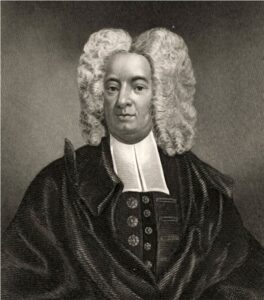
Cotton Mather (1663-1728)
Haunted by the events of 1692-1693, witnesses to the mass-hysteria found way to deflect their shame and outrage. Salem Village changed its name to Danvers in 1752. In recent times Salem has profited from Wiccan tourism and a lively Halloween industry. Astride a crescent moon, a life-sized bronze statue of Bewitched actress Elizabeth Montgomery was installed along a pedestrian walkway. Visitors to Gallows Hill would pass by unknowing the rocky wooded rise where the executions actually took place. Curious to visit the site, it was troubling to find Proctor’s Ledge wedged in behind the drive-through lane of a Walgreen’s drugstore. Here the gallows once stood, not on the hill behind it. One year and two months after this photograph was taken, a memorial to the victims was dedicated near the eastern end of the ledge along modern-day Pope Street, amid fissures in the rock where the corpses had been dumped.
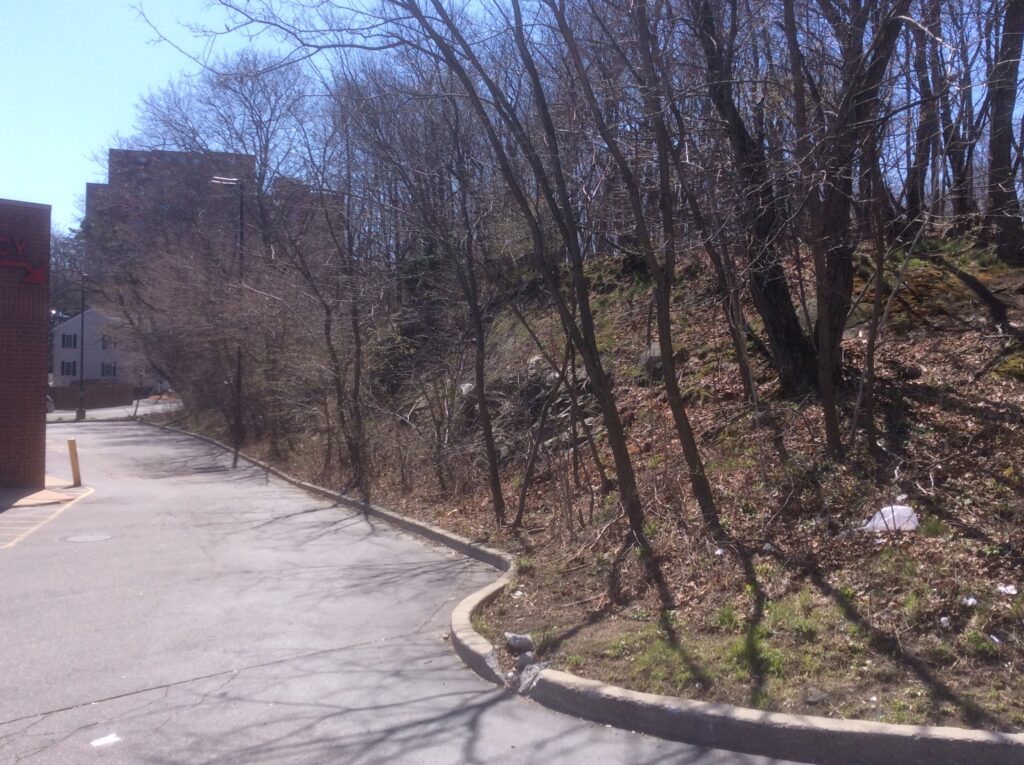
Looking east from Proctor Street toward Pope Street. Walgreens on the left.
Proctor’s Ridge on the right. 4:30 pm. April 15, 2016
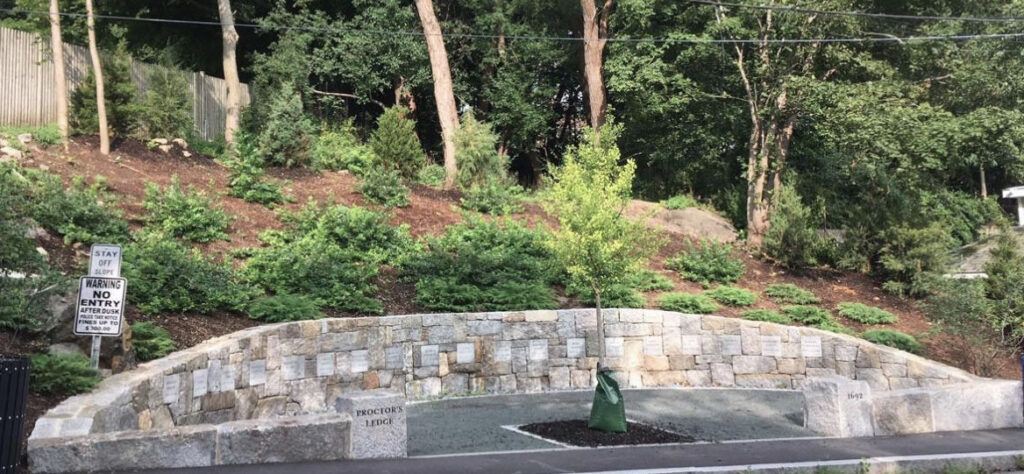
Proctors Ledge Memorial. Dedicated June 19, 2017.
Salem struggled through the eighteenth century. Its fishery suffered during the French and Indian War and during the American War of Independence, when privateering helped to develop a maritime economy that would later evolve into profitable merchant fleets.

Map of Salem 1820
Situated at the base of a forked spit of land dividing Massachusetts Bay from the Danvers River, a tidal estuary formed by a confluence of creeks that drain the surrounding low-lying hills, Salem profited from trade in molasses, rum and slaves. Following the American war of independence, Salem established shipping routes to the far east.
Embarking for the Orient, merchantmen rounded Cape Horn before sailing to the Pacific Northwest and Alaska. Otter-pelts and other exotic furs prized by Chinese buyers were traded for silks, tea, and porcelains. During the Napoleonic Wars, Salem ships called at Nagasaki, as proxies for the Dutch East India Company. By the early nineteenth century Salem had grown to become the sixth largest city in the new republic, and the wealthiest. A consortium of sea-captains and ship owners in 1799 established the East India Marine Society to preserve in a museum natural and cultural curiosities collected on their voyages.
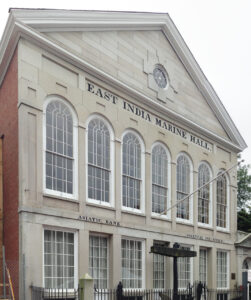
East Asia Marine Society Hall precursor to the Peabody-Essex Museum, Salem, Mass.
Like Peale’s Columbianum in Philadelphia, Salem’s museum fostered a linkage between science and art to advance higher learning. Silks, spices and Chinese export porcelain flooded into New England’s prime entrepôt of Asian luxury goods. Yankee seafarers, exotic foreigners and the occasional elephant trod Salem’s bustling docklands. Fidelia Bridges and Nathaniel Hawthorne grew up here. Stripped of its masts and rigging, the Friendship awaits a refit. Resounding with hushed memories, Derby’s wharf reaches into the harbor, a barren elegy to former glory.
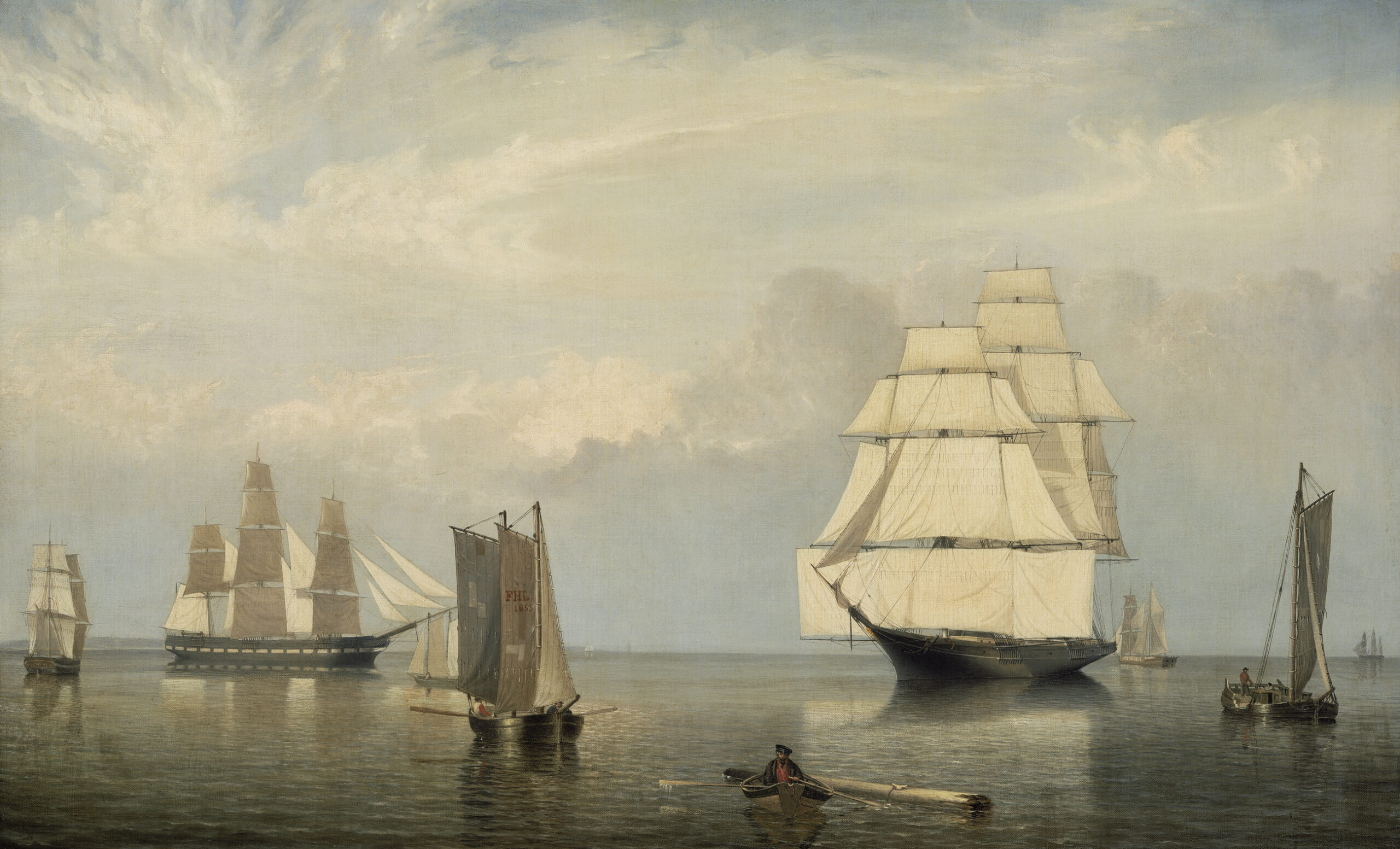
Salem Harbor. Fitz Henry Lane. 1852
Now available to own: Sketchbook Traveler: Hudson Valley
Explore my Quaranteam Dispatches, from April 1-June 8, 2020