Category Archives: Dispatches

SKETCHBOOK TRAVELER: Dispatch #115: Fort Trumbull. Thames River. New London, Connecticut

This is a sneak peek at Sketchbook Traveler: New England; the third volume in the series, from Schiffer Publishing. Projected publication date: Spring 2023


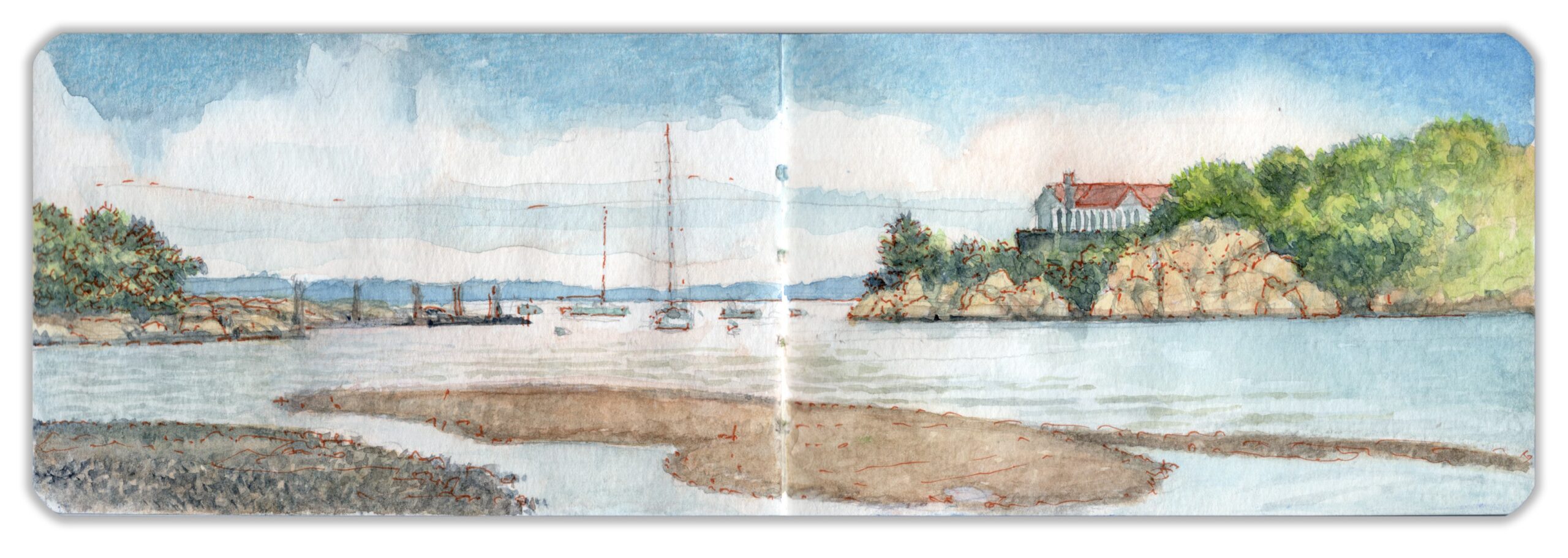
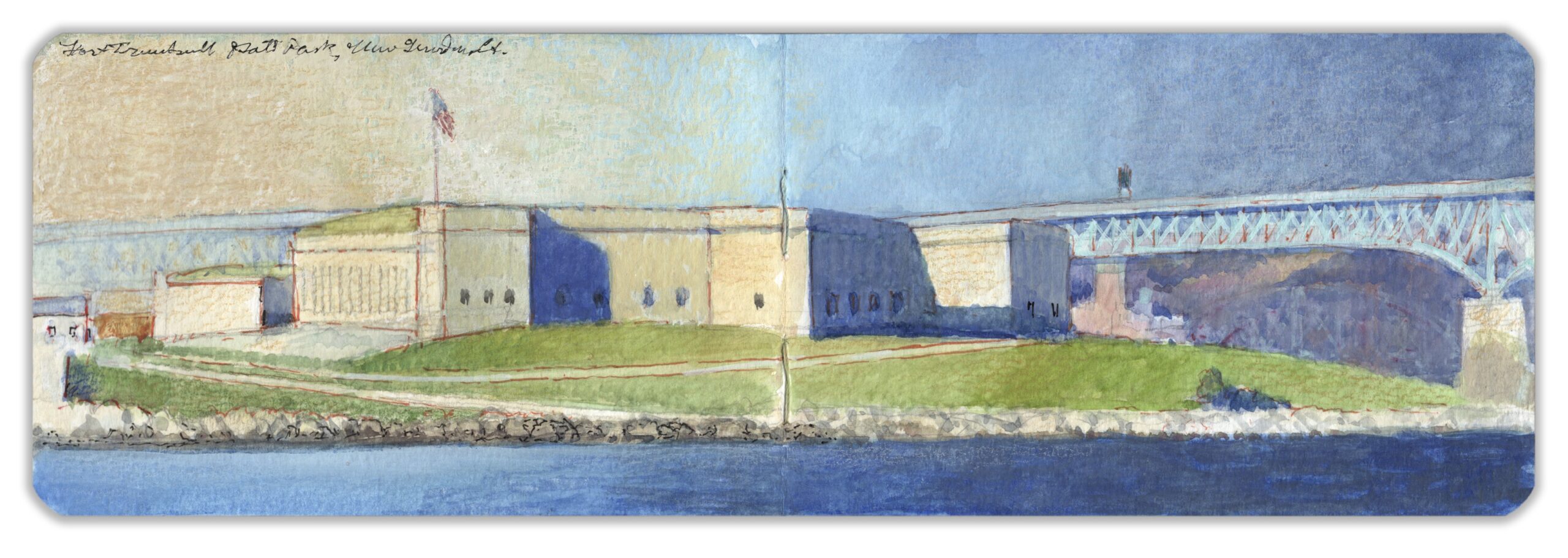
Fort Trumbull, River Thames, New London, Connecticut. Sketchbook painting. Aqueous media on paper. 3.5 x 10.5 inches


Mao of the mouth of the River Thames in Connecticut, showing the movement of British troops under the command of General Benedict Arnold on September 6, 1781.

Standing guard on a rocky headland at the mouth of the Thames River, Fort Trumbull was constructed in 1777 to protect the town of New London. Four years later, Crown forces commanded by Norwich native Benedict Arnold landed on opposite sides of the river and advanced northward. Fort Trumbull was quickly overwhelmed. Fort Griswold, on the east side of the river, greeted the attack with stiff resistance before falling to the British, who murdered its commander and most of the defenders.


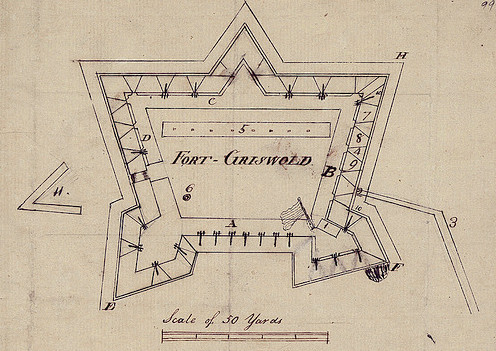
Revolutionary War-era map of Fort Griswold, Groton, CT. The earthen fort has been preserved as a public park, and a memorial to William Ledyard and members of his command murdered by British troops following their surrender.

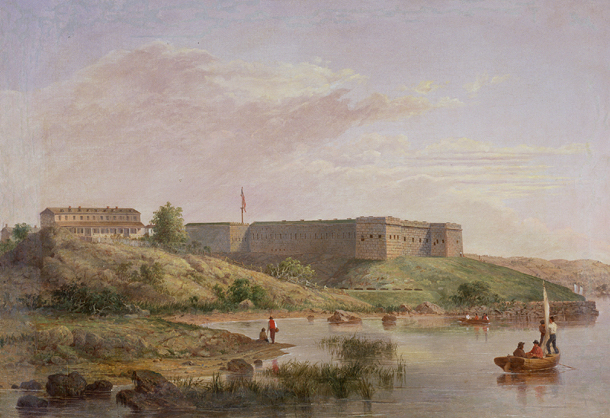
During the War of 1812, both of these fortified positions were updated and improved. In 1839 construction began of a new Third System fort on the former site of Fort Trumbull. Completed in 1852, the Egyptian-Revival fortress never faced an invader but served instead as mustering point and training center during the Civil War. General Seth Eastman included a romanticized view of the fort in his series the Principal Fortifications of the United States, commissioned by the U.S. House Committee on Military Affairs.

Brevet Brigadier General Seth Eastman. (1808-1875) Fort Griswold. Collection of U.S. Senate, Washington  DC

Fort Trumbull’s coastal guns were steadily upgraded until 1910. For two decades, the fortress was home to the U.S. Coast Guard Academy. Merchant Marine officers received their training here during World War II, after which the facility served as a laboratory for developing submarine warfare technologies in concert with the U.S. Naval Submarine Base New London, and General Dynamics Electric Boat across the river in Groton. Decommissioned in 1996, the building and grounds were reopened as a state park in 2000. This picturesque relic of a bygone age is also a souvenir of grim purpose and personal sacrifice, in America’s fight for independence.

(A preview of SKETCHBOOK TRAVELER by James L. McElhinney (c) 2020. Schiffer Publishing). Pub date: July 23, 2022

PREORDER HERE

Copyright James Lancel McElhinney (c) 2022 Texts and images may be reproduced (with proper citation) by permission of the author. To enquire, send a request to

ed******@ne***********.com


SKETCHBOOK TRAVELER: Dispatch #114. Beacon Rock. Newport, Rhode Island. Northeast from 41.4701 x -71.3374

Sneak peek at pages from Sketchbook Traveler New England, the third  volume in the series from Schiffer Publishing. Projected publication date: Spring 2023

Journal painting: 3.5 x 10.5 inches. Watercolor and mixed media on paper.

During the colonial period, Rhode Island was the reigning seaport of the transatlantic slave trade. Just prior to the revolution it emancipated enslaved Rhode Islanders, which established a precedent for those living in bondage across New England to sue their masters for freedom. During the war of independence, Bristol and Newport became a nest of privateers that preyed  on British merchantmen. During the years following the Civil War, Newport became a magnet for posh vacationers. Drawn to the rugged beauty of its rocky coastline and sandy beaches, landscape painters and maritime artists flocked to its shores. It was not by chance that artists such as Worthington Whittredge, James Suydam, William Trost Richards and John La Farge chose to set up their easels in the shadow of the Gilded Age cottages in which their patrons summered. Many of the painters’ motifs were popular destinations for picnics and hikes, such as Bishop’s Rock and Paradise Rocks. John Frederick Kensett; one of the most popular painters of the age, had pioneered a poetic offshoot of the Hudson River School later dubbed Luminism. Characterized by glowing light and tranquil settings, the Luminist style had deep roots in the maritime art of Gloucester’s Fitz Henry Lane, and Martin Johnson Heade’s haystack paintings of the Newbury-Essex salt marshes.

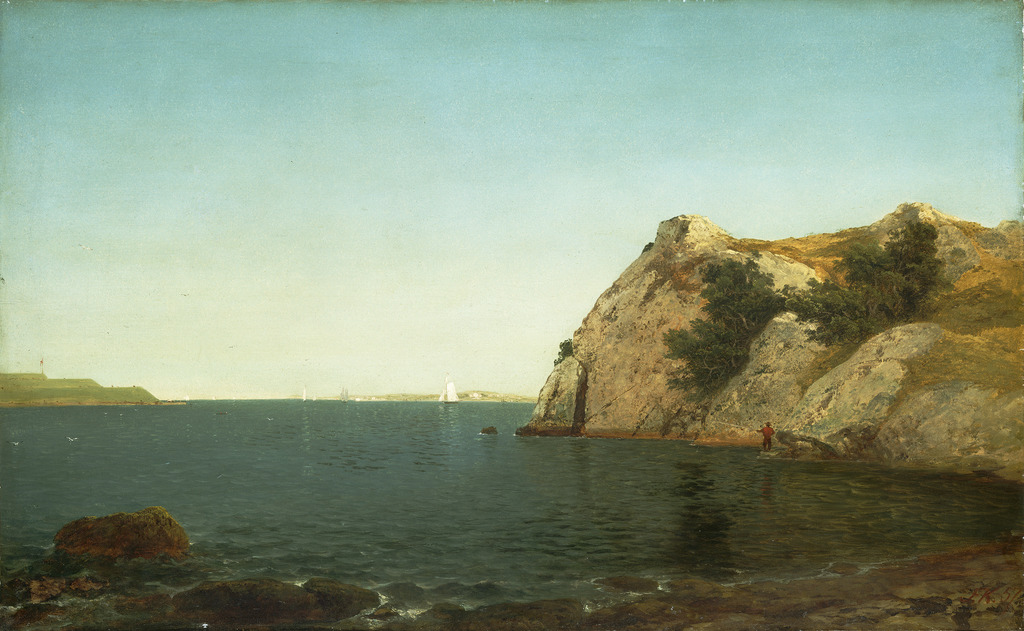
John Frederick Kensett. Beacon Rock. Oil in canvas 22.5 x 36 inches. 1857 National Gallery of Art. Washington DC. Kensett includes Fort Adams (seen on the left) which would not have been visible in this manner, from this point of view

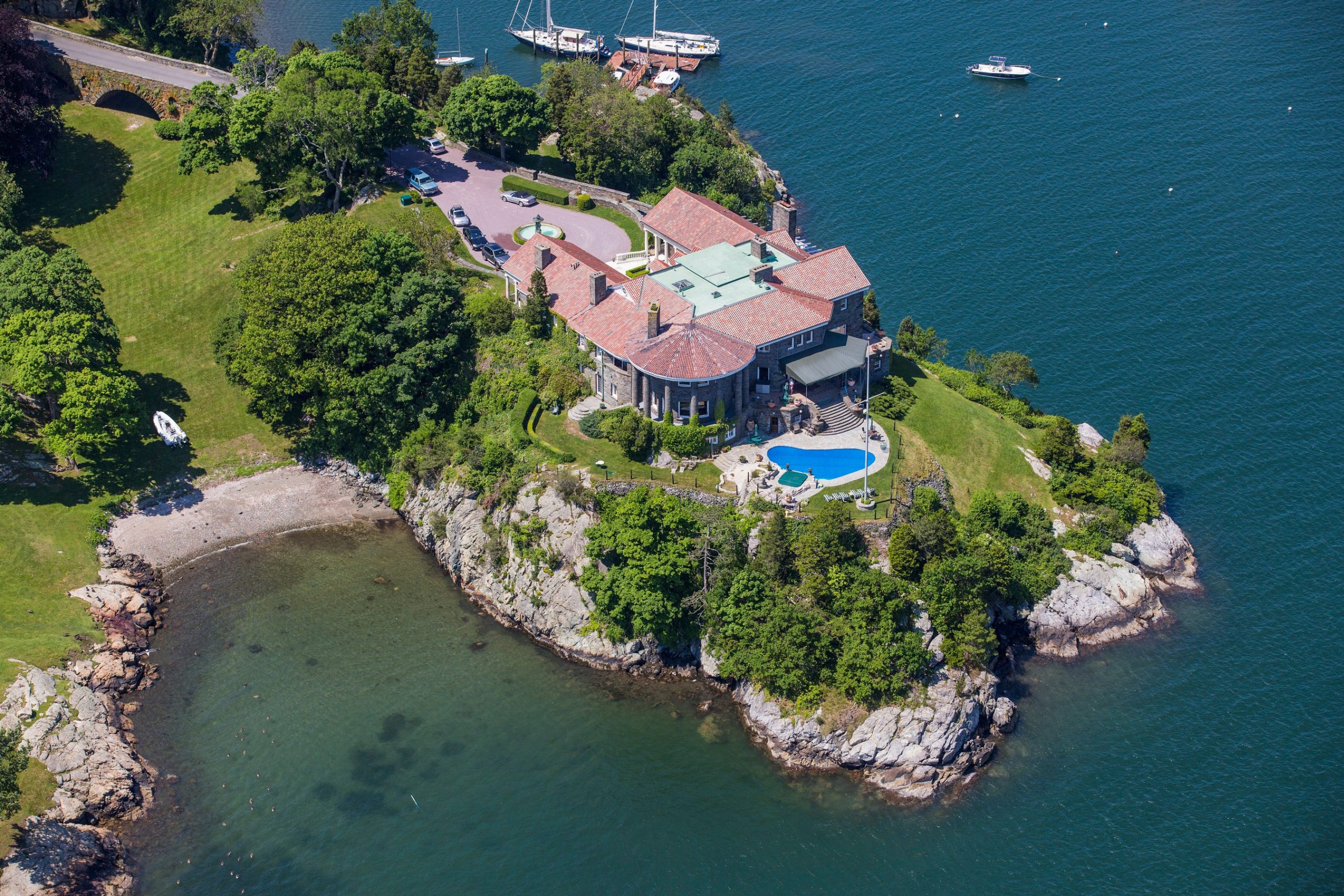
One of Kensett’s painting locations was at the head of a tiny inlet to Benton Cove, looking toward a high, rocky ledge jutting into the water from the eastern shore. Rising ninety feet above the tide, Beacon Rock bonfires guided colonial mariners along the entrance channel, northeast into Newport Harbor. Kensett’s rendition of the site in the Metropolitan Museum of Art juxtaposes a dark plane of water against a fractured Olistostrome outcrop. Kensett’s vista is fictionalized for poetic effect. The cove I found was home to pleasure-boats, riding at anchor, in the shadow of a colonnaded mansion designed by Stanford White. Commissioned by Commodore Edward Morgan in 1887, completed in 1891, “The Acropolis of Newport” recently sold for 23 million dollars.

(A preview of SKETCHBOOK TRAVELER by James L. McElhinney (c) 2020. Schiffer Publishing).

PREORDER HERE

Copyright James Lancel McElhinney (c) 2022 Texts and images may be reproduced (with proper citation) by permission of the author. To enquire, send a request to

ed******@ne***********.com


Dispatch # 113: SKETCHBOOK TRAVELER: SOUTHWEST. White Rock Canyon, New Mexico

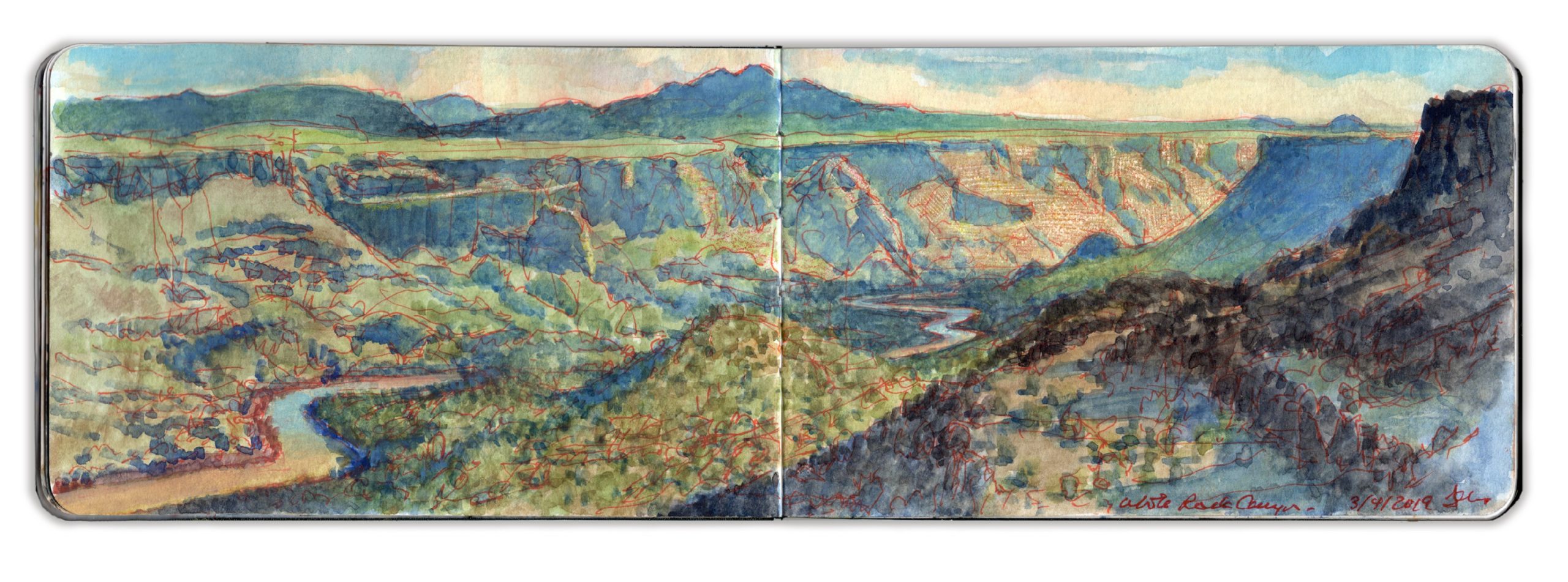
Late Light, White Rock Canyon. March 4, 2019. Looking South from 35.8257 x 106.1810

Traveling to New Mexico early in 2019, I explored the Rio Grande between John Dunn Bridge and Cochiti Reservoir. Sites were selected for narrative reasons, as well as for their visual allure. Many of the works I produced, including my painting-journal, were exhibited at Gerald Peters Gallery in Santa Fe, in the exhibitions Reimagining New Mexico, from June 28 to August 3, and Speaking to the Imagination / The Contemporary Artist’s Book, from June 21 to October 24.

White Rock Canyon is a stunning declivity carved by the Rio Grande through volcanic sediment, running south from Otowi Peak, aka Buckman Mesa. Below Cochiti Reservoir the river snakes across a wide plain, passing Cochiti Pueblo, Pena Blanca, Kewa (Santo Domingo) Pueblo, Algodones and the ruins of Kuaua Pueblo, now interpreted as Coronado Historic Site. Located on the historic route El Camino Real de Tierra Adentro, Spanish explorer Francisco Vasquez de Coronado received hospitality from the indigenous people in 1541 before pushing east in search of golden Quivira in 1542. Below Bernalillo the river flows through the northern outskirts of Albuquerque before reaching Old Town below Interstate 40.
Winding through the bottom of White Rock Canyon, the Rio Grande runs narrow and swift. The geology resembles the gorge forty miles to the north, basaltic uplifts towering above heaps of rock-fall ascending from ribbons of greenery along the riverbanks. An old narrow-gauge spur of the Denver & Rio Grande Railroad known as The Chili Line stopped at Diablo Canyon, at the confluence of Cañada Ancha, a seasonal creek-bed across the Rio Grande from White Rock.
Steam-powered locomotives were no less thirsty than living things in such a parched land, and thus like El Camino Real, it followed the river. The decision to build a narrow-gauge railroad may have been predicated on water-consumption as much as those challenges presented by terrain.


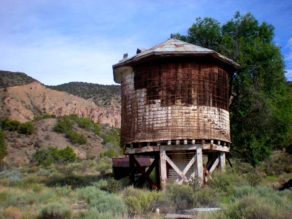
(Left) Water-tower built for the narrow-gauge The Chili Line of the Denver & Rio Grande Railroad, Embudo Station, New Mexico

Descending through Frijoles Canyon in Bandelier National Monument, Rio Frijoles joins the river a few miles downstream. Breaking the horizon, the voluptuous contours of Ortiz Mountain rises up from the distant plain. Beyond it lies La Tetilla (the nipple), a hill just north of La Bajada. (the descent) where the road from Santa Fe to Albuquerque plunges from the rim of the plateau, down into the Rio Grande Valley below Cochiti Dam.

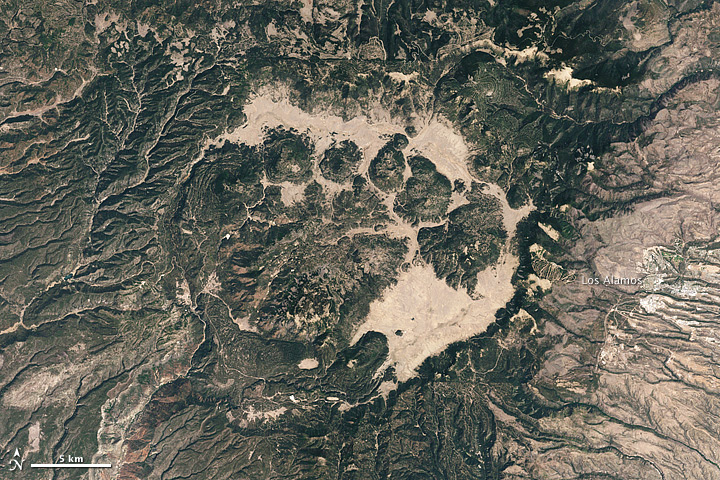
Standing atop the basalt escarpment, open patches of porous black rock are strewn with pebbles of similar porous material. Ascending westward, the terrain rises from high piñon desert through alpine forests to Valles Caldera, a vast mountaintop meadow, once of several located within the crater of a dormant volcano. More than a million years ago the violent eruption of the Jemez super-volcano buried the surrounding area under a pyroclastic flow of ash and rocks. The ground underfoot had been deposited by the cataclysm. Ash-falls spread as far east as the Llanos Estacado (staked plains) of West Texas. As a resurgent lava-cone forms under Redondo Peak, the most visible volcanic activity presents as a concatenation of hot-springs resorts running north into Colorado.


Satellite view of Jemez Caldera (Reproduced under fair use, etc.)

The town of White Rock was hastily built at the canyon’s edge as temporary housing for a growing number of postwar employees at Los Alamos Nuclear Laboratory. By 1957 residents had abandoned the settlement for more permanent dwellings. The site was leveled. By 1962, a growing population motivated developers to build permanent homes on the site of the abandoned town, along with schools, shopping, parks, playing-fields and picnic-pavilions. Trails were developed for hiking that followed the western rim of the canyon-wall. Others descended to the river several hundred feet below. Signs caution hikers to be on the lookout for rattlesnakes. These serpents tend to concentrate in areas that allow them to winter in dens. At sixty-five hundred feet of altitude, White Rock Canyon approaches the uppermost extremity of their range. The first week of March was too early for these predators to be active.

At the northern end of the town is a parking-area and overlook. Looking north one can see Otowi Peak to the right. A mile or more beyond it stands an unmistakable formation known as Black Mesa, where during the Reconquista, indigenous warriors fought the Spanish to a standstill.
People would visit me while I worked. One couple had just moved to Los Alamos from the Midwest. He worked for the Lab. I knew better than to ask what he did.
Another day I was painting half a mile south of the point, on a rocky outcropping. An Anglo couple approached. She seemed much older. Both appeared to be working-class. The man calmly told me that when he was a boy, he and a friend used to comb the canyon for artifacts, looting graves when they found them. His friend still has a couple of skulls on his dresser at home. I asked how he felt about that. He confessed that it troubled him, it didn’t seem right.
I suggested that whatever things he had taken, he would do well to return them. No good can ever come from tampering with the dead. I suggested instead that if he is interested in the indigenous culture, maybe he should read about it, or talk to the people. A better understanding of their ways might inspire more respect. While many depend on fry-bread tourism and the art-market for their economy, any diffidence shown toward non-natives is well-founded.

As on many of my forays, I had begun multiple compositions of different views from the western rim of the canyon. Facing south, I decided to push one of these compositions. Warm sunlight and cool shadows carved marvelous forms in its eastern walls. A large hawk glided past, following the canyon rim. Landing in the piñon-tree beside me, a large crow greets me with a squawk. My keys lay on top pf my field-bag. I put them in my pocket.

(A preview of SKETCHBOOK TRAVELER by James L. McElhinney (c) 2020. Schiffer Publishing).

PREORDER HERE

Copyright James Lancel McElhinney (c) 2022 Texts and images may be reproduced (with proper citation) by permission of the author. To enquire, send a request to

ed******@ne***********.com


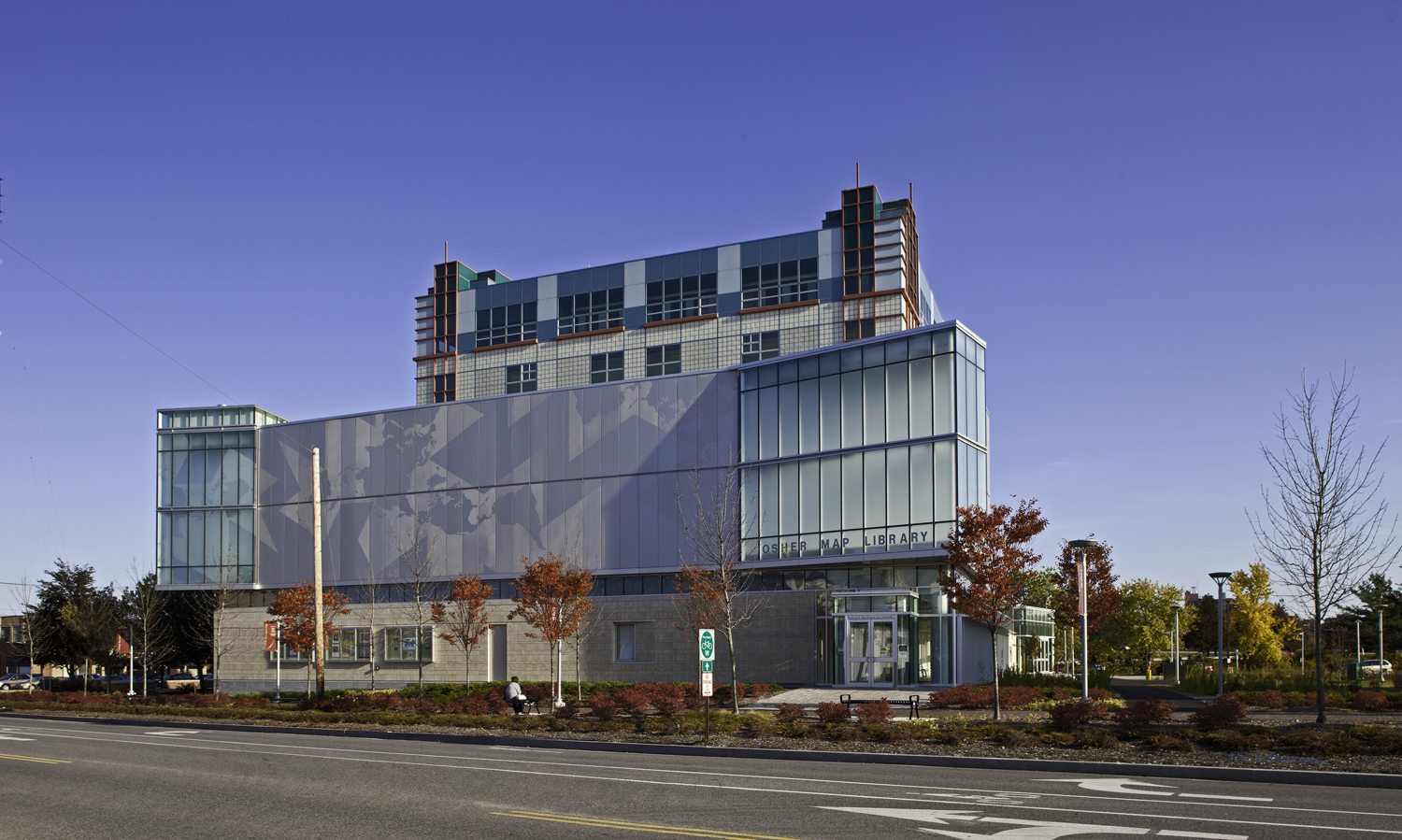
OSHER MAP LIBRARY AND SMITH CENTER FOR CARTOGRAPHIC EDUCATION  ACQUIRES TWO McELHINNEY LIMITED EDITIONS.

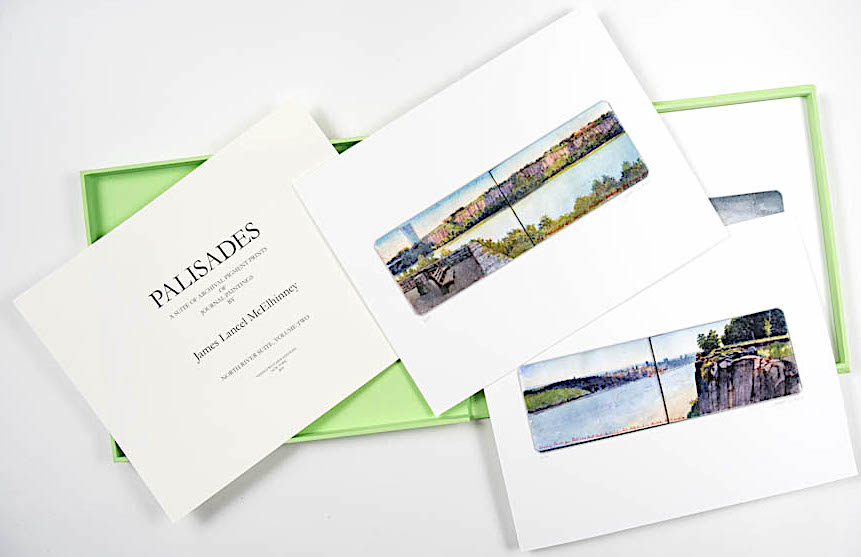
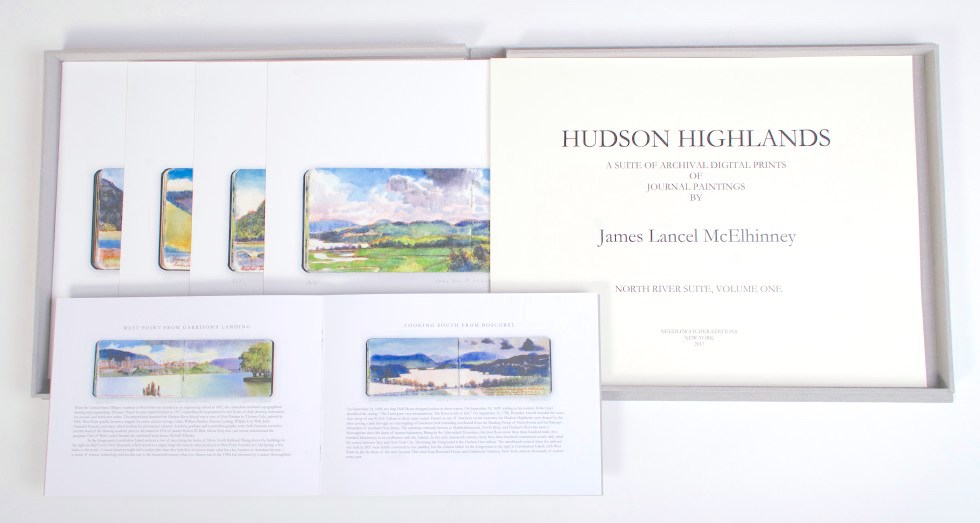
Osher Map Library and Smith Center for Cartographic Education, at the University of Southern Maine in Portland, have just acquired for its permanent collection copies of Hudson Highlands: North River Suite Volume One (2017), and Palisades: North River Suite Volume Two (2020); both published by Needlewatcher Editions.

Drawn from the journals of James Lancel McElhinney, author of the Sketchbook Traveler books released by Schiffer Publishing, each portfolio contains seven archival pigment prints of images, with title-page, and an index page with colophon, bound in a handmade archival cloth-covered Solander box with blind-stamped titles on the cover and spine. Both were produced by Brilliant Graphics in Exton, PA and Shenzhen China. The Hudson Highlands limited edition contains an illustrated chapbook, with texts by the author and an introduction by Steven Miller. The Palisades includes a color intaglio copperplate etching on Somerset etching paper, with digital chine-collé, produced by Philadelphia master printer Cindi Royce Ettinger.
Both of these works, including the prototype for Palisades, were exhibited at the Hudson River Museum in the exhibition James McElhinney: Discover the Hudson Anew, from September 13, 2019 to February 16, 2020. Hudson Highlands was previously shown in exhibitions at: The institute Library in New Haven CT and at Boscobel House and Gardens in Garrison NY. McElhinney’s O.T.W. On the Water: The Schuylkill River (also produced by Brilliant) was the centerpiece of an eponymous installation at Philadelphia’s Independence Seaport Museum, from October 24, 2018 to January 5, 2020. Fine press editions published by Needlewatcher Editions, and can be found in the following collections:
Albany Institute of History and Art
Avery Fine Art and Architecture Library, Columbia University

Boscobel House and Gardens, Garrison, New York
City of Philadelphia. Water Department Archives.
University of Denver. Library Special Collections. Denver Colorado
Free Library of Philadelphia. Print and Picture Collection
Historical Society of Pennsylvania
Hudson River Museum, Yonkers New York
Huntington Library and Museum, San Marino, California
Independence Seaport Museum
Newberry Library. Chicago, Illinois
New York Public Library. Wallach Division of Art, Prints and Photography
Osher Map Library and Smith Center for Cartographic Education. Portland ME
Pennsylvania Academy of the Fine Arts. Archives and Special Collections
Swarthmore College, Swarthmore PA
Temple University. Samuel L. Paley Library Special Collections
West Point Museum, United States Military Academy
Yale Beinecke Rare Book and Manuscript Library. New Haven CT,
And in private collections in California, Colorado, Connecticut, Illinois, Massachusetts, Missouri, New Jersey, New Mexico, New York, North Carolina, Pennsylvania, and New Zealand.

From March to October 2018, McElhinney traveled along the northern Rio Grande in Colorado and New Mexico, filling his sketchbook with paintings from the journey. Images from these travels were published in Grand River Sketchbook, a limited edition of 25 consisting of ten archival pigment prints, produced by Orion Studios Santa Fe, with a color intaglio copperplate etching with digital chine-collé produced by Philadelphia master printer Cindi Royce Ettinger. Contents are bound in a handmade cloth-covered portfolio by Peter Geraty of Praxis Bindery in Easthampton, MA.James Lancel McElhinney is represented by Gerald Peters Gallery in Santa Fe, and by William Havu Gallery in Denver. His personal website is: https://www.mcelhinneyart.com

For more information about the limited editions, please contact:

NEEDLEWATCHER EDITIONS
PO Box 233, Essex NY 12936


ed******@ne***********.com


+1 (347) 266-5652


Download (PDF, 171KB)

SKETCHBOOK TRAVELER: Dispatch #112. Words and Pictures

Since April 2020 I have been writing as much as painting, some weeks even more so. Between 1991 and 2004 I produced a series of plein-air landscapes of American battlefields. In 1992, a number of these appeared in Natural Defenses, a solo show at the Peninsula Fine Art Center in Newport News, Virginia. Curator Deborah McLeod put together a catalogue that also featured Civil War Redux, a concurrent solo exhibition by Richmond photographer Willie Anne Wright, and a group show focused on Landscape and memory. Given the historical undercurrent of my work, we decided to expand the standard tombstone labels to include short, descriptive texts. These had to be composed in a few days. It was the very first exhibition in which I paired words with imagery. The show traveled to other venues in Fairhope, Alabama and Johnson City, Tennessee. Similar narrative wall-labels were used in subsequent exhibitions at Asheville Art Museum, Danville (VA) Art Museum, Greenville (NC) Art Museum, Second Street Gallery in Charlottesville, VA, and Waterworks Art Center in Salisbury, NC. For a variety of reasons, I kept the practice of writing on the back burner, until a life-changing event in 2005 led me back to it.


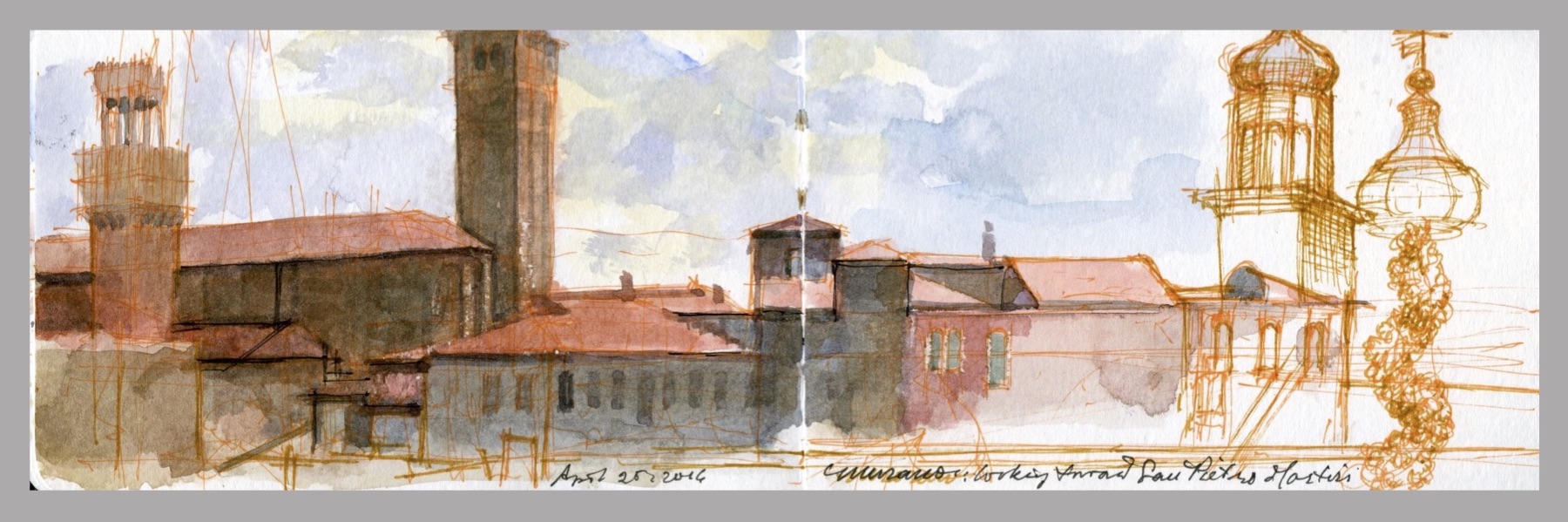
View of Murano, with Chiesa San Pietro. April 25, 2016. Journal painting 3.5 x 10.5 inches

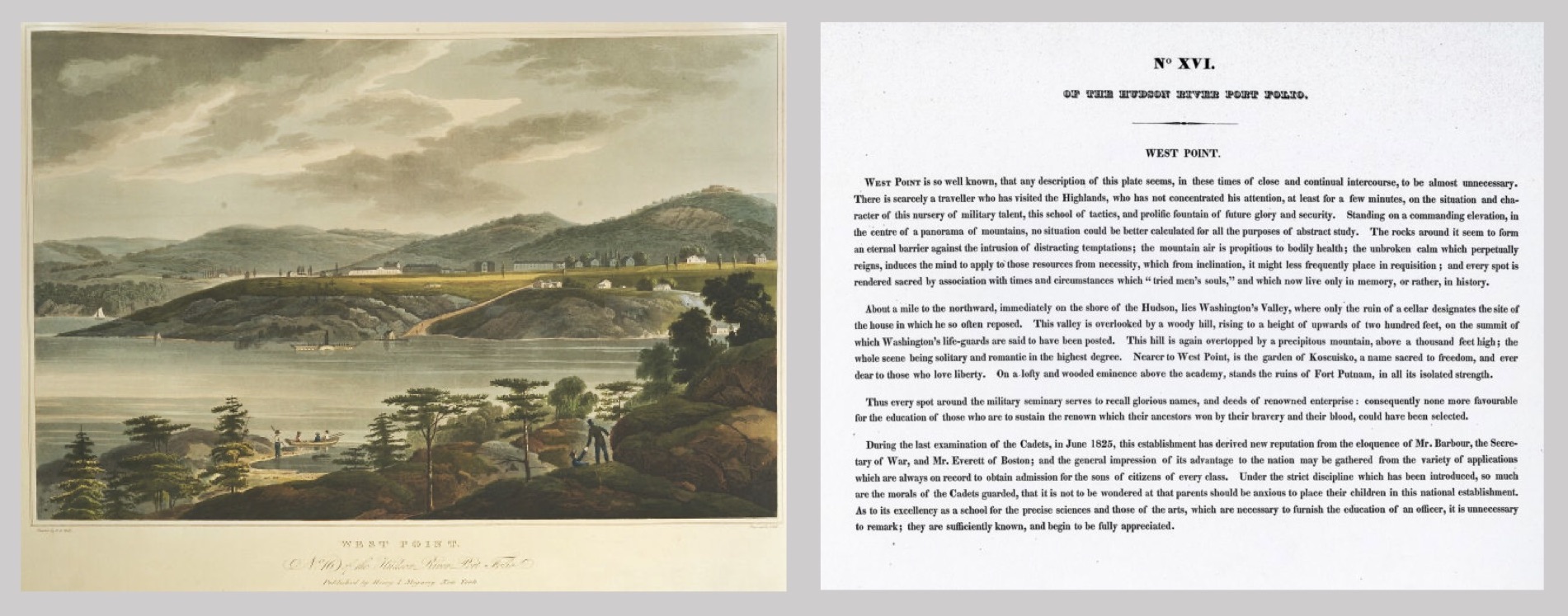
Ten years ago, Kathie and I were invited to a private jazz sitar concert on the piano nobile of the Palazzo Donà dalle Rosa in Venice. As I sketched the fashionable crowd, a British gentleman noticed what I was doing and struck up a conversation. He was in Venice to conduct research for a book on its gardens. During our brief conversation, he shared that keeping notebooks was part of his daily routine. One of these was devoted to written sketches of every location he visited. This gave me pause to reconsider my own approach. Had I been more thorough at the time, his name might not have escaped me now. Unable to work in my studio the early days of the pandemic, I composed texts to accompany some of the hundreds of journal-paintings that filled my sketchbooks, publishing them as daily blogposts. As first it was a way to keep busy; a way of dealing with the endless wail of sirens, as ambulances rushed to collect the sick and dying. I was still processing the experience of exhibiting at the Hudson River Museum, in which around thirty of my works were paired with historic precedents mined from the permanent collection. Among these was Hudson River Port Folio, a series of color aquatints by William Guy Wall, with letterpress texts written by John Agg. Sitting at my desk in Washington Heights, I had to fly without a wing man.


(Hudson River Port Folio. West Point (number 16) William Guy Wall and John Agg. 1825)

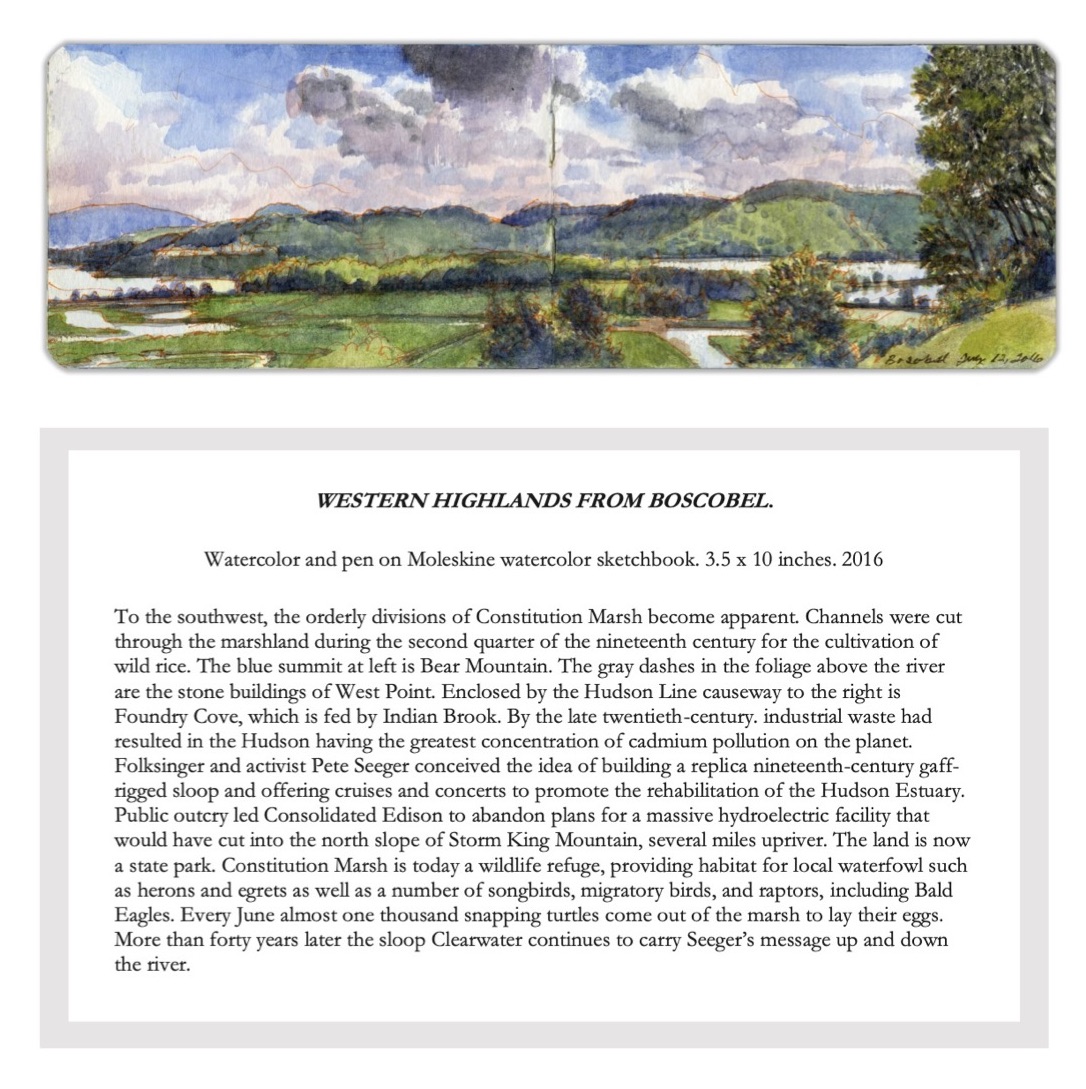
The takeaway was a realization that drawing and writing might be blended into a single practice, provided they asked the same questions, by finding words that paint a picture, while making drawings that tell a story. Below is my riposte to Wall and Agg, in a format that has been put to work in the Sketchbook Traveler series produced by Schiffer Publishing.

Approaching this task as a gesamtkunstwerk, travel and research are as much the art, as its salable byproducts. Attention to how climate, geology, flora, fauna, and human activity shape the terrain, filtered through our intuitive, spiritual and aesthetic responses to space, light and weather, can also expand knowledge, generate ideas, and foster environmental awareness.

Read Quaranteam Traveler: Pandemic Sketchbook Blogposts April 1 to June 8, 2020.

(Click on the Image Below)


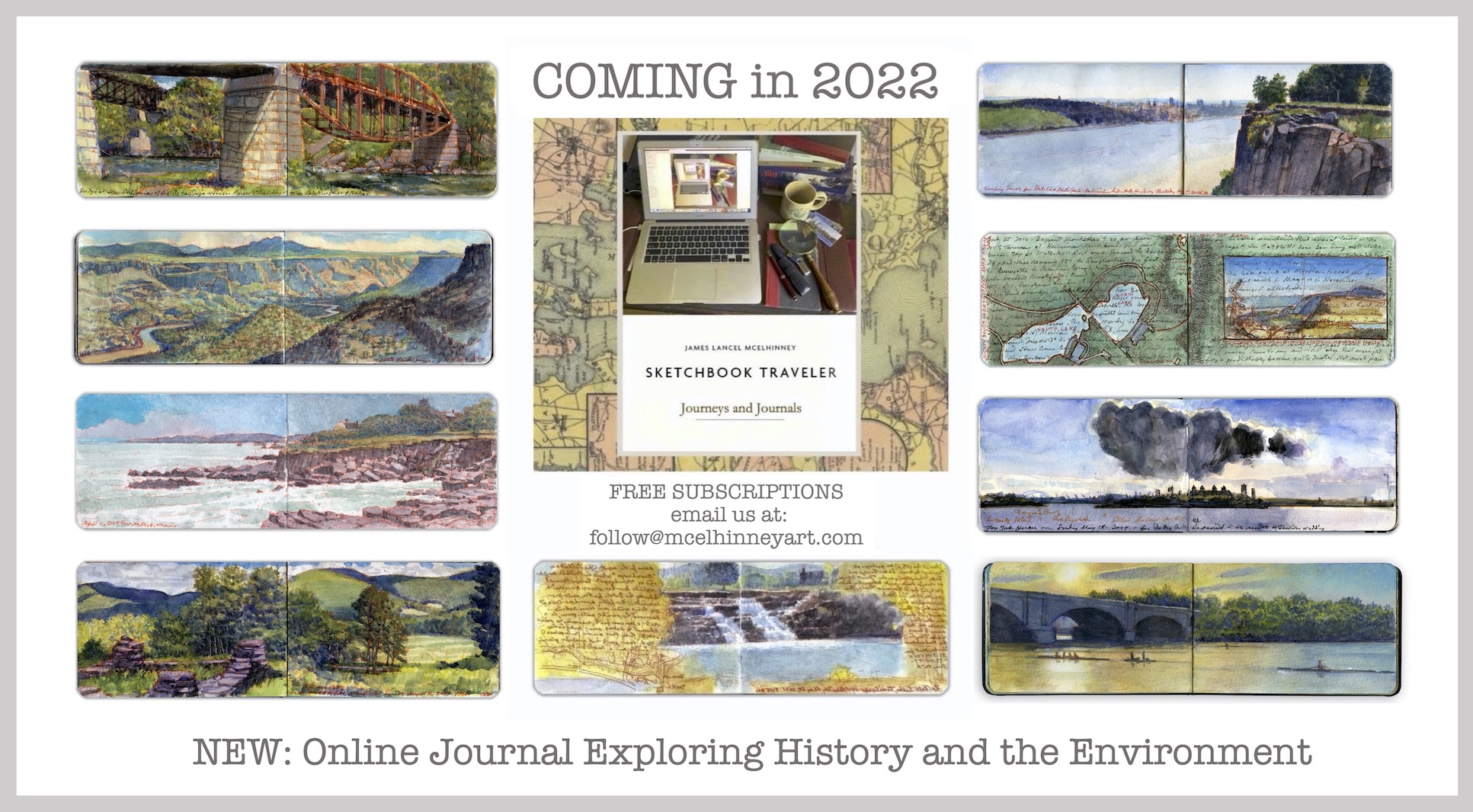
New E-Journal: Free Subscriptions (Click on the image below to learn more)

SKETCHBOOK TRAVELER: JOURNEYS AND JOURNALS

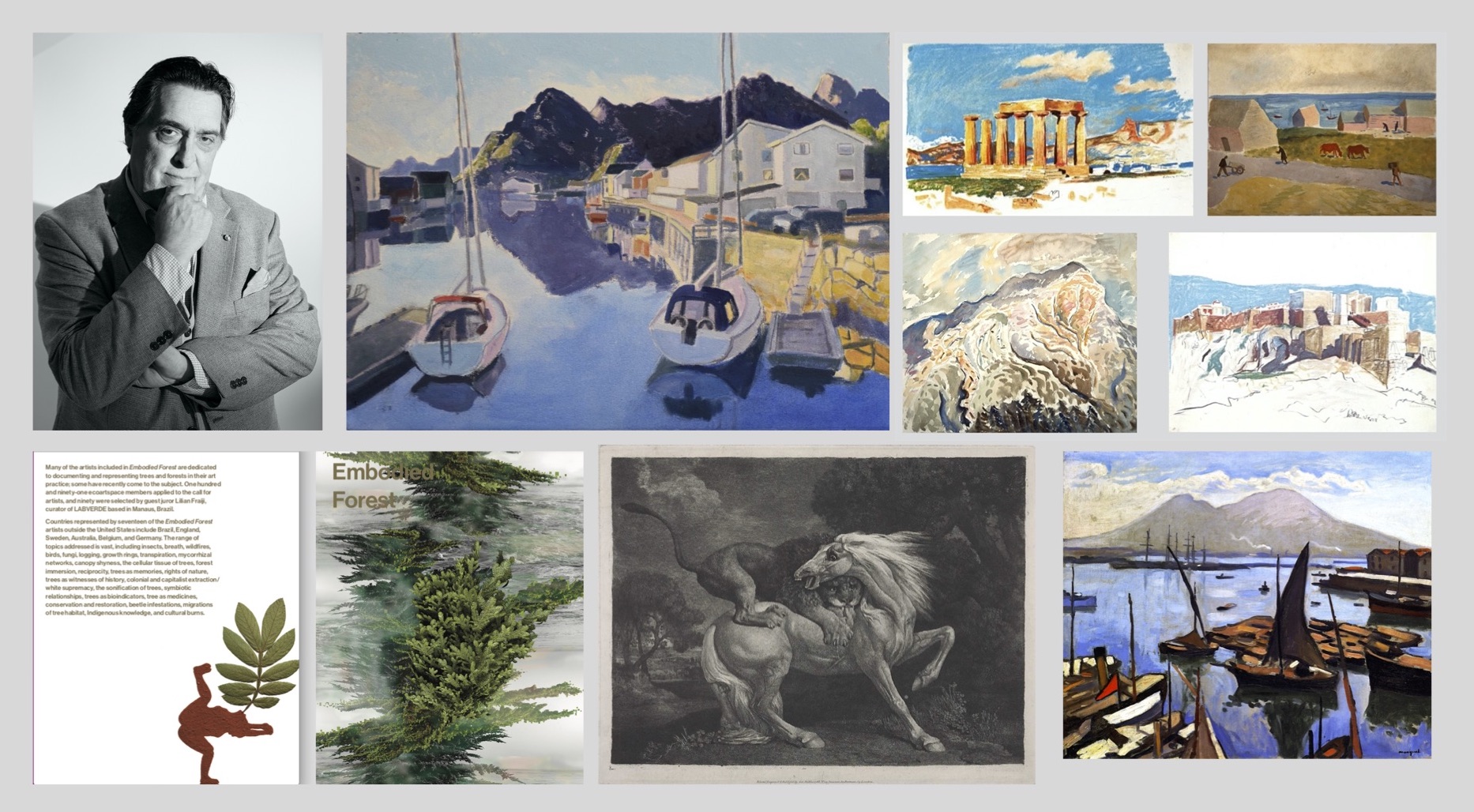
Each monthly issue will highlight works by historic and contemporary traveler artists, featuring contributions by subscribers and other living artists whose work involves mindful travel that promotes environmental awareness. The inaugural January 2022 issues features Louis I. Kahn sketchbooks, Albert Marquet and Santa Fe artist Molly Bolger Jenssen, with updates and notices of exhibitions and books, new and evergreen.


COMING SOON: RELEASE DATE: MAY 28, 2022

(Click on the image to preorder your copy)


SKETCHBOOK TRAVELER: New Online Journal

WELCOME. I was delighted to find the names of longtime friends and new colleagues on the many emails that arrived, requesting to join the conversation. This blog aims to gather together diverse voices and visions, in ways that promote environmental awareness, deepen our historical knowledge, and foster civic virtue. Mark Twain observed that
“Travel is fatal to prejudice, bigotry, and small-mindedness.”
During his lifetime, many travelers kept journals, often drawing and writing in them interchangeably. People often confuse drawing with art when it is a form of writing that allows us to transform knowledge and ideas into visual experiences. On the title page of his 1847  American Drawing Book, A Manual for the Amateur and Basis of Study for the Professional Artist, Adapted to the use of Public and Private Schools, as Well as Home Instruction, John Gadsby Chapman states that,
“Any one who can learn to write can learn to draw”
Because anyone can draw what they know, the goal of observational drawing is to learn what we behold. In the introduction to his 1835 Graphics, A Manual of Drawing and Writing for Schools and Families. which preceded Chapman’s book a dozen years, Rembrandt Peale reminds us that,
“Drawing is nothing else than drawing he forms of letters. Drawing is little more than writing  the forms of objects. Everyone that can learn to write is capable of learning to draw; and  everyone should know how to draw, that can find advantage in writing.”
Challenging a friend who never drew in their life to carry a sketchbook was met with  protest.  It was pointless, he claimed, because he had no artistic talent. I reminded him that he plays tennis, despite the fact that he would never compete at Wimbeldon.
Peale’s crusade to teach everyone how to draw met with considerable success, His textbook was an evergreen publication for almost a century; and then we lost our way.
Conflating drawing with art is no different than reading shopping-lists as poems. Drawing is a skill, confined not only to artistic practice, any more than one need be a poet to compose a shopping-list. Quoting Peale again,
“The advantages of speech are enjoyed by almost all mankind, of whom but a small number advance to the refinement and power of eloquence. In like manner, although only a few, peculiarly talented, may succeed in becoming proficients in the higher departments of drawing and painting, yet every one, without any genius but application, may learn the simple elements of this art in a degree sufficient for the most useful purposes; the labor of acquirement being lessened by the pleasure and evident value of the immediate results.”
In other words, there will be great benefits derived from the effort, including the pleasures of the process. Think of drawing as another language. To those readers who  still feel daunted by a sharp pencil and a blank page, let me again quote Peale. On the title-page of Graphics is a single word;
“Try”
Despite the pandemic, 2021 was a very busy year that set many of us on new paths. One of the most satisfying of my experiences during this prolonged ordeal has been to deliver a series of online workshops at a number of venues, including the Albany Institute of History and Art, Crown Point State Historic Site, Greenwich Art Society, Hudson River Museum, Olana State Historic Site and Whallonsburg Grange, in Essex, New York. Through these workshops, I have been able to interact with some remarkable people, exploring how mindful visual journaling can promote environmental awareness. Radical eco-warriors might interfere with logging-crews and whaling vessels. Other forms of activism include slowing down, looking closely, and beginning to understand how human behavior has contributed to climate change, and the rise of new medical crises. Drawing and writing are not just tools for individual creative self-expression. They provide us with the means for transforming visual experience into knowledge and ideas, in ways that can lead us toward a more humane and sustainable world.
JLM. January 1, 2022
In this installment: The pleasures of visual acuity, Louis Kahn sketchbooks, subscriber art, new and notable books, updates, and exhibitions. Available only to subscribers: Subscriptions are FREE. Click below

SKETCHBOOK TRAVELER: JOURNEYS & JOURNALS

On March 8, 2020 Kathie Manthorne gave an in-person lecture at Frederic Church’s Olana. Following the reception at a nearby private residence, we drove back to Manhattan. For the next three and a half months, we seldom left our apartment. Our neighborhood emerged as one of the city’s hot zones during the spread of Covid-19. By April we had grown accustomed to a constant wail of sirens, as ambulances ferried the sick and dying to overcrowded hospitals. Every night at seven o’clock, the neighborhood erupted in primal rhythms, drummed on pots and pans. Cheers and cries filled the air, in cacophonous gratitude to front-line health care workers battling the widening pandemic.

It was the second time in twenty years that health care crises had reshaped my artistic practice. The first was personal. Hospitalized for nearly a month at the end of 2005, during my recuperation I realized the possibilities of painting in books. The second was this global pandemic that has caused may of us to reassess our missions in life. The manuscript for Sketchbook Traveler: Hudson Valley had been delivered just as New York went into lockdown. The book would be released in November. Unable to get to my studio in Haverstraw, publishing quotidian blogpost became my artistic practice. From April 1 to June 8, I published sixty-nine in total. Read them all here: LINK

Since June 15, 2020, I published forty-two more. Turning my attention to new projects in the coming year, each week I will publish new content. Unlike the hundred-and-eleven that have appeared since April of last year, future installments will be available in full only by subscription, accessible via links emailed to your inbox. Blogposts will be visible  for a limited time, during which subscribers will be able view the stories online, or download them in PDF format, to read at their leisure. Subscriptions are free. Sign up now .

Now available to own:    Sketchbook Traveler: Hudson Valley


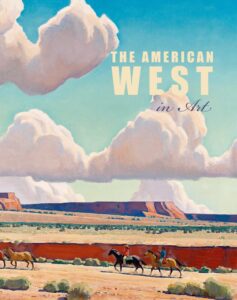
McElhinney’s work is featured in the new book The American West in Art: Selections from the Denver Art Museum. Edited by Thomas Brent Smith, with an introduction by Daniel Flores and texts by Erika Doss, Jennifer R. Hennemen and Molly Medakovich. Five Continents Editions. Milan. 2020

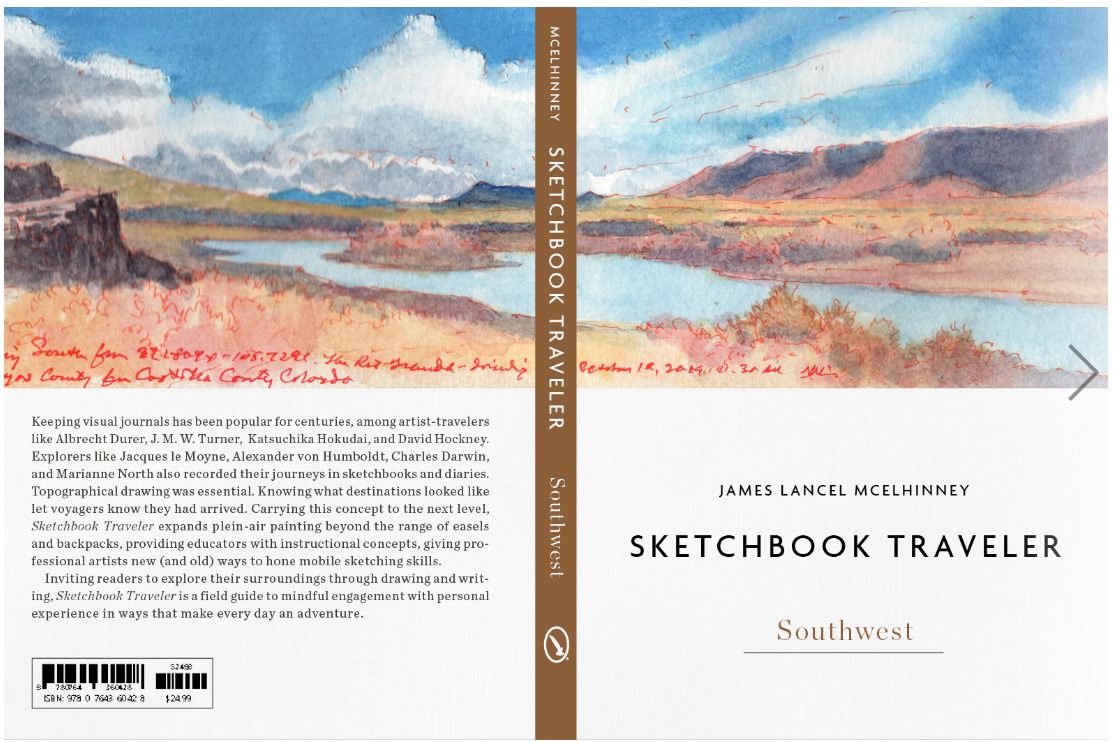
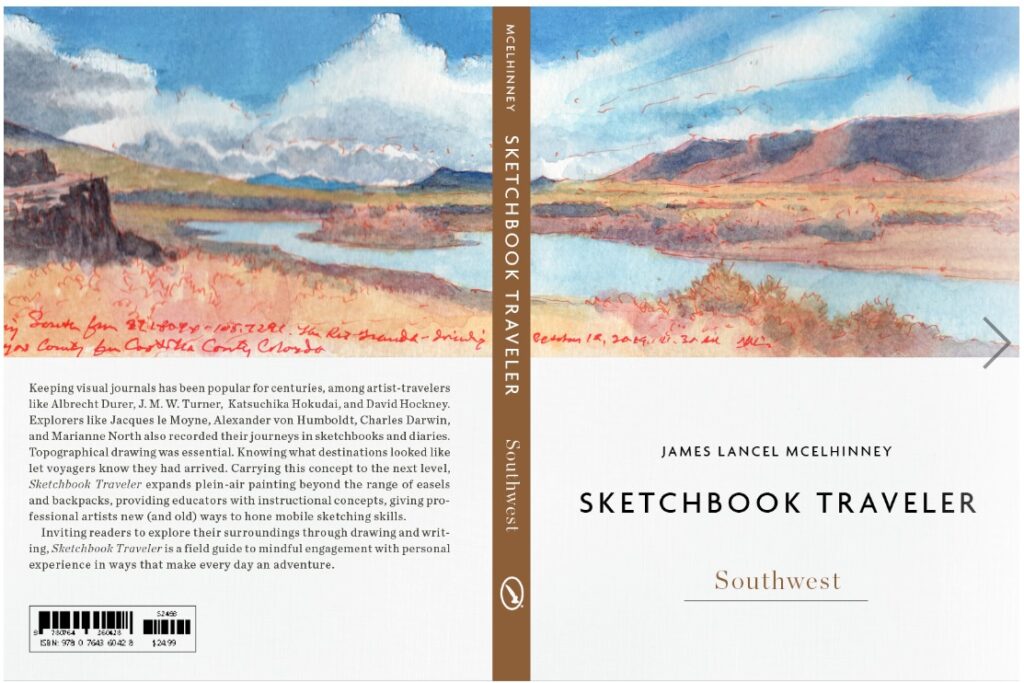
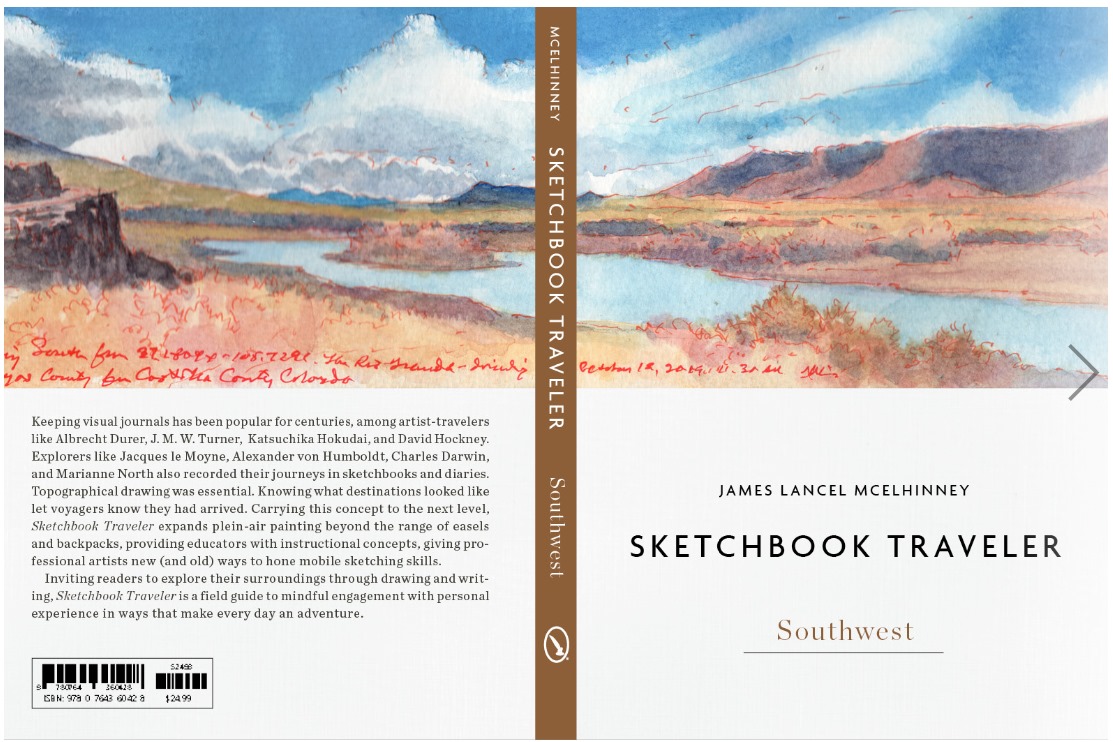
Coming soon: Sketchbook Traveler: Southwest. Release date: Spring 2022

James Lancel McElhinney is represented by Gerald Peters Gallery in Santa Fe, New Mexico,

and by William Havu Gallery in Denver, Colorado.

Sketchbook Traveler: Journeys & Journals is published by Needlewatcher Editions. PO Box 233, Essex, New York. 12936.

ed******@ne***********.com


SKETCHBOOK TRAVELER: DISPATCH #111. Barges and Gunboats


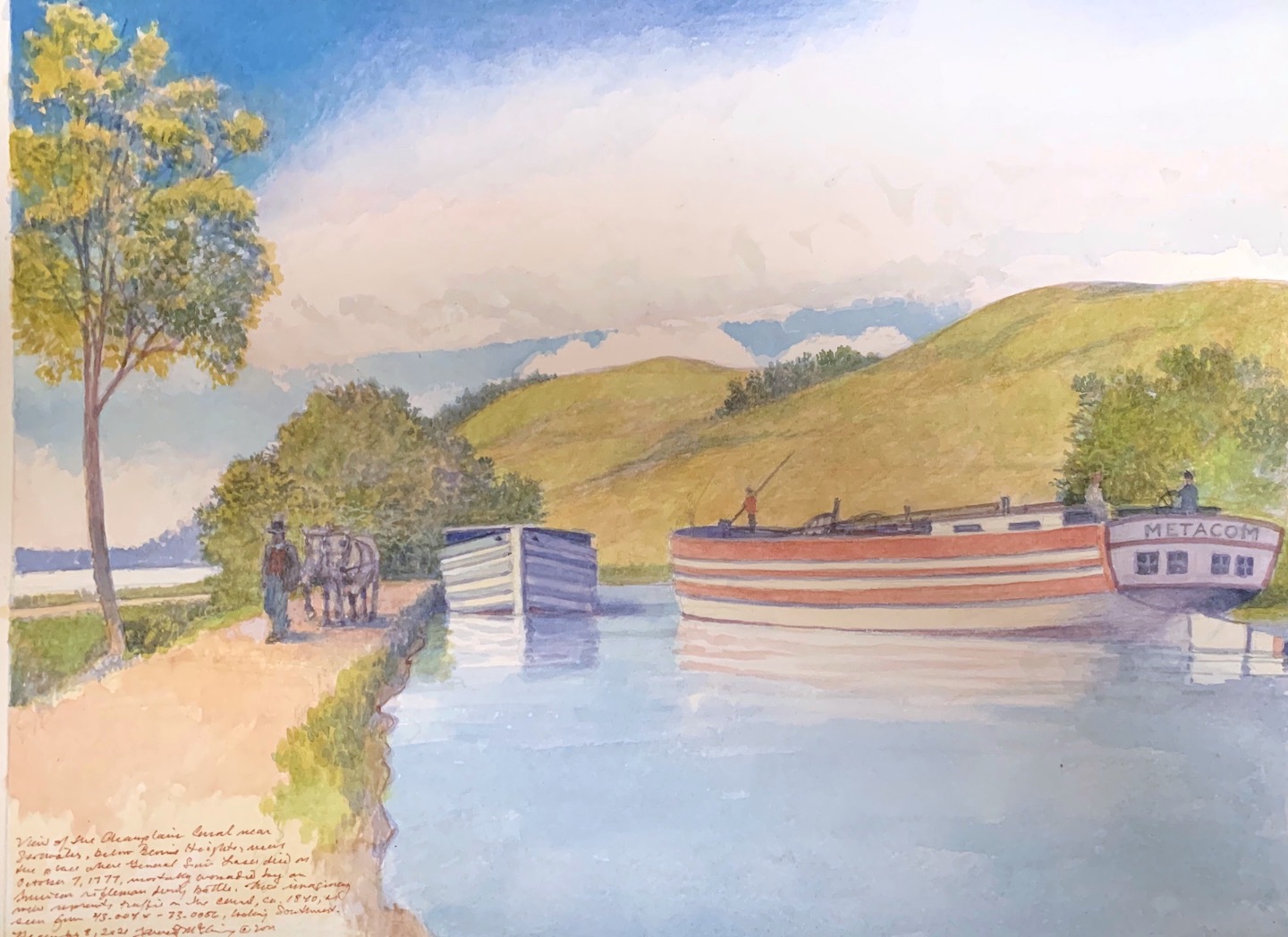
Champlain Canal below Bemis Heights, Saratoga National Historical Park. Watercolor on Lana watercolor paper. 12 x 16 inches. 2021.
This painting, which will be reproduced on interpretive signage created by the Erie Canal National Heritage Corridor, represents a slight departure in that it imagines a specific location as it may have looked circa 1840. Maps of the period revealed that the terrain depicted was nearly treeless. A few arboreal touches were included to help visitors transition from today’s semi-wooded setting to its nineteenth century appearance.

On September 10, 1823, the sixty-mile Champlain Canal finally opened to traffic, linking the Hudson River at Fort Edward with Lake Champlain at Whitehall, formerly known as Skenesboro. Built in stages starting in 1817, the canal increased the volume of goods and raw materials that moved from the navigable tidal estuary that ascended the Hudson from New York harbor to north of Cohoes. Unlike the Erie Canal, which would open two years later, the Champlain Canal was built to accommodate schooner-rigged canal boats. Spars and masts were laid lengthwise on deck. Sails and rigging were stashed in a forward compartment, where the hired man also slept. Masts would be stepped at Whitehall, secured by stout deck-mounted tabernacles. Spars and rigging were designed for quick assembly. Descending Lake Champlain under sail, steering and stability was assisted by a large centerboard that could be lowered in deep waters.  Centerboards are common features in today’s recreational sailboats. As an historical aside, the concept was first put to use in gunboats being assembled for the royal navy by John Schanck (1746-1823), for use against the American rebels that controlled Lake Champlain. Several men-or-war were taken apart on the Saint Lawrence River and reassembled at Saint John’s on the Richelieu River. With them Schank’s  centerboard gunboats would defeat Benedict Arnold’s mosquito fleet at the Battle of Valcour Island on October 11, 1776.
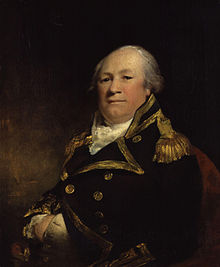

Admiral John Schank (1746-1823) Inventor of the centerboard

The rudders of Lake Champlain sailing canal-boats were equipped with a similar innovation in the form of an extension that could be flipped aft to double its length. This enhanced steering the vessel at slow speed while passing the canal, with no more than a foot or two of leeway. Running along the length of the hull above the waterline were longitudinal rub-rails; thick wooden bumpers to absorb the shock of occasional collisions with banks and bulkheads.
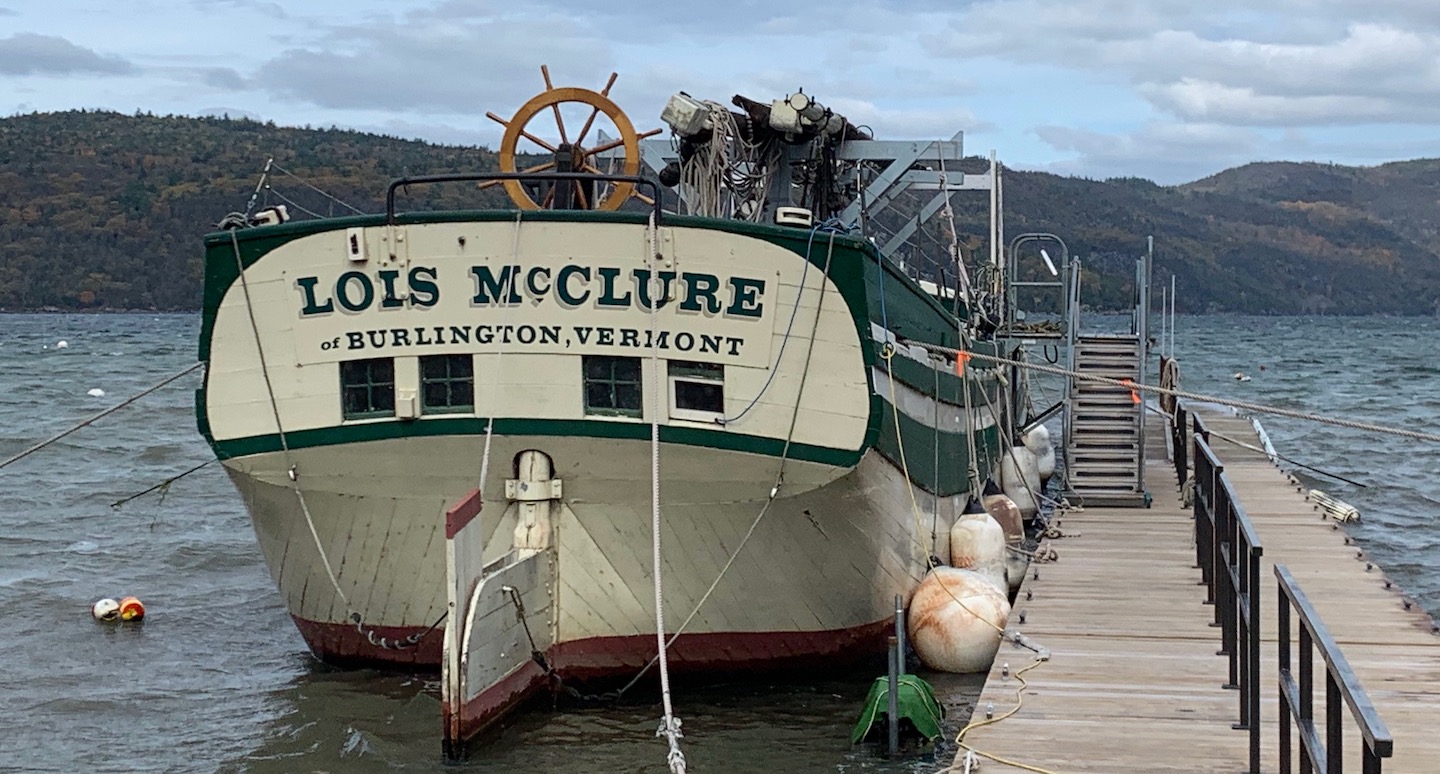

Sailing canal-boat Lois McClure, Lake Champlain Maritime Museum, Vergennes, Vermont

I had made an appointment with Lake Champlain Maritime Museum collections manager Patricia Reid to look at some of the visual documents in the museum collection related to sail-powered canal boats. Arriving at the museum near Vergennes at 10:35 on the morning of October 27, I was greeted by schooner management and volunteer coordinator Elisa Nelson, who brought me into a meeting room with books set out on a large refectory table. After perusing the volumes, accompanied by a lively and informative conversation, Elisa and I went outdoors to take a look at the museum’s working replica of an 1862 series sailing canal boat, the Lois McClure, named for one of the donors who underwrote its construction.
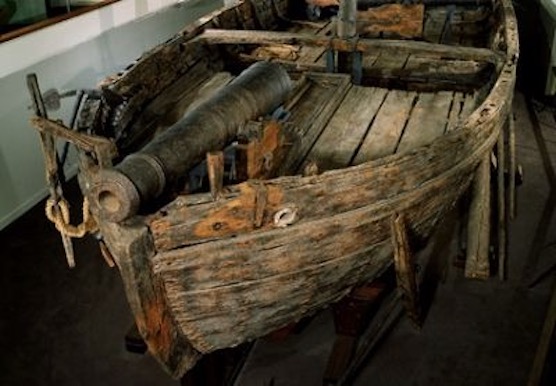

Gunboat Philadelphia. (1776) Smithsonian Museum of American History. Washington DC. Below: Replica of the gunboat Philadelphia awaiting repairs at Lake Champlain Maritime Museum.
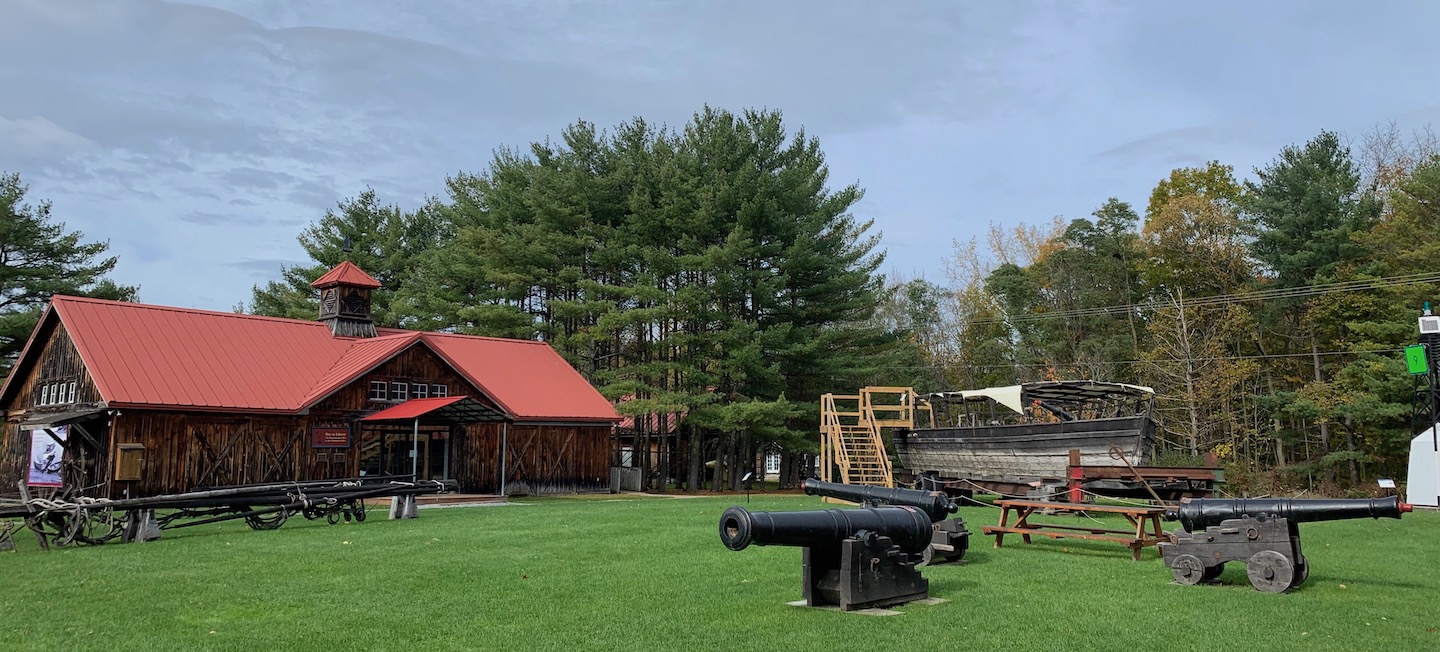
The day was windy as we walked across the campus, past boat shed and workshops. We paused to inspect the museum’s replica of the gunboat Philadelphia. The original is in the Smithsonian National Museum of American History. After years in the water, the full-scale reproduction was looking more and more like its predecessor. Copper sheeting had been attached to the bottom of the wooden hull to hinder its deterioration. Nelson related how when the original Philadelphia was being fitted out for active service, the shipwrights discovered that in their haste, they had made provisions for a bow gun in the stern. To correct their blunder, a notch had to be chopped out of the stem post to accommodate the cannon tube. The replica copied this exactly.
“These boats were never built to last,” Nelson commented. “They were built for the battle.”
Diving into the woods, we followed a steep gravel paved roadway descending to the shoreline of North Harbor. Jutting out into the water, a pier led to a long floating dock, which rocked on the waves. Moored along the south side of the dock was the Lois McClure. Stout tee bar racks supported the masts and spars.
“Those supports are not historically accurate.” Elisa explained. “When the boat was coming the canal, all that would have been just lying on the deck, with the sails and rigging stowed in the forward compartment, which would also have been where the hired man slept.”
Having closed for the season, in preparation for winter the museum crew had started dismantling bits and pieces, including twenty feet of hand rail that ran up the middle of the dock. Whitecaps appeared atop choppy, two to three foot waves. Across the lake, a sheer escarpment rising more than a hundred feet added to this sublime, unruly and dangerous expression of nature. Nelson nixed the idea of making a dash for the stairway that would have put us on the deck. “I always rope off those steps,” she explained. “You see any ropes? This crazy wind has blown them off. It’s too bad we can’t go aboard, but it’s just not safe.”
Before winter sets in, the schooner will be towed to Basin Harbor, the next anchorage to the south. There it will spend the winter out of the water, before undergoing maintenance and repairs before returning to the museum dock.
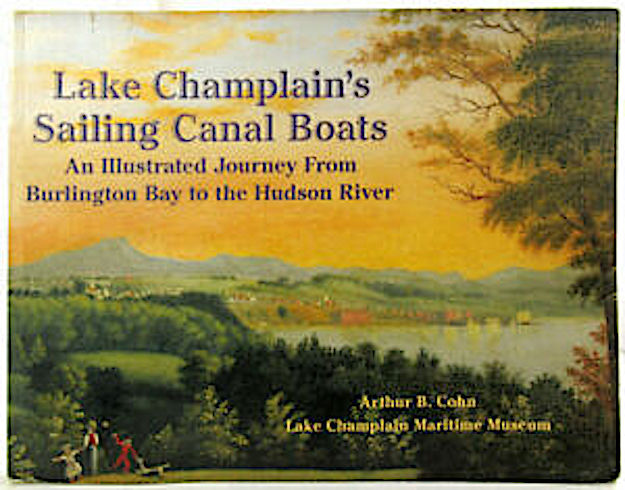

Arthur B. Cohn 
Lake Champlain Sailing Canal Boats.
Lake Champlain Maritime Museum. Basin Harbor, VT. 2003

Back in the office, I purchased a membership, and a copy of the book Lake Champlain’s Sailing Canal Boats: An Illustrated Journey from Burlington Bay to the Hudson River – Building the Canal Schooner Lois McClure by former executive director Arthur B. Cohn, and others. Thanking my hosts for an informative visit, I made my way to the parking area. Climbing into my car, I backed up slowly as another vehicle pulled in beside me. Strapped to the top was a large kayak. Unlike the ubiquitous tutti-frutti synthetic variety seen zipping around the Green Mountains and Adirondacks, this one appeared to be made of natural materials, painted in modest earth tones. The driver noted my interest and nodded. I nodded back and continued my journey.
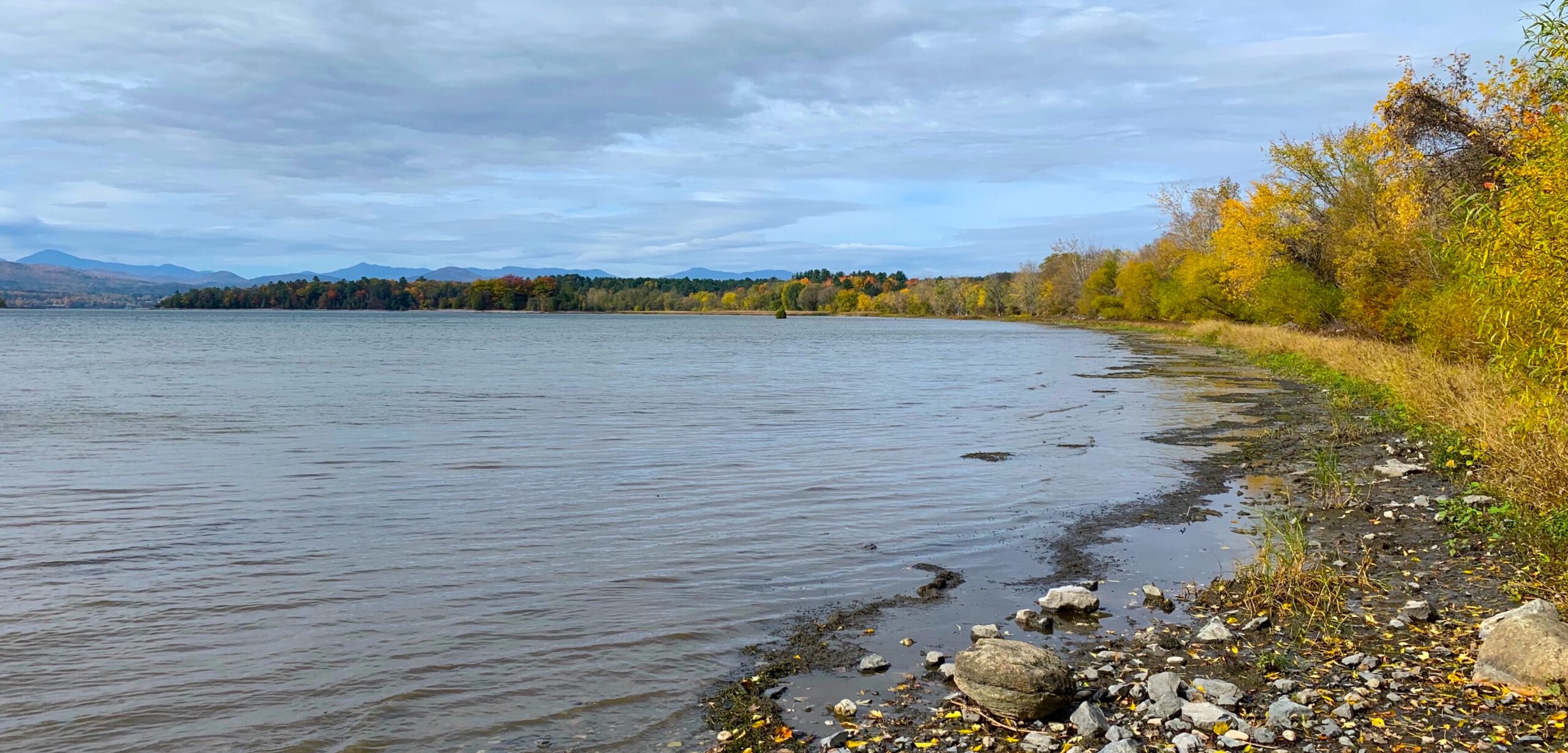

Button Bay, formerly Buttonmould Bay. In June 1777,  elements of General John Burgoyne’s army camped along these shores during its progress up the lake toward Ticonderoga.

Heading back to Crown Point, I was curious to visit the little bay where the British navy caught up to Benedict Arnold on October 13, 1776. The gunboat Philadelphia, reproduced at Lake Champlain Maritime Museum, had already been lost when the British fleet caught up the remnants of the leaky, battered rebel fleet just south of Split Rock. The fight that ensued cost more American lives. Lieutenant Thomas Rogers was blown to smithereens when a Swedish-made cannon exploded on the gunboat New York. Facing certain defeat, Arnold ran his remaining boats ashore, put them to the torch and beat a hasty overland skedaddle to Crown Point.
Today the road to Arnold Bay runs along a narrow gravel-paved course through the wooded margins of the lake. To the left on the descent is a massive concrete building that houses the water treatment facility for the town of Panton, Vermont. Parking on the little point on the northern corner of the circular bay, I found a bronze and stone Sons of the American Revolution marker identifying the site as where Arnold had come ashore on October 13. Reaching into the bay were two piers. Small single class racing boats were secured to the more distant pier, managed by the sailing program at Middlebury College. Riding at anchor in the middle of the bay was a solitary cruising sloop of thirty feet or more. Its tender was stashed onshore, just below the water treatment plant. To the north, the shoreline rose vertically in one of the ubiquitous fossil-reef limestone layer-cakes that rim the lakeshore.
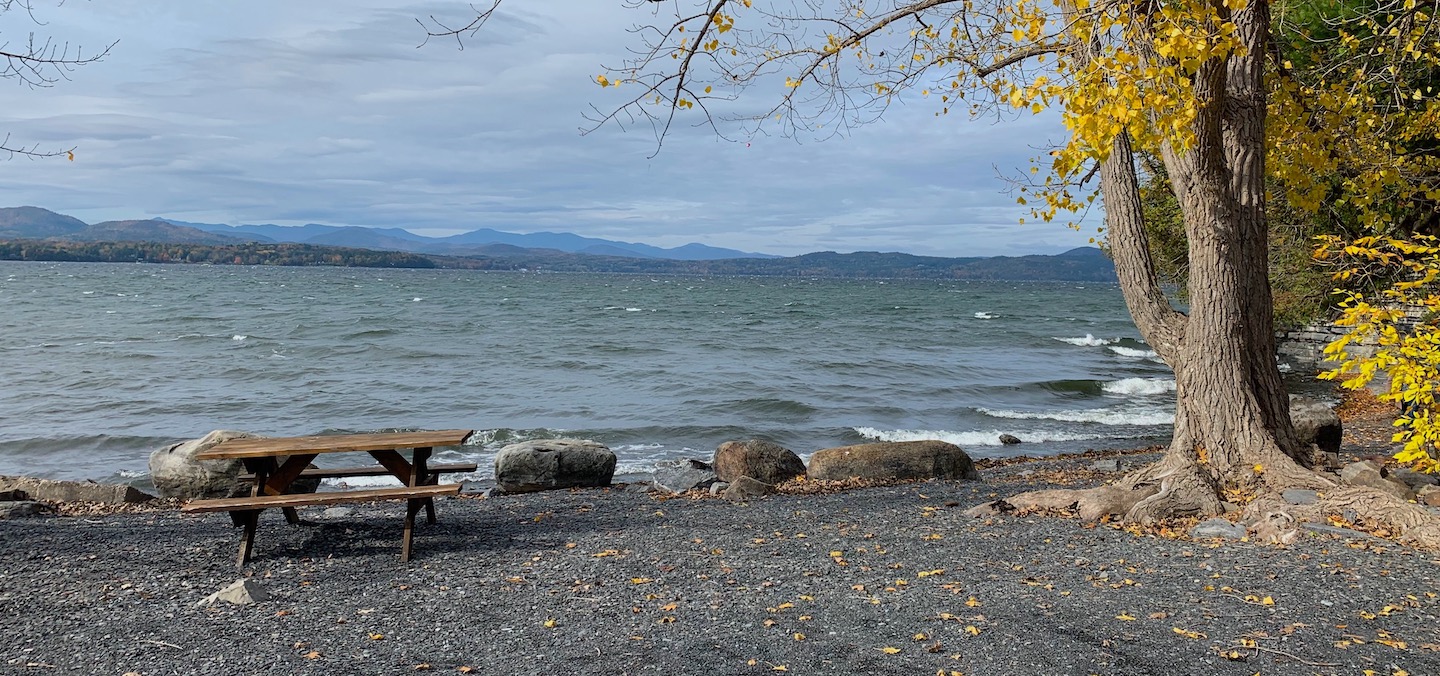

Arnold Bay, Panton, Vermont. Looking west toward the Adirondacks.

Taking note of my surroundings a veteran subcompact import rolled to a stop, ten feet from my Subaru. From it emerged the same  cheerful hirsute fellow, with whom I had exchanged nods in the parking lot at the maritime museum. Strapped to the roof was the same kayak. Its owner was Ron Rost, a longtime member of the dance department staff at Middlebury College. Replying to my query about the kayak he replied,
“This was handmade by one of the guys up in the boat shop at Champlain Maritime Museum. Because of its size, it’s stable enough for the lake. It’s roomier inside that you might think.”
Rost explained how after graduating from college in 1979, he had come to the Champlain Valley to work on a Delaware Bay oysterman. Having grown up in the Delaware Valley, I was familiar with these boats with their beamy hulls, shallow drafts and raking masts. They were a common sight also in Chesapeake Bay, where they were known regionally as skipjacks. The schooner whose crew Rost had joined traveled up and down the lake, stopping at different ports of call to take on visitors for tours and day cruises.It struck me as odd that someone would think it was a good idea to bring a craft designed for coasting over shoals to a deep and often turbulent body of water with its own regional history of nautical architecture. The bicentennial years of the late seventies had seen their parades of tall ships. Suddenly every urban waterfront in America needed tourist-friendly seaport zones with their own tall ships. It seemed to me that a Delmarva Skipjack on Lake Champlain was like a benign invasive species, unlike the Zebra Mussels and Asian Watermilfoil that had made their way into its waters. I kept these thoughts to myself.
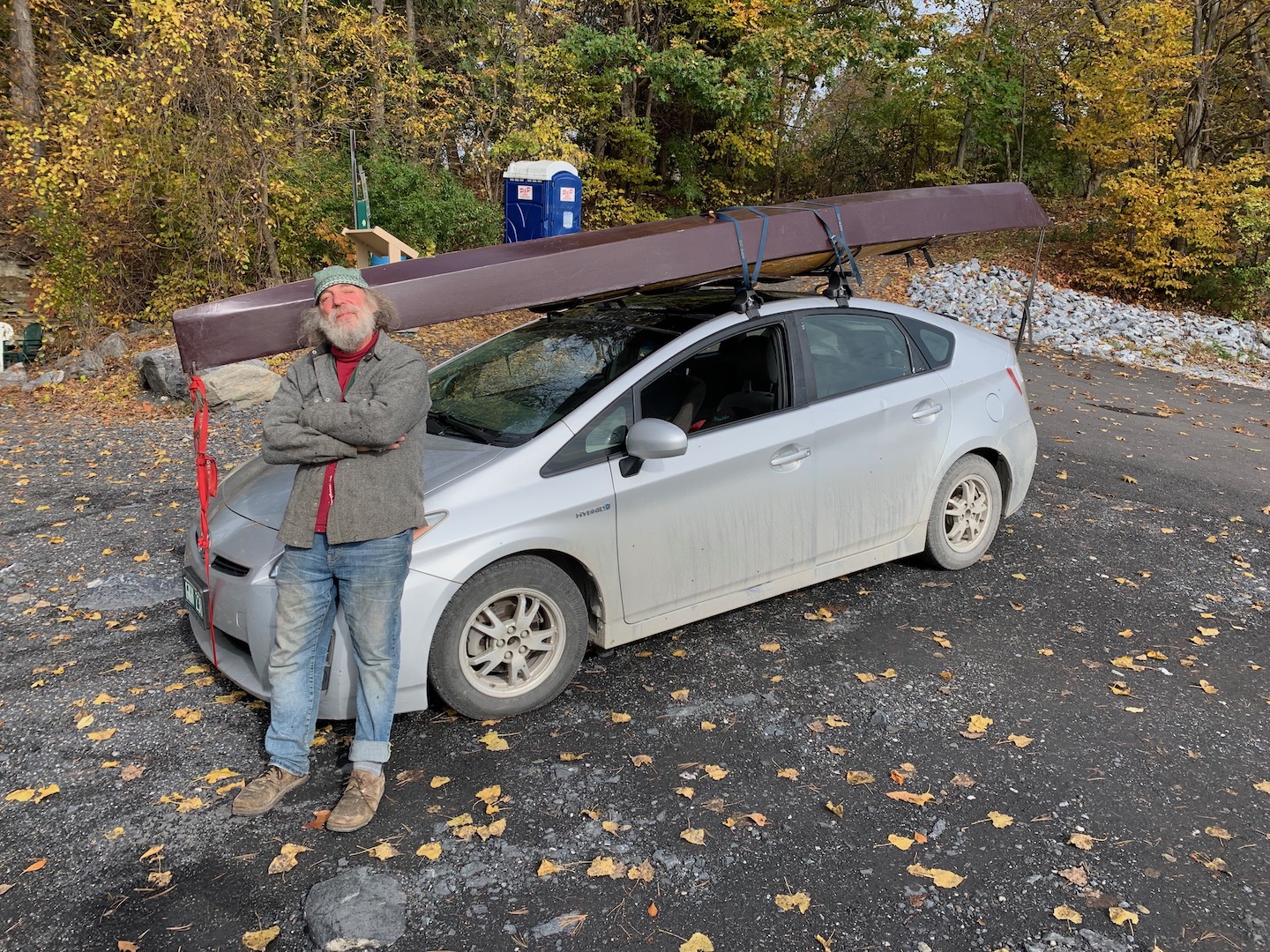
Rost explained that when I had seen him at the museum, he was paying a visit to friends on the boat shop. He was now in search of a likely place to launch his kayak and planned to travel from bay to bay in search of calmer waters. We spoke about the battle at Valcour, and the action that took place just offshore. Directing me to a few other bays and landings he though worth exploring, he noted that  the tranquility of Arnold’s Bay looked like an inflatable kiddie pool, compared to the churning cauldron stretching back to Westport on the Adirondack Coast. As Rost cogitated on the merits and perils of putting in, I bade him farewell and continued on to Crown Point. Crossing the narrows from Chimney Point into New York State, the king’s colors danced above the massive fort in a fierce west wind.

James Lancel McElhinney (c) 2021

Now available to own: Sketchbook Traveler: Hudson Valley
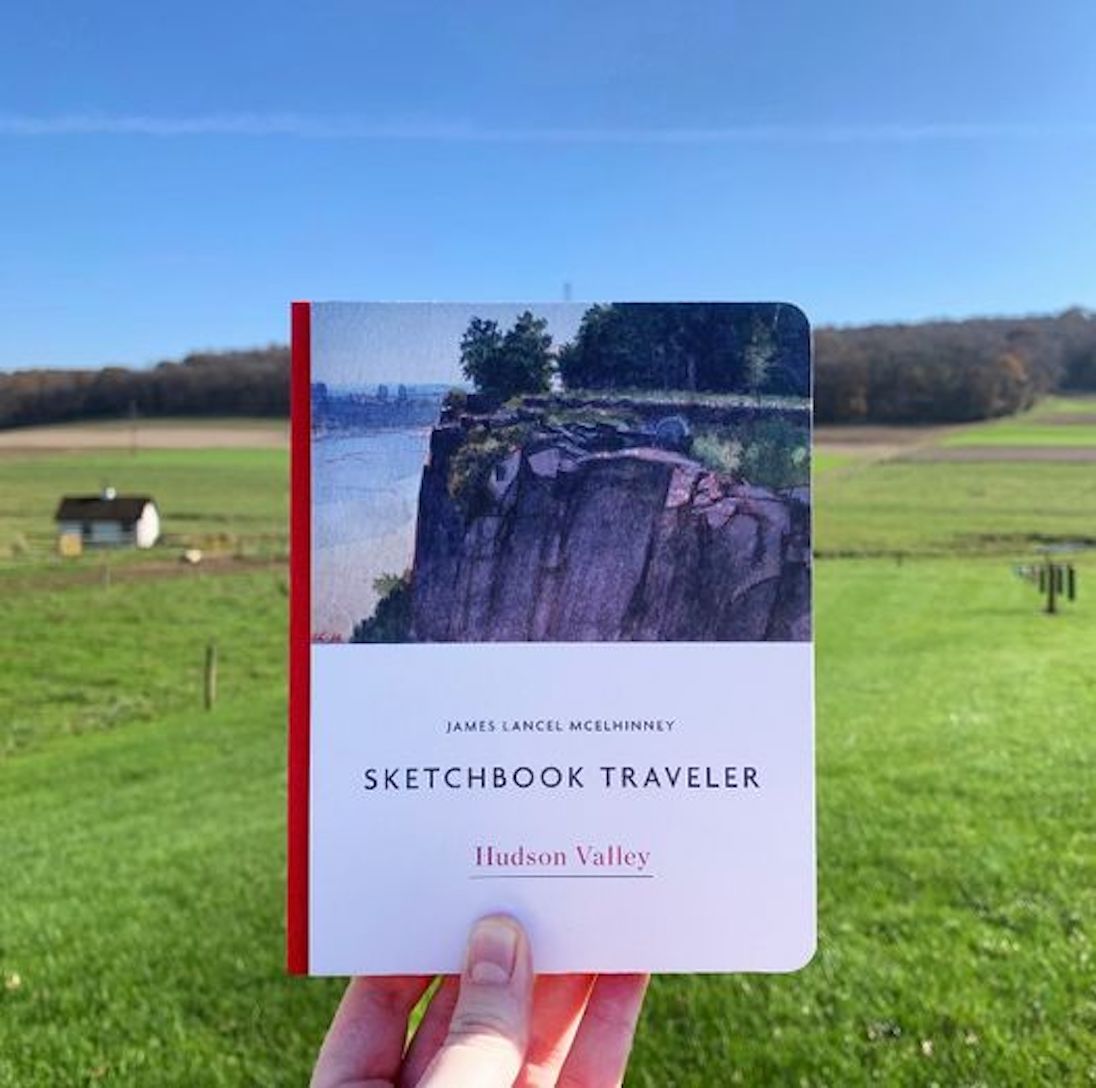
Coming Soon: Spring 2022: Sketchbook Traveler: Southwest
Explore my Quaranteam Dispatches, from April 1-June 8, 2020
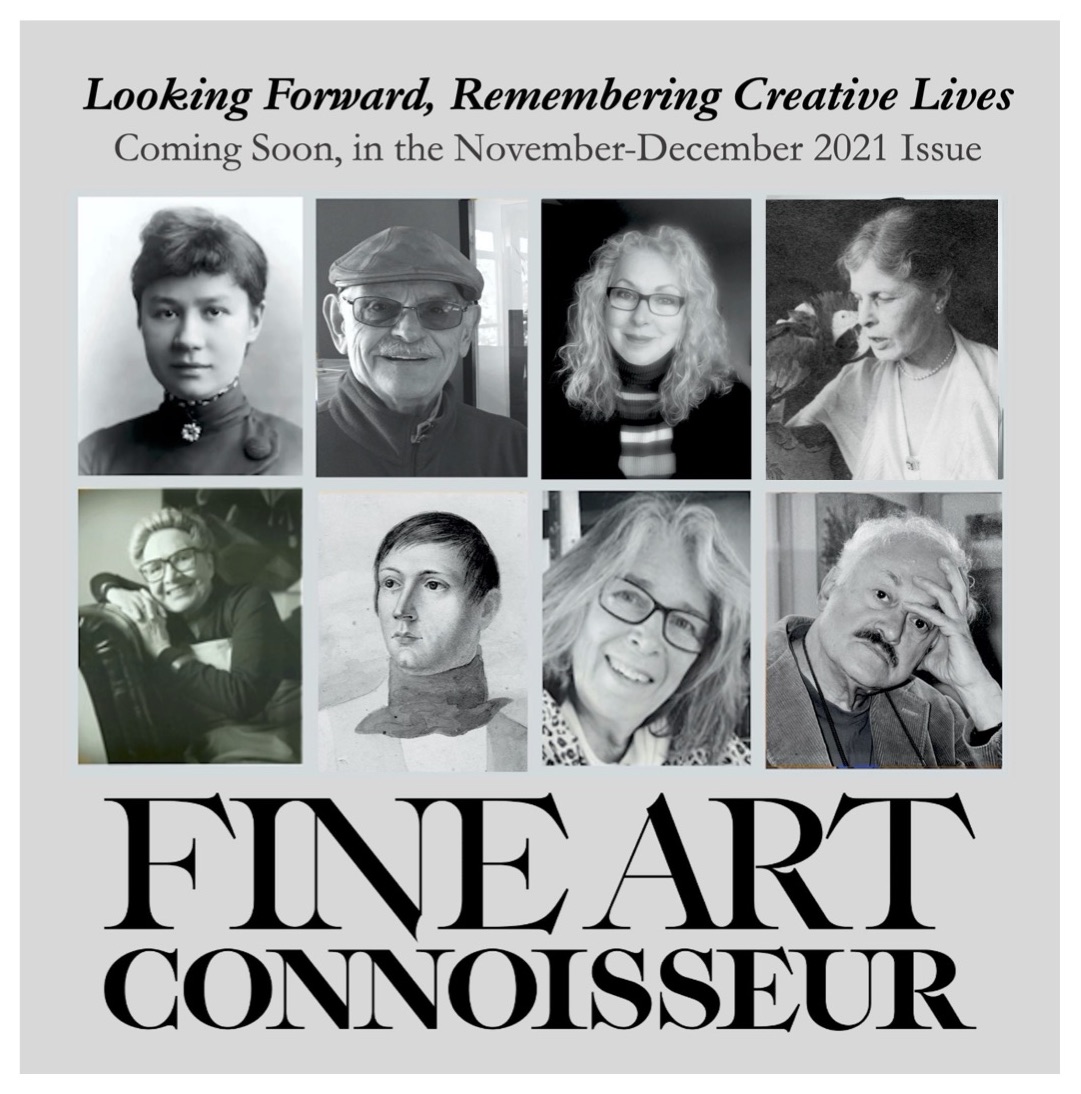
Remembering Creative Lives: Legacy Planning for Artists

Read the Full Article from Fine Art Connoisseur magazine (scroll down)

“For the first time in history, a considerable number of visual artists have amassed vast fortunes. Lavishly endowed eponymous artist-estate foundations herald a new species of philanthropy: many possess sufficient funding to maintain a permanent staff to pursue their missions in support of education, research, and helping artists in need. In some cases, these foundations establish museums and research centers or collaborate with existing institutions. Among the leaders in this sector are Robert Motherwell’s Dedalus Foundation, the Joan Mitchell Foundation, Robert Mapplethorpe Foundation, and Andy Warhol Foundation for the Visual Arts.
Such ambitious goals are beyond the means of many notable artists, even those of considerable fame. So what options are available to them? What must the heirs of noteworthy and moderately successful artists do to prevent works that once won laurels from being flogged for pennies or carted off to landfills?
…Augustus Kollner (1812–1906) was born in Stuttgart, Germany. Immigrating to the United States in 1839, he settled in Philadelphia, a hub of print publishing. Working as an illustrator and engraver, Kollner gained recognition for his city views and landscapes. He outlived his career, however, and died forgotten at 94. In life Kollner had organized his oeuvre into an orderly collection. yet his daughter let the junk man have it all for two dollars. Recognizing the quality of what he had just purchased, the canny scrap dealer preserved the artworks, which over time made their way into private and public collections. Later, philanthropist Joseph M. Fox donated his collection of Kollner’s graphic works to the Free Library of Philadelphia. While much of this artist’s visual output is preserved, most of his correspondence and records has been lost.
Famed as a teacher, Ashcan School painter John French Sloan (1871–1951) pioneered a gritty brand of realism that presaged WPA-era regionalism. Widowed in 1943, Sloan married his former protégé and extramarital lover Helen Farr (1911–2005) two years later. When Sloan passed away, Helen devoted herself to preserving his legacy. A decade later, she reached an agreement with the Delaware Art Museum, which received thousands of works representing each phase of Sloan’s career. A century after the Ashcan painters fell from favor, Sloan’s reputation endures.”

–excerpt from “Looking Forward. Remembering Creative Lives” in the November-December 2021 issue of Fine Art Connoisseur magazine. Scroll down to a link & download a PDF of the article

Beginning in 2006, for more than ten years I collected oral history interviews for the Smithsonian Archives of American Art and other organizations.These conversations made me keenly aware of how many practicing artists, especially those working in higher education, misunderstood the nature of the art market, and their roles in it.
The event that got me involved in legacy planning was the death of my grad school mentor Bernard Chaet (1924-2012). Following his retirement from Yale he devoted himself to painting with astounding vigor. His prolific output was exhibited widely to growing acclaim. Pressing on as his health declined, he continued to produce new work until he was no longer able. When he passed away in the fall of 2012, his widow and daughter were faced with the daunting task of organizing countless postcards, letters, drawings, watercolors, prints and paintings. Bernie threw nothing away. Nor did he make plans for what was to be done with all that material. Putting his estate in touch with the Archives of American Art provided guidance in organizing Bernie’s papers, which I delivered in person to the Victor Building in Washington DC. Since then I have provided professional consulting, research and appraisal services to a number of artists’ estates.
The more involved with this work I became, the more aware I became of others engaged in similar work, including a number of artists stealing a march on time. Nobody wants to confront their own mortality, nor consign a productive lifetime to oblivion. My hope is that by unpacking a number of case studies, this article will motivate artists to play a proactive role in estate planning, by embracing the task as part of their creative practice

DOWNLOADABLE PDF. LINK:  LOOKING FORWARD, REMEMBERING CREATIVE LIVES.  Fine Art Connoisseur magazine. Streamline Publishing

SUBSCRIBE:  FINE ART CONNOISSEUR 

THE AUTHOR: James Lancel McElhinney is owner of Needlewatcher Arts Advisory (Needlewatcher LLC) Enquiries: PO Box 233, Essex, New York. 12936-0233.

ap********@ne***********.com


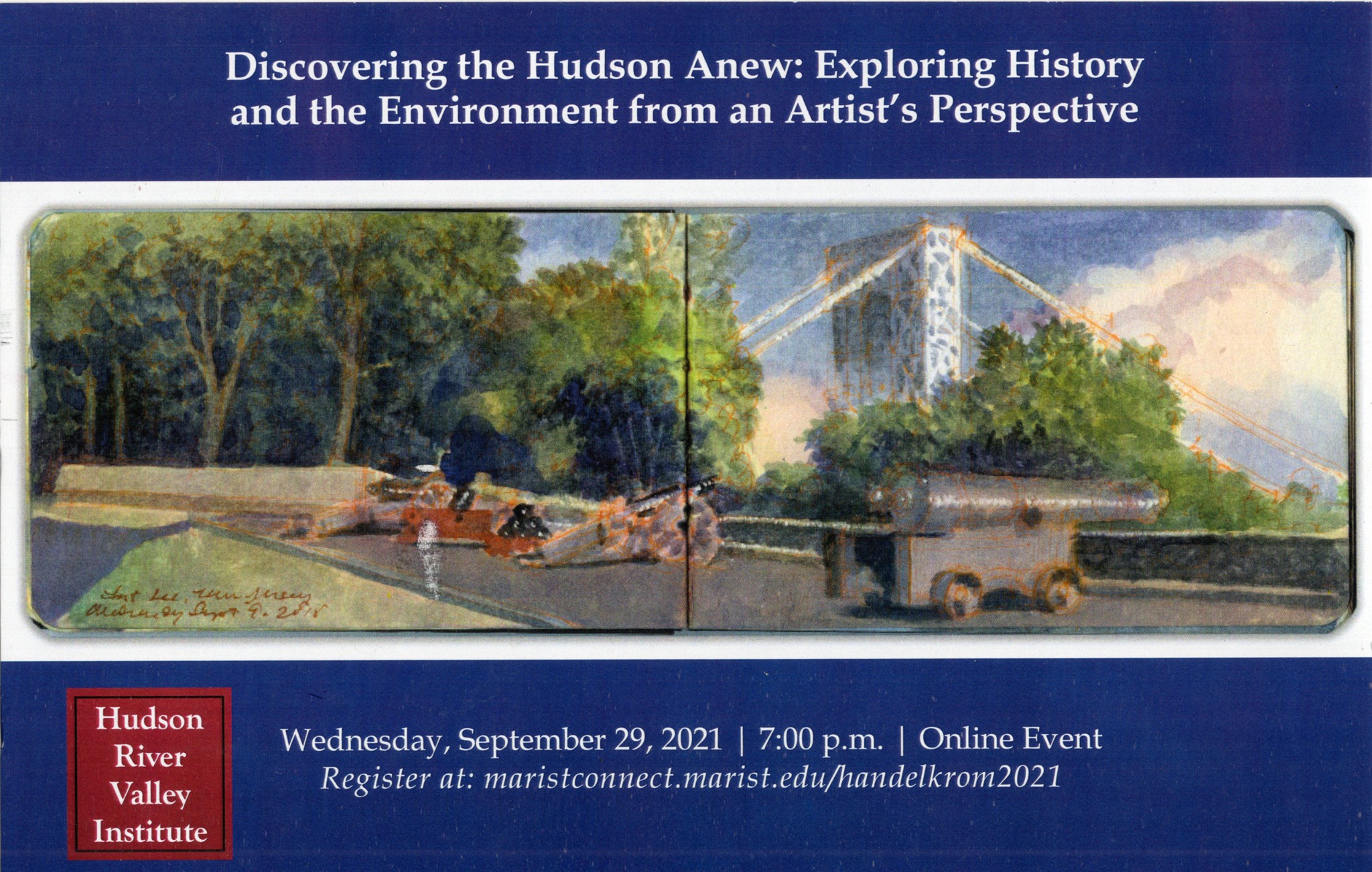
SKETCHBOOK TRAVELER: Dispatch #110. Discovering the Hudson Anew: Lecture and Transcript

Last spring, the Hudson River Valley Review published my article Explorers, Naturalists and Military Precursors of the Hudson River School. This was deeply gratifying. For many years my teaching had been devoted to promoting drawing as form of literacy, beyond that of poetic endeavors. Like putting words together, drawing gives us a way to transform personal experience into knowledge and ideas. Intensifying our encounters with nature in this way can foster social responsibility and ecological civics. This may smack of Yankee utilitarianism, which as a descendant of literate Congregationalist yeoman farmers, Minutemen, Quaker whale-ship captains, and progressive educators, would be part of my nature. The art-historical narrative has also changed. Titanic cults of individualism and selfhood have today given way to explorations of social justice, human identity, and environmental priorities.
Everyone can learn to draw, just as they can learn to write. This is nothing new. Rembrandt Peale argued that writing is a form of drawing, and drawing is a just mode of writing. Horace Mann described drawing as an essential industrial skill. He also called it a moral force. These voices advocated for a system of universal education, in which drawing was a core subject. This was not to promote self-expression, but to develop a virtuous citizenry that valued knowledge, practiced democracy, and contributed to society.
Being bold enough to go out into the world, to lay down marks, pictures and words promises rich rewards.  Anyone can describe anything, once they know it. Drawing sharpens our focus, and deepens our experience, to teach us what we behold. It seems that the best way to demonstrate how this can works is by setting an example.

WATCH THE VIDEO

DOWNLOAD THE TRANSCRIPT

Download (PDF, 281KB)

PDF

Now available to own: Sketchbook Traveler: Hudson Valley

Explore my Quaranteam Dispatches, from April 1-June 8, 2020

Be the first to receive these blogposts


up*****@mc***********.com


“>